

 Sign in
 Rose Catalog
Share
Prices nearby
or to see prices for this rose



















Brief summary
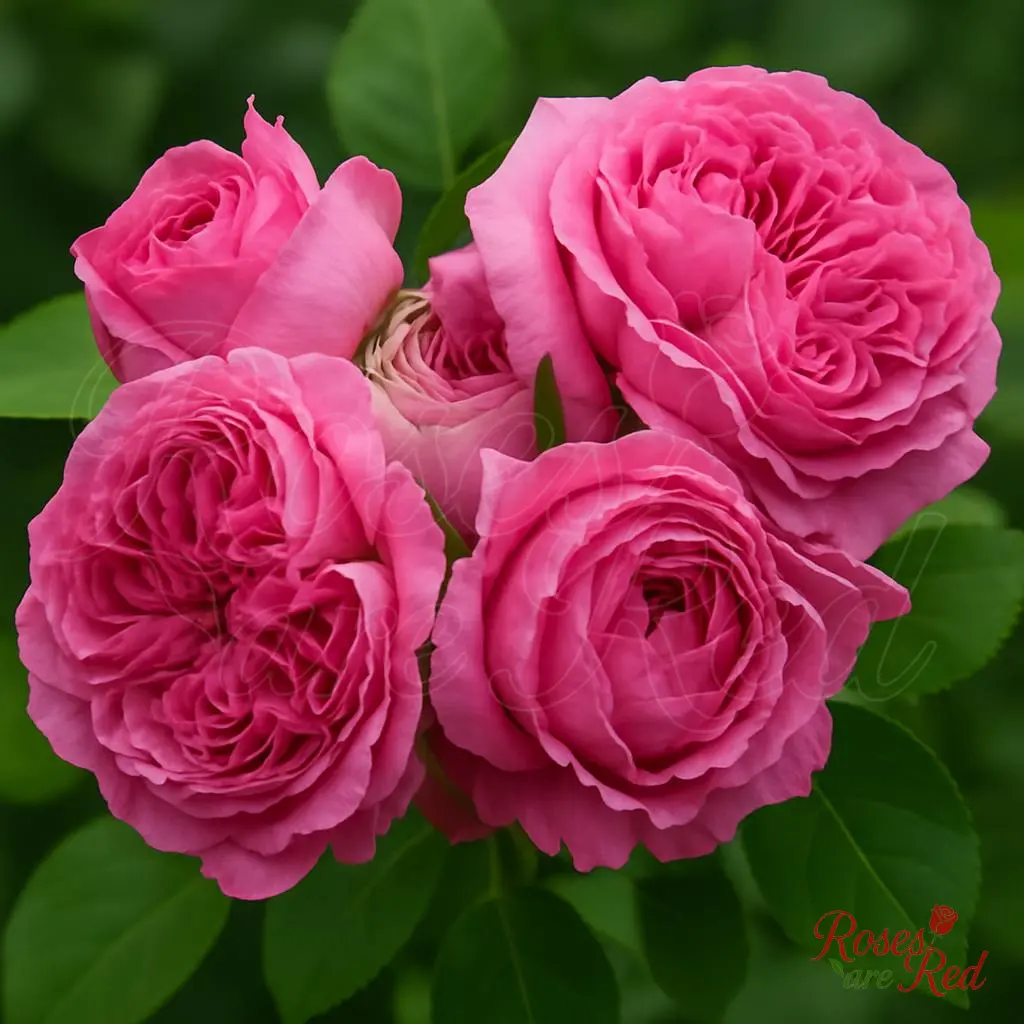
Old Garden Rose, portland "Yolande d'Aragon", introduced by Jean-Pierre Vibert in 1843, Usually is fuchsia in color, cupped bloom shape, blooms 8 - 10 cm in size, has 1-3 buds per stem, repeat rebloom, has rich fragrance, the bush shape can be bushy, 120 - 150 cm in height, 100 cm in width, suitable for USDA zone 5 from -29°C and above, low resistance to rain, moderate resistance to black spot, moderate resistance to mildew.
Main characteristics

Aroma

USDA Zone 5
-29°С

Rebloom


Bush Shape

Bloom Shape
Cupped
Size

Height
120 - 150 cm

Width
100 cm
Bloom size
8 - 10 cm

Buds / Stem
1-3

Petal Count
Resistance

Heat

Shade

Rain

Black Spot
Mildew
More information
The American Rose Society classifies this rose as a Portland rose, while catalogues more often place it among Hybrid Perpetuals. It bears thick red-pink buds that open to densely brushed blooms about 9cm across. The spiralled petals range in colour from warm pink to purplish mauve pink toward the centre, and the flowers form a wide open bowl with a flat centre. They are very fragrant and appear in clusters. The first flowering is very abundant; later, solitary blooms appear, followed by a second wave in autumn. Shoots are very spiny, foliage is matte, bright green. The shrub is erect, medium-sized, 120–150 cm tall and 100–120 cm wide. This variety is often combined with silver-leaved plants such as Artemisia, or with Lichenis chalcedonskii bearing white flowers. It shows disease resistance, though black spot or powdery mildew may occur without preventative measures.
Yolande d’Aragon is a large, very fragrant remontant rose. The flowers are slightly cup-shaped; the outer pale pink, silky-textured petals form a regular circle around the central, smaller, darker petals. The colouring is dense pink with a lighter edge and a purple tinge in the centre. The foliage is fine, smooth, pale green, showing traces of Chinese rose ancestry. The bush is dense, branched, erect. Repeat flowering is steady, especially if discarded flowers are removed. It responds to abundant fertiliser and watering. Named in honour of Yolanda, Queen of the Four Kingdoms (Sicily, Naples, Jerusalem and Aragon), Duchess of Anjou, and Countess of Provence.
Yolande d’Aragon is a large, very fragrant remontant rose. The flowers are slightly cup-shaped; the outer pale pink, silky-textured petals form a regular circle around the central, smaller, darker petals. The colouring is dense pink with a lighter edge and a purple tinge in the centre. The foliage is fine, smooth, pale green, showing traces of Chinese rose ancestry. The bush is dense, branched, erect. Repeat flowering is steady, especially if discarded flowers are removed. It responds to abundant fertiliser and watering. Named in honour of Yolanda, Queen of the Four Kingdoms (Sicily, Naples, Jerusalem and Aragon), Duchess of Anjou, and Countess of Provence.
Popular Breeders
Articles