


 Sign in
 Rose Catalog
William Shakespeare 2000, shrub

Registration name
AUSromeo
Share
Prices nearby
or to see prices for this rose



















Brief summary
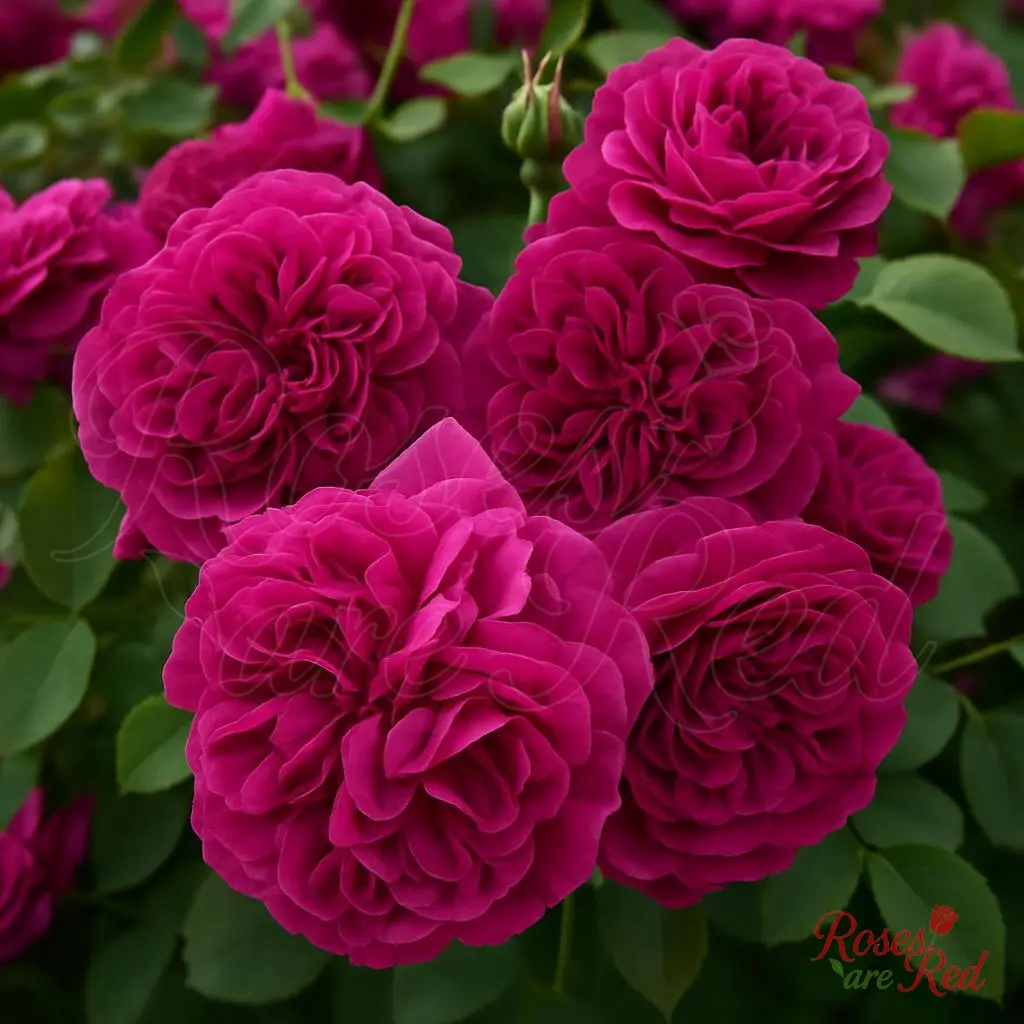
Modern Rose, shrub "William Shakespeare 2000", United Kingdom, introduced by David C. H. Austin in 1994, Usually is purple in color, quartered bloom shape, very full petal count, blooms 10 - 12 cm in size, has 3-5 buds per stem, repeat rebloom, has rich fragrance, the bush shape can be bushy, upright, 100 - 120 cm in height, 100 cm in width, suitable for USDA zone 6 from -23°C and above, moderate resistance to rain, strong resistance to black spot, strong resistance to mildew, good for cutting.
Main characteristics

Aroma

USDA Zone 6
-23°С

Rebloom


Bush Shape


Bloom Shape
Quartered
Size

Height
100 - 120 cm

Width
100 cm

Bloom size
10 - 12 cm

Buds / Stem
3-5

Petal Count
Very full
Resistance

Heat

Shade

Rain

Black Spot

Mildew
More information
A red rose with vibrant, velvet-red blooms that later shift to an equally rich purple. The flowers begin deeply cupped, then open and become progressively flatter. The shrub is upright, carrying many blooms on each shoot. Strong rose fragrance. Shows strong disease resistance.
Silhouetted variety that quickly develops into a dense bush; highly disease-resistant. It flowers in large clusters, and each cluster persists for more than a fortnight. New shoots come into bloom quickly, unlike older red Austin varieties that produce long, non-flowering shoots. The flowers are large—over 10 cm in diameter—densely-margined, with a rich fragrance featuring violet notes.
In 1987, David Austin Senior introduced the William Shakespeare rose, and 13 years later replaced it with William Shakespeare 2000. The 1987 rose proved very susceptible to rust and powdery mildew, whereas the newer variety appears quite resistant to various rose diseases. It bears velvety, carmine-red flowers that age to purple and carry an Old Rose scent. The shrub is fast-growing, upright, freely branching, and clad in large, matte, pure green foliage.
Silhouetted variety that quickly develops into a dense bush; highly disease-resistant. It flowers in large clusters, and each cluster persists for more than a fortnight. New shoots come into bloom quickly, unlike older red Austin varieties that produce long, non-flowering shoots. The flowers are large—over 10 cm in diameter—densely-margined, with a rich fragrance featuring violet notes.
In 1987, David Austin Senior introduced the William Shakespeare rose, and 13 years later replaced it with William Shakespeare 2000. The 1987 rose proved very susceptible to rust and powdery mildew, whereas the newer variety appears quite resistant to various rose diseases. It bears velvety, carmine-red flowers that age to purple and carry an Old Rose scent. The shrub is fast-growing, upright, freely branching, and clad in large, matte, pure green foliage.
Popular Breeders
Articles