


 Sign in
 Rose Catalog
William Lobb, moss

Also known as
Old Velvet Moss
Duchesse dIstrie
Centifolia Muscosa William Lobb
Rosa centifolia f muscosa William Lobb
Share
Prices nearby
or to see prices for this rose



















Brief summary
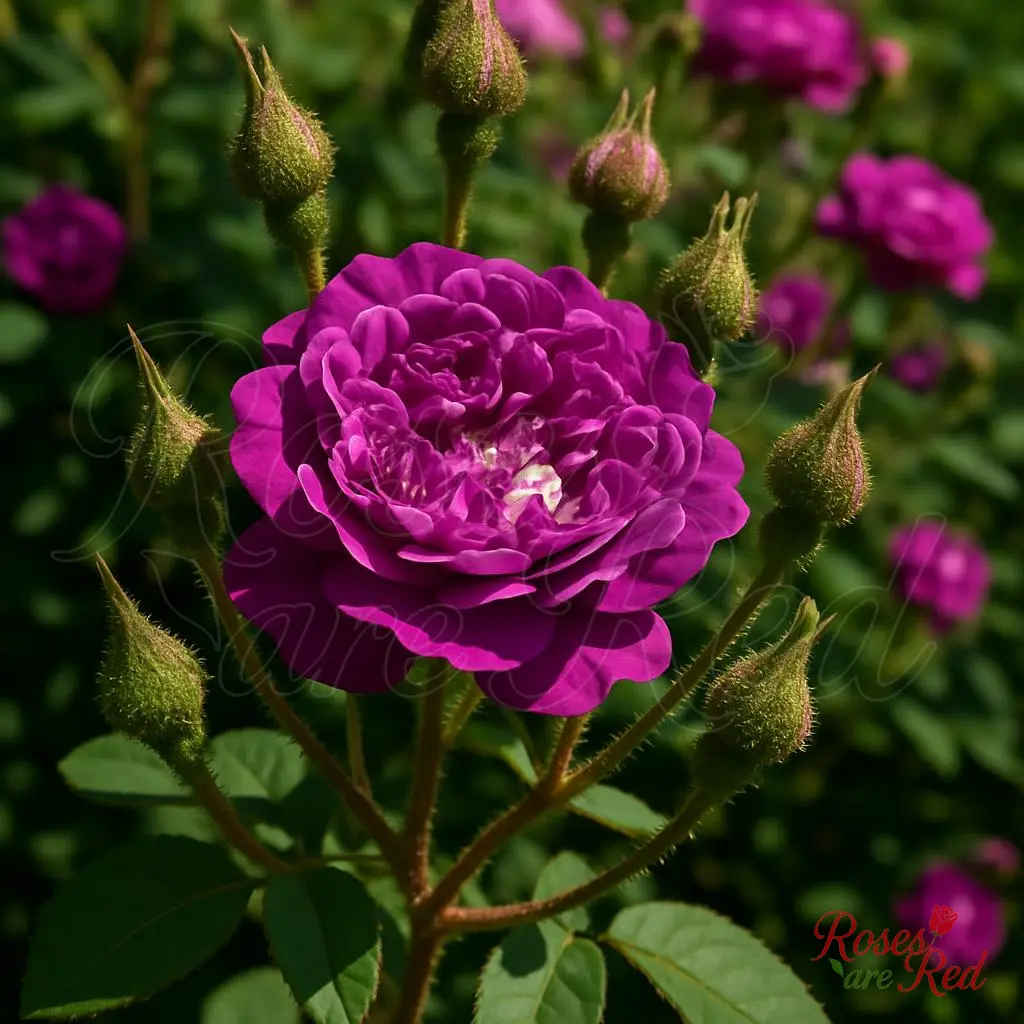
Old Garden Rose, moss "William Lobb", France, introduced by Jean Laffay in 1855, Usually is purple in color, semi double bloom shape, blooms 8 - 10 cm in size, has 3-5 buds per stem, once rebloom, has rich fragrance, the bush shape can be upright, 180 - 300 cm in height, 100 cm in width, suitable for USDA zone 5 from -29°C and above, moderate resistance to rain, moderate resistance to black spot, low resistance to mildew.
Main characteristics

Aroma

USDA Zone 5
-29°С

Rebloom


Bush Shape

Bloom Shape
Semi double
Size

Height
180 - 300 cm

Width
100 cm

Bloom size
8 - 10 cm

Buds / Stem
3-5

Petal Count
Resistance

Heat

Shade

Rain

Black Spot

Mildew
More information
William Lobb is a well-known moss rose, sometimes listed as Old Velvet Moss. Some sources propose a Chinese origin, cited to account for the unusually tall, arching habit. The rich purple blooms, 7.5–10 cm across, fade to soft violet-grey and purple, with a strong rose-oil fragrance. Flowering is profuse, produced in large clusters over an extended period in early summer (single flowering). A cluster may carry up to 20 blooms. The shrub is very tall, reported with small thorns and suitable for training over a hedge, lattice, or other support. The thorns are also described as thick and very prickly. Height reaches 2.5–3 metres, depending on climate. In cold regions it can be frosted in severe winters, but it regrows well.
William Lobb is the English name for the French rose Duchesse d’Istrie, and it is also referred to as Old Velvet Moss. Growth is vigorous, with noted winter hardiness. In Canada, the long, spiny canes are seldom damaged by frost even in very cold winters, and within a couple of years after planting the plant attains substantial size; allow ample space at planting. Training the shoots on a support is recommended, as the canes are weak and bend under the weight of large clusters. This is a moss rose; the “moss” (glandular growth) on the buds and upper shoots is especially dense in William Lobb. Flowers are borne in dense clusters, well-formed, with a delicate fragrance. Bloom is very abundant. Propagates readily from green cuttings.
The flowers are nearly purple, about 5 cm in diameter. The long, spiny shoots require support. Withstands frost without protection.
Buds and pedicels are covered with moss-like glandular hairs; roses with this trait are termed moss roses. The flowers are fragrant, semi-branched, mauve-pink, with much lighter petal undersides, and they appear in the middle of summer. The shrub is tall, erect, and weakly branching, so it is often grown on a support near a column or wall, with other plants in front. Shoots bear dense prickles and large grey-green leaves.
William Lobb is the English name for the French rose Duchesse d’Istrie, and it is also referred to as Old Velvet Moss. Growth is vigorous, with noted winter hardiness. In Canada, the long, spiny canes are seldom damaged by frost even in very cold winters, and within a couple of years after planting the plant attains substantial size; allow ample space at planting. Training the shoots on a support is recommended, as the canes are weak and bend under the weight of large clusters. This is a moss rose; the “moss” (glandular growth) on the buds and upper shoots is especially dense in William Lobb. Flowers are borne in dense clusters, well-formed, with a delicate fragrance. Bloom is very abundant. Propagates readily from green cuttings.
The flowers are nearly purple, about 5 cm in diameter. The long, spiny shoots require support. Withstands frost without protection.
Buds and pedicels are covered with moss-like glandular hairs; roses with this trait are termed moss roses. The flowers are fragrant, semi-branched, mauve-pink, with much lighter petal undersides, and they appear in the middle of summer. The shrub is tall, erect, and weakly branching, so it is often grown on a support near a column or wall, with other plants in front. Shoots bear dense prickles and large grey-green leaves.
Popular Breeders
Articles