

 Sign in
 Rose Catalog
Viridiflora, china/bengale
Also known as
Bengale a Fleurs Vertes
Green Calyx
Green Rose
R chinensis viridiflora
La Rose Verte
Lu E
Rosa chinensis f viridiflora CKSchneid
Rosa viridiflora
Share
Prices nearby
or to see prices for this rose



















Brief summary
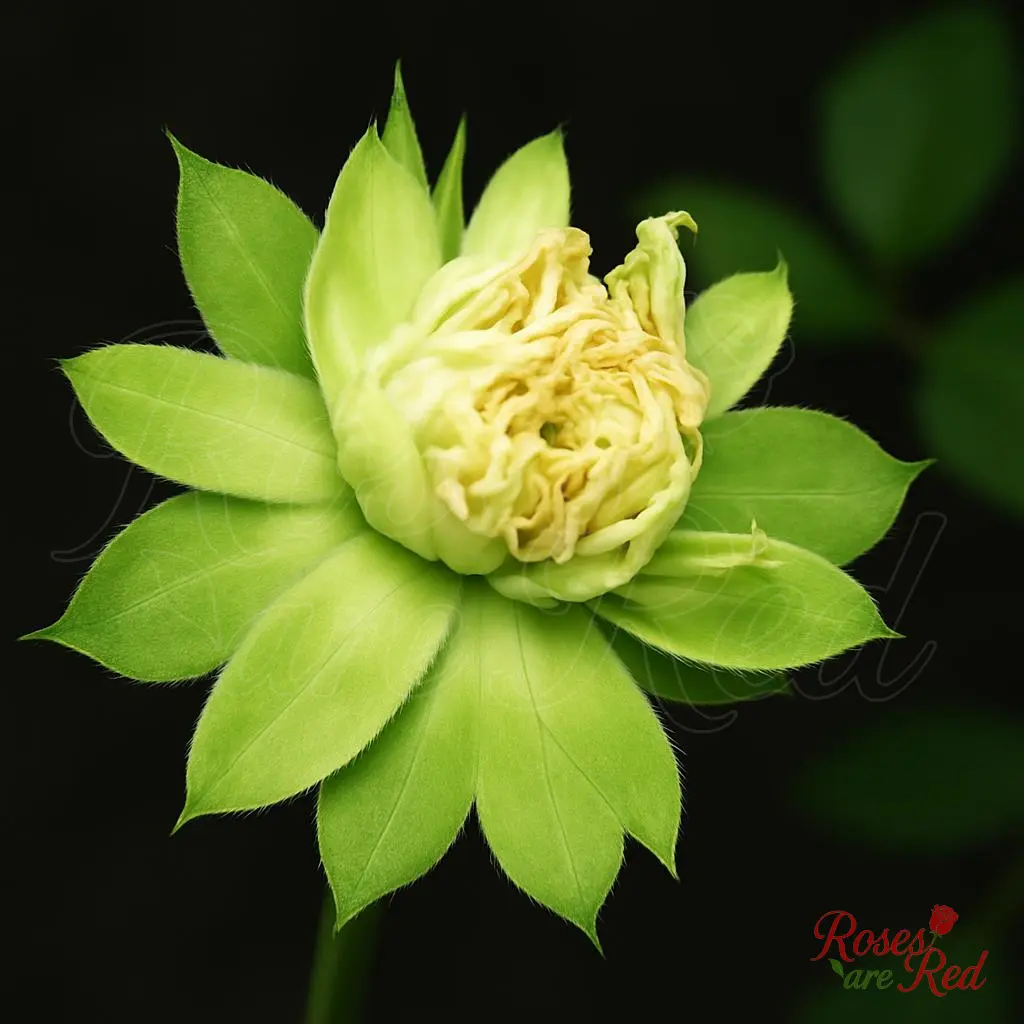
Old Garden Rose, china/bengale "Viridiflora", introduced in 1845, Usually is green in color, semi double bloom shape, blooms 5 - 6 cm in size, has 1-3 buds per stem, continual rebloom, has light fragrance, the bush shape can be bushy, 80 - 100 cm in height, 80 cm in width, suitable for USDA zone 5 from -29°C and above, strong resistance to rain, moderate resistance to black spot, moderate resistance to mildew.
Main characteristics

Aroma

USDA Zone 5
-29°С

Rebloom


Bush Shape

Bloom Shape
Semi double
Size

Height
80 - 100 cm

Width
80 cm

Bloom size
5 - 6 cm

Buds / Stem
1-3

Petal Count
Resistance

Heat

Shade

Rain

Black Spot
Mildew
More information
A green rose in which all floral organs are transformed into photosynthetic structures: the petals, stamens, and pistil are foliar derivatives. The mutation in this rose (from the Old Blush variety) is sufficiently subtle that geneticists have not yet isolated the gene responsible for these traits. The flowers open green, then fade to a copper tone with age, and persist on the plant for many weeks. Shoots are flexible, armed with thorns, and new growth is burgundy. In cold climates with winter dormancy, it is among the first to flower in spring and among the last to cease blooming in autumn.
A green rose bearing expanded sepals in place of petals. Later blooms develop bronze and rust tones and persist for many weeks. Used in floral arrangements. Reaches 1 metre in height. Flowers almost continuously from spring to autumn. Winter hardy and disease resistant, but may fail to bloom after severe pruning. Remove only dead wood and prune lightly to shape. Tolerates poor soils but requires full sun.
In cultivation since about 1743. The shrub is densely branched, compact, and small. In cold regions it is not winter-hardy; in zones 5 and 6 it dies back to the ground. Foliage is bright green and disease resistant.
This cultivar descends from one of the first continuous-flowering Chinese roses, Old Blush. Viridiflora also blooms all summer; the flowers are green with pale pink stripes and spots. The structures resembling petals are perianth leaves, differently colored than typical foliage. With age, the blooms turn wine-red; arrangers use them as a base for bouquets.
A green rose bearing expanded sepals in place of petals. Later blooms develop bronze and rust tones and persist for many weeks. Used in floral arrangements. Reaches 1 metre in height. Flowers almost continuously from spring to autumn. Winter hardy and disease resistant, but may fail to bloom after severe pruning. Remove only dead wood and prune lightly to shape. Tolerates poor soils but requires full sun.
In cultivation since about 1743. The shrub is densely branched, compact, and small. In cold regions it is not winter-hardy; in zones 5 and 6 it dies back to the ground. Foliage is bright green and disease resistant.
This cultivar descends from one of the first continuous-flowering Chinese roses, Old Blush. Viridiflora also blooms all summer; the flowers are green with pale pink stripes and spots. The structures resembling petals are perianth leaves, differently colored than typical foliage. With age, the blooms turn wine-red; arrangers use them as a base for bouquets.
Popular Breeders
Articles