


 Sign in
 Rose Catalog
Violetta, hybrid multiflora

Also known as
Violette
Share
Prices nearby
or to see prices for this rose



















Brief summary
Old Garden Rose, hybrid multiflora "Violetta", France, introduced by Eugène Turbat & Compagnie in 1921, Usually is purple in color, semi double bloom shape, blooms 3 - 4 cm in size, has 5-10 buds per stem, once rebloom, has light fragrance, the bush shape can be arching, 200 - 300 cm in height, 200 cm in width, suitable for USDA zone 6 from -23°C and above, moderate resistance to black spot, moderate resistance to mildew.
Main characteristics

Aroma

USDA Zone 6
-23°С

Rebloom


Bush Shape

Bloom Shape
Semi double
Size

Height
200 - 300 cm

Width
200 cm
Bloom size
3 - 4 cm

Buds / Stem
5-10

Petal Count
Resistance

Heat

Shade

Rain

Black Spot

Mildew
More information
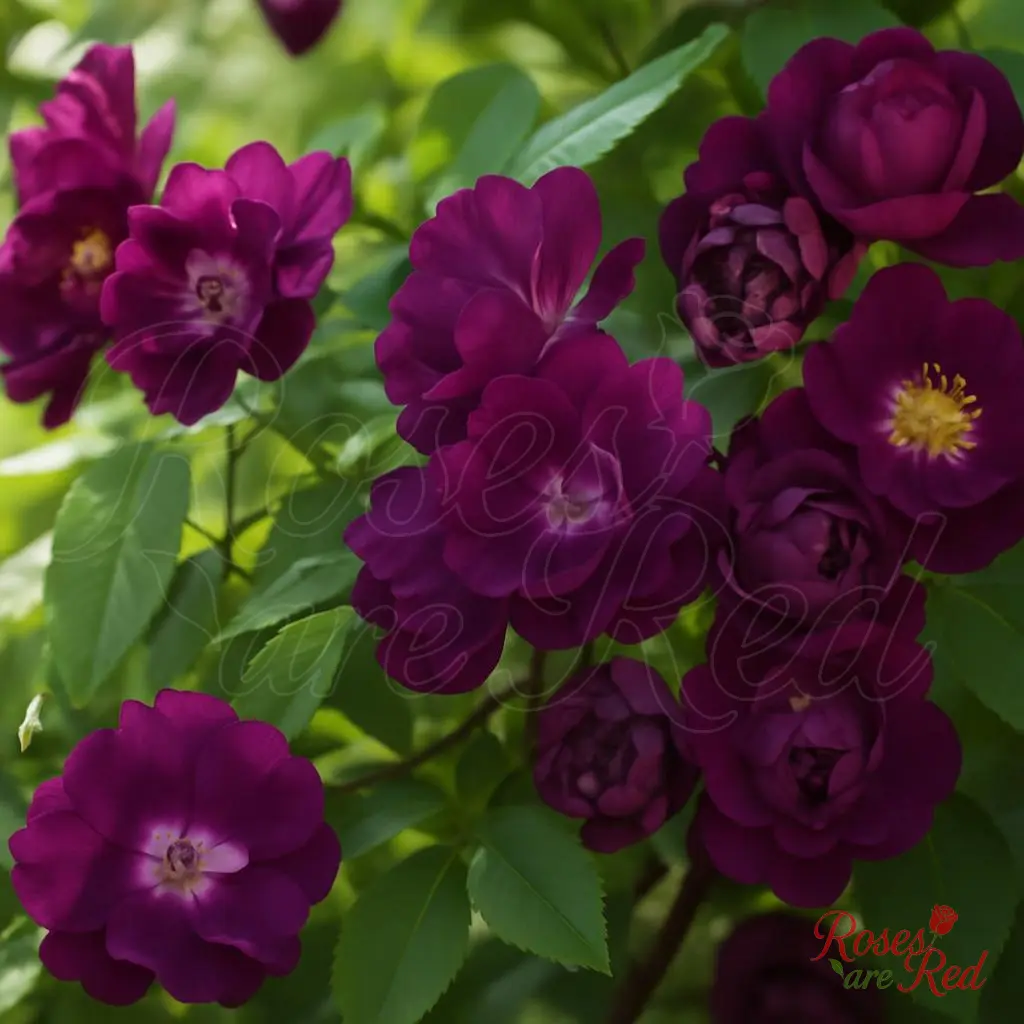
Violette is among the darkest of the “blue” ramblers bred in France and Germany in 1910–1920. The flowers are deep purple with a pale lilac reverse and bright golden stamens. The color difference is evident next to its progenitor Veilchenblau, which appears pink‑purple in comparison with Violette. Flowers are small and borne in dense clusters of 10–30. The foliage is bright green; the shoots are flexible, graceful, and almost thornless. The bush is less vigorous than Veilchenblau. Powdery mildew may occur in late summer.
This rose is noticeably darker, more purple, and less lilac than Veilchenblau, though the very purple petals show a delicate lilac reverse. The flowers are small (3 cm), semi‑marginal, slightly cup‑shaped, with a light musky fragrance. They appear in large clusters of up to 30. Shoots are long, almost thornless; the foliage is pale green. It quickly reaches 4–5 m.
A strong‑growing rambler. The flowers have two rows of dense purple petals and appear in large numbers in early summer. The blooms are single. The variety is strong‑growing; young growth in late summer may suffer slightly from powdery mildew; otherwise no notable issues are mentioned. To obtain more flowers, long shoots should be tied horizontally. A climbing rose suitable for walls and pergolas. The foliage is light green, glossy, and the shoots are almost thornless.
This rose is noticeably darker, more purple, and less lilac than Veilchenblau, though the very purple petals show a delicate lilac reverse. The flowers are small (3 cm), semi‑marginal, slightly cup‑shaped, with a light musky fragrance. They appear in large clusters of up to 30. Shoots are long, almost thornless; the foliage is pale green. It quickly reaches 4–5 m.
A strong‑growing rambler. The flowers have two rows of dense purple petals and appear in large numbers in early summer. The blooms are single. The variety is strong‑growing; young growth in late summer may suffer slightly from powdery mildew; otherwise no notable issues are mentioned. To obtain more flowers, long shoots should be tied horizontally. A climbing rose suitable for walls and pergolas. The foliage is light green, glossy, and the shoots are almost thornless.
Popular Breeders
Articles