

 Sign in
 Rose Catalog
Share
Prices nearby
or to see prices for this rose

















Brief summary
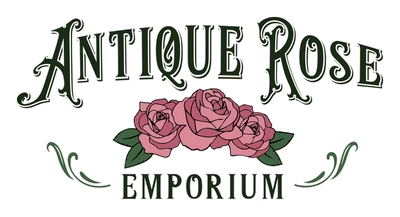
Modern Rose, hybrid tea "Violet's Pride", United States, introduced by Weeks Roses in 2017, Usually is lavender in color, high-center (point) bloom shape, full petal count, blooms 10 - 12 cm in size, has 3-5 buds per stem, repeat rebloom, has rich fragrance, the bush shape can be upright, 100 - 130 cm in height, 60 - 80 cm in width, suitable for USDA zone 6 from -23°C and above, strong resistance to rain, strong resistance to black spot, strong resistance to mildew, good for cutting.
Main characteristics

Aroma

USDA Zone 6
-23°С

Rebloom


Bush Shape

Bloom Shape
High-center (Point)
Size

Height
100 - 130 cm

Width
60 - 80 cm

Bloom size
10 - 12 cm
Buds / Stem
3-5

Petal Count
Full
Resistance

Heat

Shade

Rain

Black Spot
Mildew
More information
Violet’s Pride is a lilac-toned rose cultivar of interest to collectors of such varieties, characterized by a strong, pleasant fragrance, densely petaled blooms carried on sturdy peduncles, abundant flowering, and noted tolerance to rain and common diseases. The variety was named in honor of Lady Violet, Dowager Countess of Grantham, a central character from the television series Downton Abbey. The breeder, inspired by the lavender shades of Lady Violet’s gowns, developed Violet’s Pride with coloring that includes a distinct purple heart on the inner petals. The plant exhibits dense foliage and combines disease resistance with a scent profile that includes subtle grapefruit and broader fruity notes. The name translates as “Violet’s Pride” and references Lady Violet’s association with her garden; the cultivar is described by its prolific bloom. Fragrant buds and flowers, supported by strong stems and peduncles, are suitable for prominent placement in display plantings. The overall presentation focuses on reliable bloom production, rain tolerance, and foliage density together with a fruit-accented perfume. The connection to Downton Abbey and its character naming clarifies the origin of the cultivar’s designation and the inspiration behind its lilac-lavender palette with an emphasized purple center on the inner petals.
Popular Breeders
Articles