

 Sign in
 Rose Catalog
Therese Bugnet, hybrid rugosa
Share
Prices nearby
or to see prices for this rose



















Brief summary
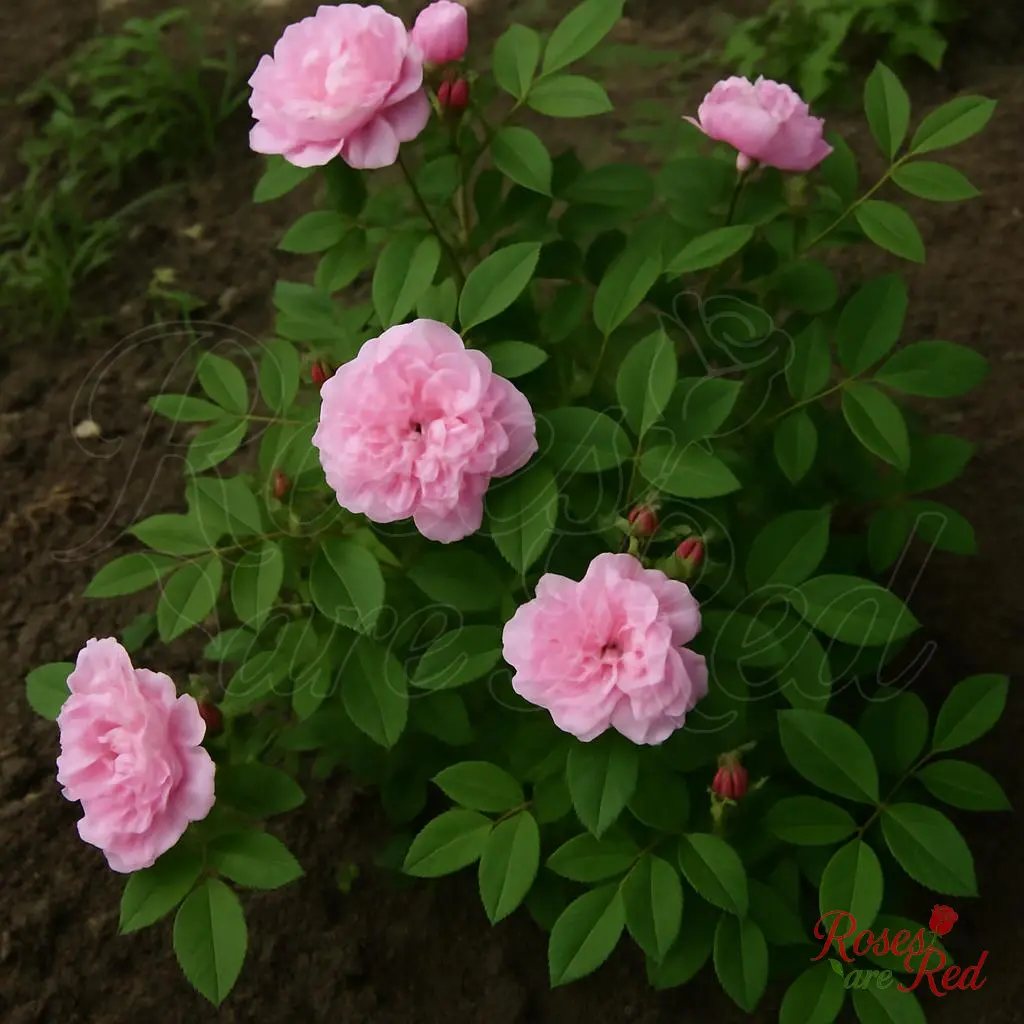
Modern Rose, hybrid rugosa "Therese Bugnet", introduced by Georges Bugnet in 1950, Usually is pink in color, semi double bloom shape, blooms 7 - 8 cm in size, has 3-5 buds per stem, continual rebloom, has rich fragrance, the bush shape can be upright, 150 - 200 cm in height, 100 cm in width, low resistance to rain, strong resistance to black spot, strong resistance to mildew.
Main characteristics

Aroma

Rebloom


Bush Shape

Bloom Shape
Semi double
Size

Height
150 - 200 cm

Width
100 cm

Bloom size
7 - 8 cm

Buds / Stem
3-5

Petal Count
Resistance

Heat

Shade

Rain

Black Spot
Mildew
More information
The writer Georges Bugnet (1879-1981) spent 25 years breeding roses capable of withstanding Alberta’s cold winters; the cultivar Therese Bugnet resulted from this work. The blooms are bright pink, with loosely arranged petals and an old-fashioned form. They appear in large numbers, either singly or in clusters of up to 5, on a bush that has almost no thorns, which is unusual for a hybrid rugosa. It flowers until the first frost, especially if spent blooms are removed. The foliage is bronze in spring and dark yellow in autumn, and the red shoots are notable in winter when the sun shines through them. The variety is very hardy, easy to grow, and also performs well in hot climates.
Therese Bugnet is noted for exceptional winter hardiness and for large, very fragrant flowers that appear in great numbers from early summer to late autumn. When the imposing, fountain-shaped shrub first blooms, few leaves are visible beneath the flowers; later flushes are lighter, but the plant continues to flower throughout the summer. The petals are crinkled, as if made of crepe paper, delicately pink, and slightly tousled. Therese Bugnet provides winter interest with red branch structure and bright red shoots. It roots readily from cuttings.
A bush with a clear silhouette and long shoots can reach 2 m in height; the flowers are large, double, and fragrant, bright crimson at first, later fading to pink. It blooms abundantly and almost continuously throughout the season. Very winter-hardy, and tolerant of poor soils and partial shade.
Bred to endure harsh Canadian winters, it also performs in southern gardens. It forms a large, upright shrub with fragrant pink flowers that later fade to pale pink. Re-bloom is very abundant, especially when spent blooms are removed. The foliage is blue-green. Reported as the first to bloom in one garden. (Oliver)
This is a robust, winter-hardy variety, bred with species roses to increase cold tolerance. The flowers are quite large, consisting of 36 wavy, slightly recurved petals with a delicate texture. They are reddish pink, fading over time, saucer-shaped, with a sweet fragrance. Like most rugosa hybrids, it blooms throughout summer and autumn. The flowers are suitable for cutting. An additional attribute is the almost complete absence of thorns. Requires minimal attention. Reaches medium height; the long, rather smooth leaves are atypical for rugosa.
Therese Bugnet is noted for exceptional winter hardiness and for large, very fragrant flowers that appear in great numbers from early summer to late autumn. When the imposing, fountain-shaped shrub first blooms, few leaves are visible beneath the flowers; later flushes are lighter, but the plant continues to flower throughout the summer. The petals are crinkled, as if made of crepe paper, delicately pink, and slightly tousled. Therese Bugnet provides winter interest with red branch structure and bright red shoots. It roots readily from cuttings.
A bush with a clear silhouette and long shoots can reach 2 m in height; the flowers are large, double, and fragrant, bright crimson at first, later fading to pink. It blooms abundantly and almost continuously throughout the season. Very winter-hardy, and tolerant of poor soils and partial shade.
Bred to endure harsh Canadian winters, it also performs in southern gardens. It forms a large, upright shrub with fragrant pink flowers that later fade to pale pink. Re-bloom is very abundant, especially when spent blooms are removed. The foliage is blue-green. Reported as the first to bloom in one garden. (Oliver)
This is a robust, winter-hardy variety, bred with species roses to increase cold tolerance. The flowers are quite large, consisting of 36 wavy, slightly recurved petals with a delicate texture. They are reddish pink, fading over time, saucer-shaped, with a sweet fragrance. Like most rugosa hybrids, it blooms throughout summer and autumn. The flowers are suitable for cutting. An additional attribute is the almost complete absence of thorns. Requires minimal attention. Reaches medium height; the long, rather smooth leaves are atypical for rugosa.
Popular Breeders
Articles