


 Sign in
 Rose Catalog
Share
Prices nearby
or to see prices for this rose



















Brief summary
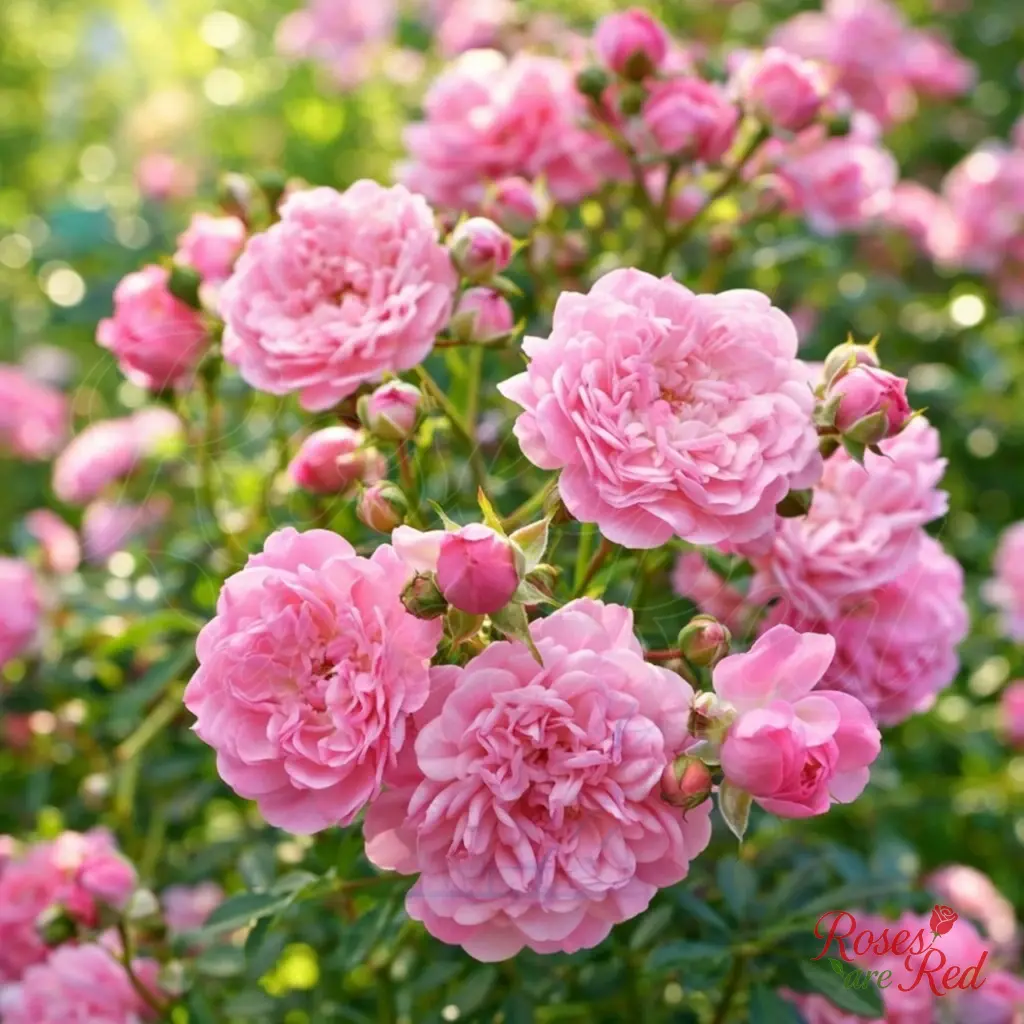
Modern Rose, polyantha "The Fairy", United Kingdom, introduced by Bentall in 1932, Usually is pink in color, flat bloom shape, double petal count, blooms 3 - 4 cm in size, has 5-10 buds per stem, continual rebloom, has light fragrance, the bush shape can be arching, 60 - 75 cm in height, 125 - 120 cm in width, suitable for USDA zone 6 from -23°C and above, strong resistance to shade, moderate resistance to rain, strong resistance to black spot, strong resistance to mildew, thornless or has nearly no thorns.
Main characteristics

Aroma

USDA Zone 6
-23°С

Rebloom


Bush Shape

Bloom Shape
Flat
Size

Height
60 - 75 cm

Width
125 - 120 cm

Bloom size
3 - 4 cm

Buds / Stem
5-10

Petal Count
Double
Resistance

Heat

Shade

Rain

Black Spot

Mildew
More information
The Fairy has been described as the world’s most popular and most widely distributed polyanthus rose, and it is easy to cultivate. The flowers are pink, fading to pale pink and sometimes almost white (the colour holds best in cool weather). They appear in long, airy sprays of 10–40 blooms. Flowering starts quite late, but continues almost without interruption until late autumn. Small orange hips sometimes follow the flowers. The foliage is pale; the bush is spreading and broadens laterally with age. Susceptible to black spot and powdery mildew in wet weather, though growth vigour is not reduced. Cuttings root well and quickly, and it is sometimes used for hedging by inserting cuttings directly where the rose is to be planted. Used as a groundcover and landscape rose, and also suited to patio and mixed-border planting.
This rose blooms in masses of small double flowers. The pink blooms with a light fragrance are suitable for cutting. The foliage is small, bright green, and shiny. The bush is spreading, branched, up to 70 cm high and up to 1.2 m wide. It flowers very abundantly. Flowering begins later than in most roses. Tolerates poor soils and semi-shade.
Since its introduction, The Fairy has become widely grown around the world. This easy-to-grow small polyanthus rose rarely exceeds 1 metre in height and width, so the bush remains compact. The sprays of pink blooms are very long-lasting and slowly fade to pale pink or white. Flowers continue until the first frost. Tolerates semi-shade, but disease resistance is slightly reduced and the bush becomes more elongated there. To maintain shape, cut back in early spring and after the first flowering.
Known for compact bush growth and an abundance of semi-double pale pink flowers. They are borne in clusters above glossy, clean green foliage. The variety blooms later than usual and in waves, with flowers present almost continuously. It can be grown without pruning as a shrub, groundcover, or border rose, and with regular pruning as a low shrub or as a weeping standard. Very resistant to powdery mildew, but occasionally affected by black spot.
Although this rose blooms later than most others, it flowers for weeks without interruption. The blooms are rosette-shaped, formed by rows of tiny petals, and appear in airy clusters across the bush. During the rare intervals without flowers, the plant forms a cushion of small bright green leaves. Suitable for a low hedge, the foreground of a border, or container planting. No noticeable fragrance. With pruning, it remains relatively low; if left uncut, it forms a small shrub. Suitable as a weeping standard.
This rose blooms in masses of small double flowers. The pink blooms with a light fragrance are suitable for cutting. The foliage is small, bright green, and shiny. The bush is spreading, branched, up to 70 cm high and up to 1.2 m wide. It flowers very abundantly. Flowering begins later than in most roses. Tolerates poor soils and semi-shade.
Since its introduction, The Fairy has become widely grown around the world. This easy-to-grow small polyanthus rose rarely exceeds 1 metre in height and width, so the bush remains compact. The sprays of pink blooms are very long-lasting and slowly fade to pale pink or white. Flowers continue until the first frost. Tolerates semi-shade, but disease resistance is slightly reduced and the bush becomes more elongated there. To maintain shape, cut back in early spring and after the first flowering.
Known for compact bush growth and an abundance of semi-double pale pink flowers. They are borne in clusters above glossy, clean green foliage. The variety blooms later than usual and in waves, with flowers present almost continuously. It can be grown without pruning as a shrub, groundcover, or border rose, and with regular pruning as a low shrub or as a weeping standard. Very resistant to powdery mildew, but occasionally affected by black spot.
Although this rose blooms later than most others, it flowers for weeks without interruption. The blooms are rosette-shaped, formed by rows of tiny petals, and appear in airy clusters across the bush. During the rare intervals without flowers, the plant forms a cushion of small bright green leaves. Suitable for a low hedge, the foreground of a border, or container planting. No noticeable fragrance. With pruning, it remains relatively low; if left uncut, it forms a small shrub. Suitable as a weeping standard.
Popular Breeders
Articles