


 Sign in
 Rose Catalog
Tausendschon, hybrid multiflora

Also known as
Beauty Thousand
Thousand Beauties
Share
Prices nearby
or to see prices for this rose



















Brief summary
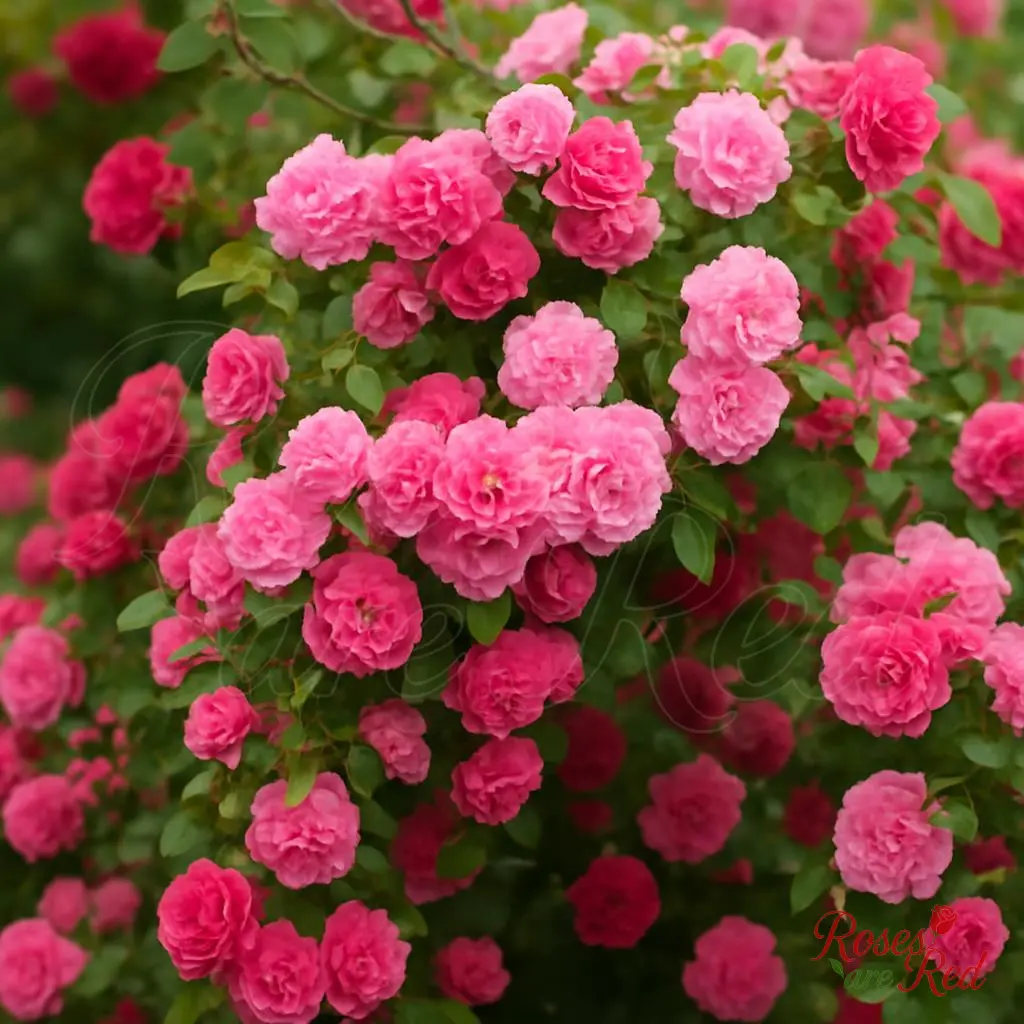
Old Garden Rose, hybrid multiflora "Tausendschon", Germany, introduced by Hermann Kiese in 1906, Usually is pink in color, flat bloom shape, blooms 6 - 7 cm in size, has 5-10 buds per stem, once rebloom, has light fragrance, the bush shape can be arching, 400 - 500 cm in height, 300 cm in width, suitable for USDA zone 5 from -29°C and above, strong resistance to black spot, strong resistance to mildew.
Main characteristics

Aroma

USDA Zone 5
-29°С

Rebloom


Bush Shape

Bloom Shape
Flat
Size

Height
400 - 500 cm

Width
300 cm

Bloom size
6 - 7 cm

Buds / Stem
5-10

Petal Count
Resistance

Heat

Shade

Rain

Black Spot

Mildew
More information
Tausendschon is winter-hardy, thornless, disease-resistant, and blooms very abundantly. The cultivar’s name reflects its color-shifting flowers in white, pale pink, salmon-pink, and cream. The blooms open a dense pink, then fade to pale pink, while the central petals remain cream. Flowers are double, with wavy petals, and appear in large clusters at the ends of long shoots (20-40 pieces). The leaves are soft green, shading the flowers, and the flexible shoots are easy to guide on a support.
Bred by Kiese, Tausendschon is among the most winter-hardy of the variegated roses and is widely distributed worldwide. The flowers are medium-sized (6 cm), double, with wavy petals. The name “thousand beauties” refers to the color range: shades of white, pale pink, warm pink, and cream. When they first open, the blooms are dark pink, fading to pale pink, while the centers open cream and retain this shade for a long time. Flowers appear in large clusters at the ends of strong shoots, 20-40 per cluster, with a light musk scent. The foliage is tender-green, disease-resistant, shading the softly colored blooms, and the smooth shoots bend well and are easy to guide. The bush reaches 3-4m.
Bred by Kiese, Tausendschon is among the most winter-hardy of the variegated roses and is widely distributed worldwide. The flowers are medium-sized (6 cm), double, with wavy petals. The name “thousand beauties” refers to the color range: shades of white, pale pink, warm pink, and cream. When they first open, the blooms are dark pink, fading to pale pink, while the centers open cream and retain this shade for a long time. Flowers appear in large clusters at the ends of strong shoots, 20-40 per cluster, with a light musk scent. The foliage is tender-green, disease-resistant, shading the softly colored blooms, and the smooth shoots bend well and are easy to guide. The bush reaches 3-4m.
Popular Breeders
Articles