


 Sign in
 Rose Catalog
Share
Prices nearby
or to see prices for this rose



















Brief summary
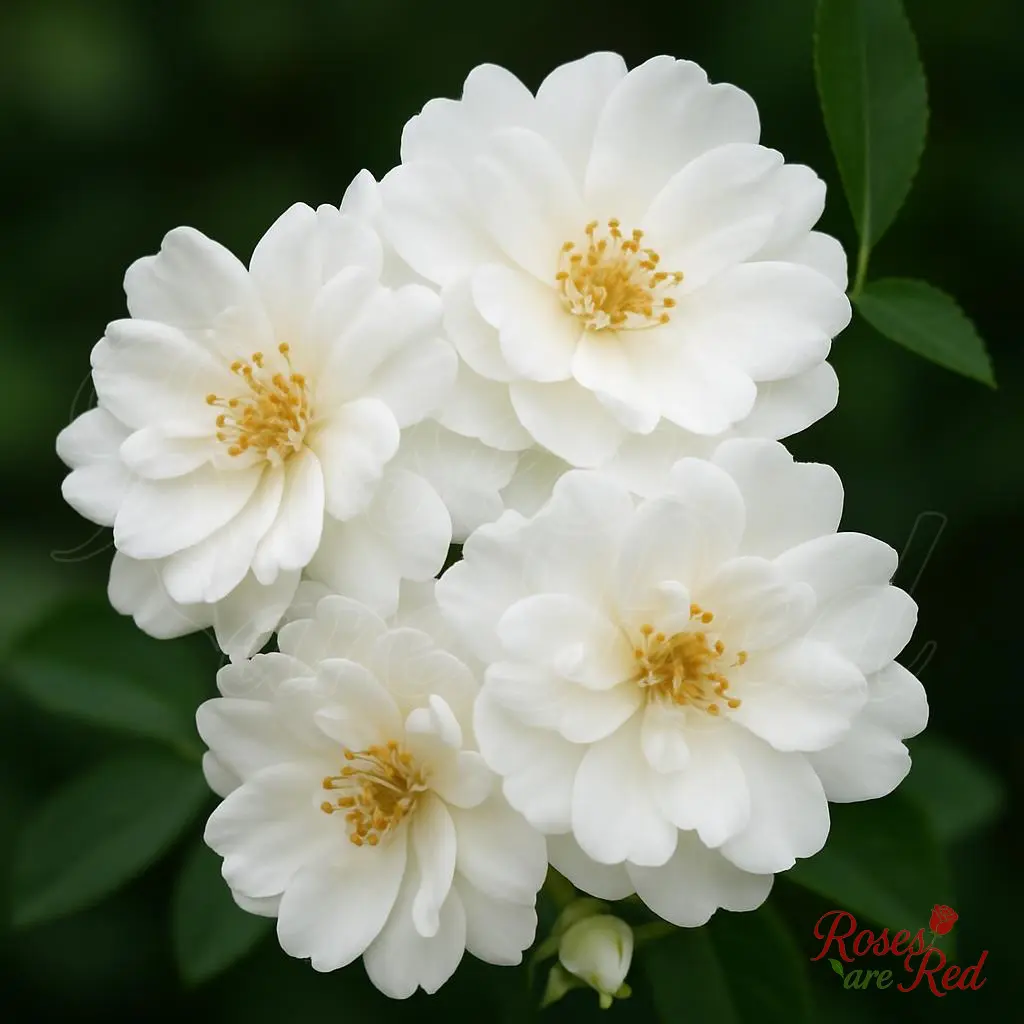
Modern Rose, climber "Snow Goose", United Kingdom, introduced by David C. H. Austin in 1997, Usually is white in color, flat bloom shape, double petal count, blooms 4 - 5 cm in size, has 5-10 buds per stem, repeat rebloom, has light fragrance, the bush shape can be climbing, arching, 200 - 250 cm in height, 150 cm in width, suitable for USDA zone 6 from -23°C and above, moderate resistance to black spot, moderate resistance to mildew.
Main characteristics

Aroma

USDA Zone 6
-23°С

Rebloom


Bush Shape


Bloom Shape
Flat
Size

Height
200 - 250 cm

Width
150 cm

Bloom size
4 - 5 cm

Buds / Stem
5-10

Petal Count
Double
Resistance

Heat

Shade

Rain

Black Spot

Mildew
More information
This cultivar resembles Fransine Austin, bearing small white blooms in large, pom-pom-like clusters. Snow Goose, however, differs slightly in having denser clusters, and its white flowers have petals of varying lengths, reminiscent of daisies. As with Fransine Austin, it does not, strictly speaking, belong to English Roses, and is more accurately classified as a repeat-flowering rambler. It also behaves more as a climbing rose than as a shrub. The plant is vigorous, shows disease resistance, and can reach up to 3 metres. Can be used as ground cover; in bloom the bush is densely covered with white flowers.
The origin of this pleached rose is unknown, but the cultivar closely resembles Fransine Austin, an Alister Stella Gray hybrid Noisette rose. Snow Goose bears creamy white flowers that quickly fade to pure white, with many narrow petals. They appear in clusters of 5–20, and it flowers very abundantly, almost continuously in hot climates. The foliage is small, dark green, glossy, and disease resistant. There are few thorns; the bush is branched. It is suitable for training on an obelisk, with flowering from top to ground level. In hot climates it can reach up to 5 metres.
The origin of this pleached rose is unknown, but the cultivar closely resembles Fransine Austin, an Alister Stella Gray hybrid Noisette rose. Snow Goose bears creamy white flowers that quickly fade to pure white, with many narrow petals. They appear in clusters of 5–20, and it flowers very abundantly, almost continuously in hot climates. The foliage is small, dark green, glossy, and disease resistant. There are few thorns; the bush is branched. It is suitable for training on an obelisk, with flowering from top to ground level. In hot climates it can reach up to 5 metres.
Popular Breeders
Articles