


 Sign in
 Rose Catalog
Schneewittchen, floribunda

Registration name
KORbin
Also known as
Iceberg
Fee des Neiges
Sneeuwwitje
Fée des Neiges
Share
Prices nearby
or to see prices for this rose



















Brief summary
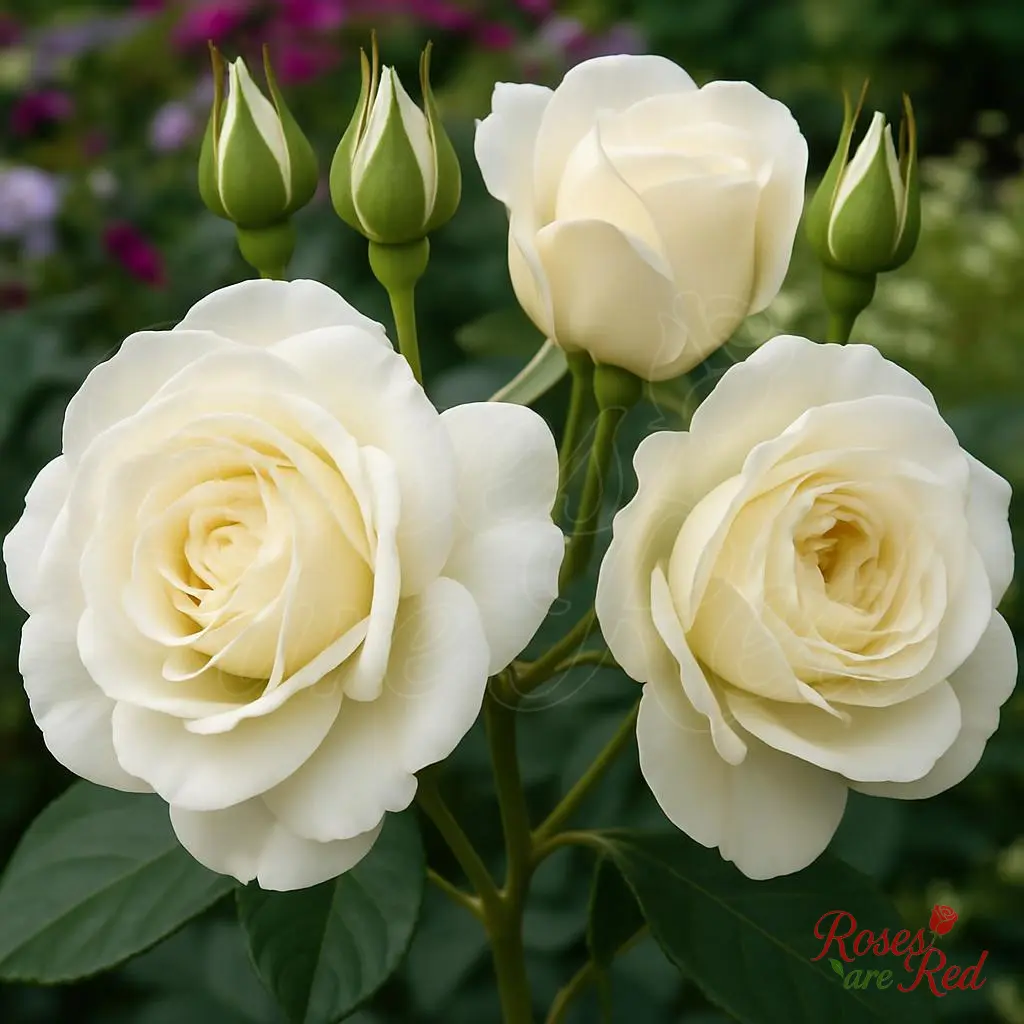
Modern Rose, floribunda "Schneewittchen", Germany, introduced by Kordes Rosen in 1958, Usually is white in color, semi double bloom shape, double petal count, blooms 6 - 7 cm in size, has 3-5 buds per stem, repeat rebloom, has light fragrance, the bush shape can be bushy, upright, 100 - 150 cm in height, 100 cm in width, suitable for USDA zone 5 from -29°C and above, strong resistance to shade, moderate resistance to rain, strong resistance to black spot, strong resistance to mildew, good for cutting.
Main characteristics

Aroma

USDA Zone 5
-29°С

Rebloom


Bush Shape


Bloom Shape
Semi double
Size

Height
100 - 150 cm

Width
100 cm

Bloom size
6 - 7 cm

Buds / Stem
3-5

Petal Count
Double
Resistance

Heat

Shade

Rain

Black Spot

Mildew
More information
Schneewittchen is among the most popular and widely distributed roses worldwide. In Britain, Australia, and the USA it is known as Iceberg. This cultivar is classified as a floribunda, though it originates from a cross between a Hybrid Tea and a Hybrid Musk. It is very hardy and free-flowering, with potential to bloom for up to 12 months a year in hot climates. The buds are elongated, sometimes greenish or pink, opening to semi-double, pure white blooms that may show a slight pink tint in cold weather. The flowers are long-lasting both on the plant and when cut, with stamens keeping their yellow color for many days. Blooms appear in quantity in loose clusters of about 3–15 and the plant self-cleans well. The shrub is branching and vigorous, with pale green shoots and pale, glossy foliage. In hot climates it can reach 2 m, though it is commonly pruned to about half that height. Black spot can be an issue in wet weather; in dry climates Schneewittchen is regarded as disease resistant. Widely used for hedges, mass plantings, and mixed plantings.
It blooms continuously and very profusely. It tolerates rain, and the flowers persist for a long time. It shows high disease resistance. Fragrance is minimal to absent. Also available as a pleached sport.
Buds are small and light green, opening into 6 cm flowers, smaller in heat. The flowers are semi-double, flat, and without scent. The blooms are carried in large inflorescences, flowering over several weeks and producing numerous white flowers during this period. Mature plants form large shrubs with a uniform, rounded crown. The foliage is light green, glossy, and somewhat sparse. It is susceptible to powdery mildew.
This is a widely known white floribunda, flowering very profusely with clusters along the length of the shoots; some sources describe the flowers as fragrant. Elegant buds open into semi-double white blooms that can take on a slight pink cast with age, especially in autumn. The shrub is erect, with large, shiny leaves. It is very winter-hardy and robust. It can develop black spot or powdery mildew if planted too close to other plants.
Iceberg has been grown for over 40 years, and this floribunda remains widely cultivated. The blooms are double, about 7 cm in diameter; initially goblet-shaped, later cup-shaped. They are usually snow-white, though a pink tinge may appear in cold conditions. It begins flowering in early summer and continues until the first frost. The foliage is glossy, light green. The shrub is upright, branched, and fairly rounded. Used as a specimen and in mixed borders. Flowers last well when cut. It is generally disease resistant, although black spot and powdery mildew may occur.
It blooms continuously and very profusely. It tolerates rain, and the flowers persist for a long time. It shows high disease resistance. Fragrance is minimal to absent. Also available as a pleached sport.
Buds are small and light green, opening into 6 cm flowers, smaller in heat. The flowers are semi-double, flat, and without scent. The blooms are carried in large inflorescences, flowering over several weeks and producing numerous white flowers during this period. Mature plants form large shrubs with a uniform, rounded crown. The foliage is light green, glossy, and somewhat sparse. It is susceptible to powdery mildew.
This is a widely known white floribunda, flowering very profusely with clusters along the length of the shoots; some sources describe the flowers as fragrant. Elegant buds open into semi-double white blooms that can take on a slight pink cast with age, especially in autumn. The shrub is erect, with large, shiny leaves. It is very winter-hardy and robust. It can develop black spot or powdery mildew if planted too close to other plants.
Iceberg has been grown for over 40 years, and this floribunda remains widely cultivated. The blooms are double, about 7 cm in diameter; initially goblet-shaped, later cup-shaped. They are usually snow-white, though a pink tinge may appear in cold conditions. It begins flowering in early summer and continues until the first frost. The foliage is glossy, light green. The shrub is upright, branched, and fairly rounded. Used as a specimen and in mixed borders. Flowers last well when cut. It is generally disease resistant, although black spot and powdery mildew may occur.
Popular Breeders
Articles