


 Sign in
 Rose Catalog
Share
Prices nearby
or to see prices for this rose



















Brief summary
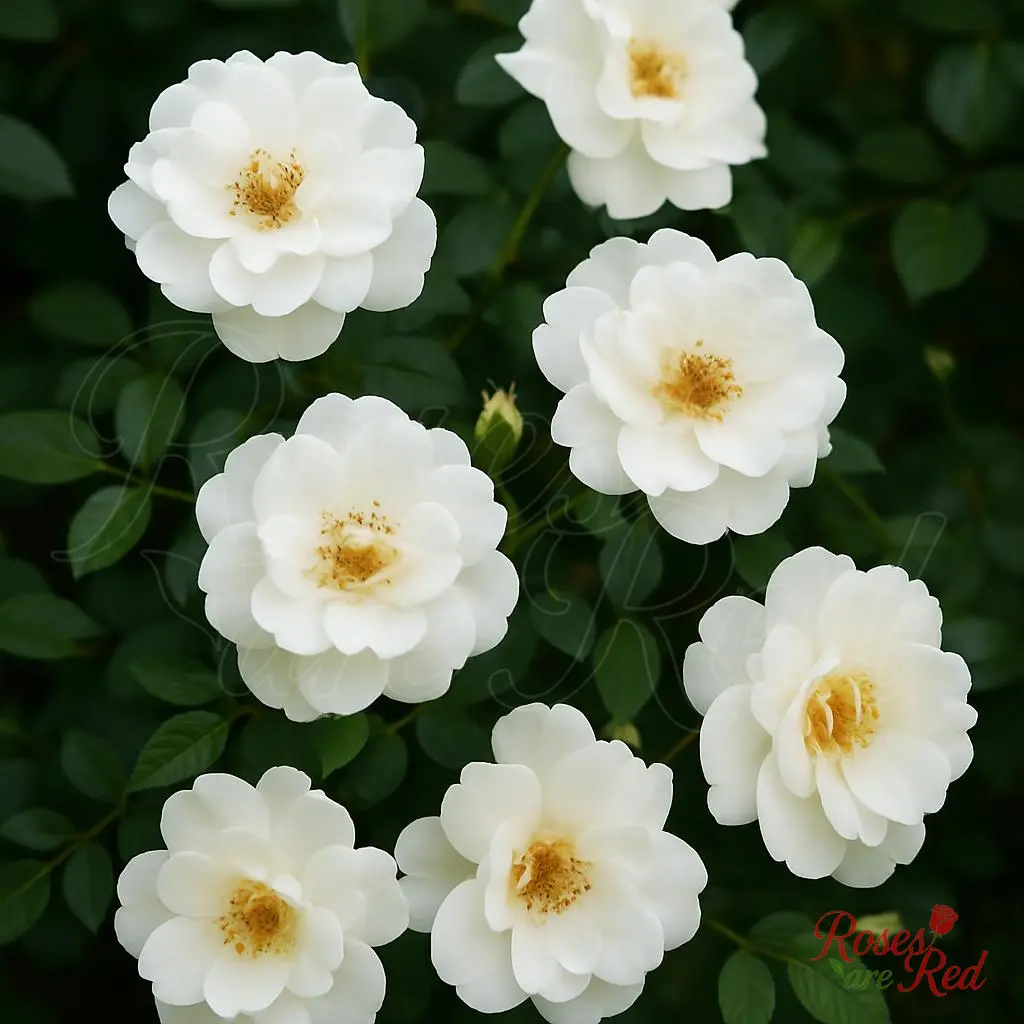
Modern Rose, hybrid wichurana "Sander’s White Rambler", United Kingdom, introduced by Sander in 1912, Usually is white in color, flat bloom shape, blooms 3 - 4 cm in size, has 5-10 buds per stem, once rebloom, has rich fragrance, the bush shape can be arching, 300 - 400 cm in height, 300 cm in width, suitable for USDA zone 5 from -29°C and above, strong resistance to rain, moderate resistance to black spot, moderate resistance to mildew.
Main characteristics

Aroma

USDA Zone 5
-29°С

Rebloom


Bush Shape

Bloom Shape
Flat
Size

Height
300 - 400 cm

Width
300 cm

Bloom size
3 - 4 cm

Buds / Stem
5-10

Petal Count
Resistance

Heat

Shade

Rain

Black Spot

Mildew
More information
Sander’s White Rambler is a Wichurana hybrid of the Dorothy Perkins type. Long, slender, well-formed clusters stand out against abundant dark foliage. The flowers are flat, closely packed, forming rosette-like blooms. It tolerates rain well and has a strong fragrance. A cluster typically carries 10–20 flowers. The plant is vigorous, straightforward to grow and prune, producing many basal shoots each year. Suitable for training as a weeping standard.
Blooms profusely in large clusters of small flowers at a time when most roses have already finished. The fragrance is fresh and fruity. Introduced in 1912 and widely cultivated since.
The only white Wichurana hybrid. The flowers are small, nodding, fragrant, and very rarely turn brown in rain. The foliage is glossy, bright green. The shoots are very flexible, and the plant reaches 4 m. Suitable for arches and obelisks.
A strong-growing, spreading shrub with abundant white, rosette-shaped flowers and a sweet fragrance. The foliage is bright green; it reaches 3.5 m in height and 2.5 m in width. Flowering is continuous from late summer onward. Performs well on a trellis. Tolerates poor soils and semi-shade.
Peak bloom occurs in early July, when it is covered with semi-double white flowers with a light fruity fragrance. It reblooms a few weeks later. The long, slender shoots reach up to 4 m. Without support, the shoots sprawl. The leaves are well shaped, usually with 7 leaflets, shiny, bright green, and disease-free.
Blooms profusely in large clusters of small flowers at a time when most roses have already finished. The fragrance is fresh and fruity. Introduced in 1912 and widely cultivated since.
The only white Wichurana hybrid. The flowers are small, nodding, fragrant, and very rarely turn brown in rain. The foliage is glossy, bright green. The shoots are very flexible, and the plant reaches 4 m. Suitable for arches and obelisks.
A strong-growing, spreading shrub with abundant white, rosette-shaped flowers and a sweet fragrance. The foliage is bright green; it reaches 3.5 m in height and 2.5 m in width. Flowering is continuous from late summer onward. Performs well on a trellis. Tolerates poor soils and semi-shade.
Peak bloom occurs in early July, when it is covered with semi-double white flowers with a light fruity fragrance. It reblooms a few weeks later. The long, slender shoots reach up to 4 m. Without support, the shoots sprawl. The leaves are well shaped, usually with 7 leaflets, shiny, bright green, and disease-free.
Popular Breeders
Articles