

 Sign in
 Rose Catalog
Robin Hood, hybrid musk

Also known as
Robin des Bois
Share
Prices nearby
or to see prices for this rose


















Brief summary
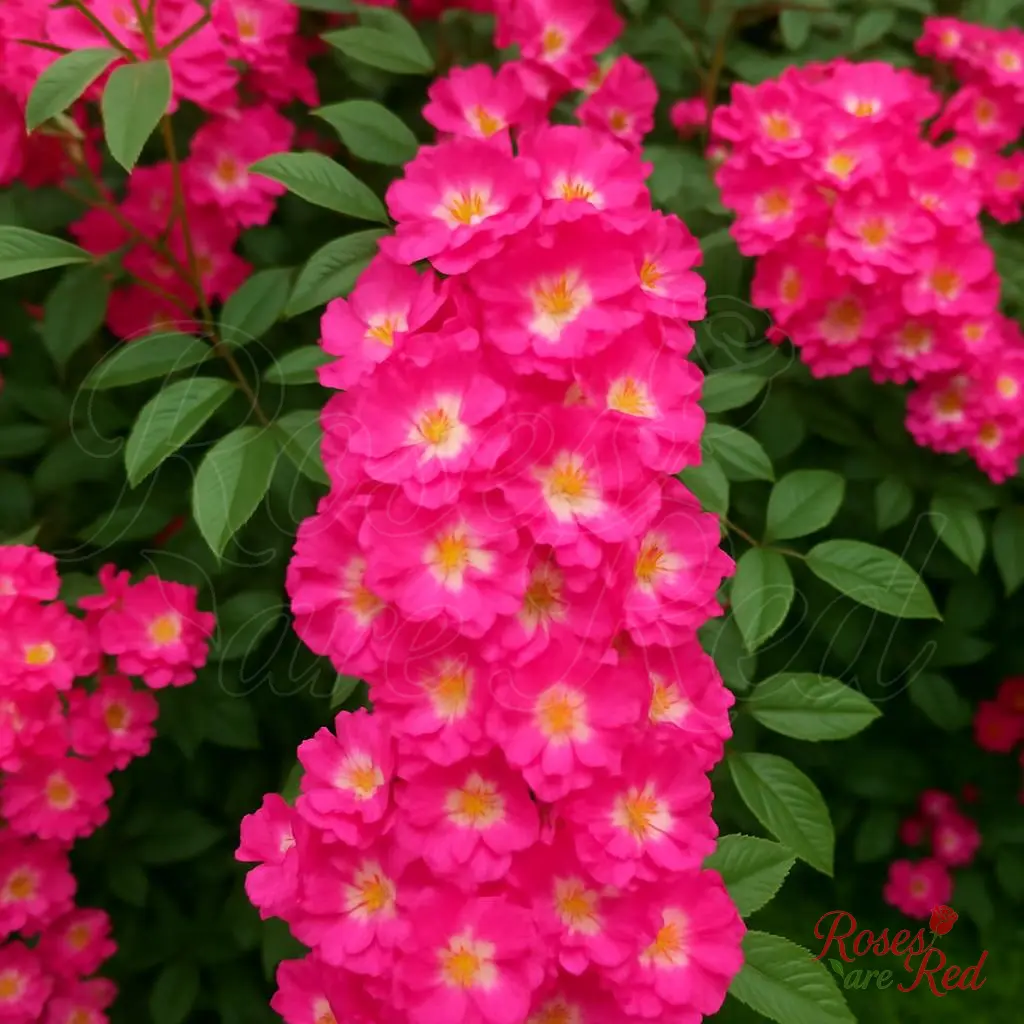
Modern Rose, hybrid musk "Robin Hood", United Kingdom, introduced by Joseph Hardwick Pemberton in 1927, Usually is crimson in color, flat bloom shape, blooms 2 - 3 cm in size, has 5-10 buds per stem, repeat rebloom, has light fragrance, the bush shape can be spreading, 130 - 150 cm in height, 120 cm in width, suitable for USDA zone 6 from -23°C and above, moderate resistance to rain, moderate resistance to black spot, moderate resistance to mildew.
Main characteristics

Aroma

USDA Zone 6
-23°С

Rebloom


Bush Shape

Bloom Shape
Flat
Size
Height
130 - 150 cm

Width
120 cm
Bloom size
2 - 3 cm
Buds / Stem
5-10

Petal Count
Resistance

Heat

Shade

Rain

Black Spot
Mildew
More information
Unlike many musk roses, Pemberton raised ‘Robin Hood’ from a polyantha rose. Although the blooms are very small, they compensate by appearing in large trusses throughout the season. Individual flowers vary: some are single, others semi-double. All are crimson or cherry with a white center and numerous white streaks on the petals. A cluster of golden stamens sits in the center, turning brown quickly. The clusters are dense, often resembling crimson balls. Foliage is dark green. The shrub is quite prickly, vigorous, and shows disease resistance. Shoots often arch under the weight of the flowers. The cultivar became a parent of a whole line of musk roses and floribundas, winter-hardy in continental Europe.
Blooming for several months, it bears slightly wavy, shallowly cupped flowers 2–3 cm in diameter. Individual blooms are tiny, cherry red or reddish pink, with a white eye and a tuft of yellow stamens. They form large, elongated clusters. Flowering continues until frost. The bush is fountain-shaped, moderately prickly, with fine dark-green foliage, dense and rounded in outline. Reaches 120–150 cm in height and width. Tolerates partial shade. Shows disease resistance.
The bush is low, about 90 cm tall, well-branched, and blooms in large clusters of small, semi-double, pink-red flowers with a white center.
Produces clusters of small cherry-pink flowers that darken with age. The bush is compact and vigorous. Blooms for a long period and in quantity. Resistant to diseases and adverse weather.
Blooming for several months, it bears slightly wavy, shallowly cupped flowers 2–3 cm in diameter. Individual blooms are tiny, cherry red or reddish pink, with a white eye and a tuft of yellow stamens. They form large, elongated clusters. Flowering continues until frost. The bush is fountain-shaped, moderately prickly, with fine dark-green foliage, dense and rounded in outline. Reaches 120–150 cm in height and width. Tolerates partial shade. Shows disease resistance.
The bush is low, about 90 cm tall, well-branched, and blooms in large clusters of small, semi-double, pink-red flowers with a white center.
Produces clusters of small cherry-pink flowers that darken with age. The bush is compact and vigorous. Blooms for a long period and in quantity. Resistant to diseases and adverse weather.
Popular Breeders
Articles