

 Sign in
 Rose Catalog
Phyllis Bide, hybrid wichurana

Bide (Bide), 1923
Share
Prices nearby
or to see prices for this rose


















Brief summary
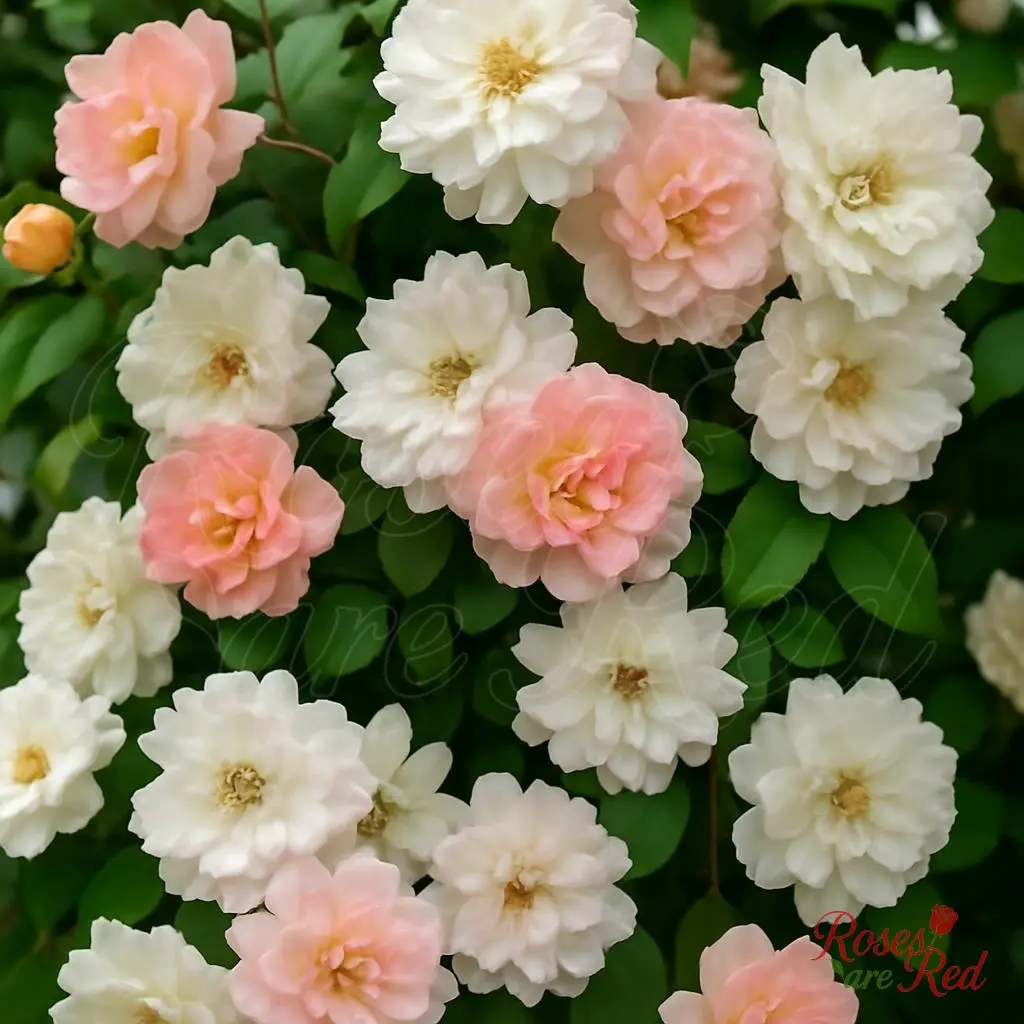
Modern Rose, hybrid wichurana "Phyllis Bide", United Kingdom, introduced by Bide in 1923, Usually is peach in color, semi double bloom shape, blooms 4 - 5 cm in size, has 5-10 buds per stem, repeat rebloom, has light fragrance, the bush shape can be bushy, 200 - 300 cm in height, 200 cm in width, suitable for USDA zone 6 from -23°C and above, moderate resistance to black spot, moderate resistance to mildew.
Main characteristics

Aroma

USDA Zone 6
-23°С

Rebloom


Bush Shape

Bloom Shape
Semi double
Size
Height
200 - 300 cm
Width
200 cm
Bloom size
4 - 5 cm
Buds / Stem
5-10

Petal Count
Resistance

Heat

Shade

Rain

Black Spot
Mildew
More information
Vigorous variety. At bud stage and just opening, the flowers can resemble miniature Hybrid Teas, showing a blend of gold, orange, apricot, and red. Blooming is abundant, in clusters of 5–30. Fully open blooms are flat with wavy petals; the color bleaches to dirty white, and in heat this shift can be almost immediate, so color holds better in cooler weather and in autumn. Flowering is nearly continuous. Foliage is small and dark. The bush is branched and not very tall.
This repeat-flowering Multiflora hybrid shows pink, salmon, and gold tones, associated with its affinity to Gloire de Dijon. Long, loose clusters of small flowers (3 cm) are produced in quantity. The blooms are tightly clustered, lightly scented, opening pale golden with a pink bloom, but they bleach quickly, especially in full sun; stamens turn from golden to brown rapidly. The first flush is very abundant, and the plant remains in flower until early winter. Flexible shoots reach 2 m, extending to about 4 m when trained on an arch or wall. Foliage is fine, tidy, and disease-resistant.
Phyllis Bide is listed by the American Society of Rose Growers as a polyanthus plianthus rose, while other sources list it as a Multiflora hybrid. It is a variegated polyanthus-type rose. Elongated yellow buds open to small, semi-double, cup-shaped blooms about 5 cm across, initially pale yellow, then fading to cream with a slight peach tint. They appear in large, airy clusters. The bush is branched with arching canes. Flowering is prolonged, with repeat waves through summer.
With Chinese roses in its parentage, it flowers continuously through summer. The small, semi-double, cup-shaped blooms, a mix of yellow, cream, and pink that becomes more evident with age, are carried in large, drooping clusters on flexible, almost thornless shoots that can be guided easily over supports. Foliage is light green and fine-textured.
This cultivar shows several unusual traits, including non-stop blooming through summer and autumn, a feature uncommon for a variegated rose at the time of its introduction. Buds are conical, arising in broad clusters on short shoots, and open to modest-sized rosette blooms combining salmon-pink and yellow tones. Fragrance is light. Inflorescences are neatly arranged on the plant. The shrub is branched, vigorous, with flexible arching canes. Suitable for fences, pillars, and arches; can also be trained along a wall and used as a weeping standard. Reaches medium height; shoots can be shortened to grow it on a low obelisk. Foliage is abundant, fine, narrow, and glossy.
This repeat-flowering Multiflora hybrid shows pink, salmon, and gold tones, associated with its affinity to Gloire de Dijon. Long, loose clusters of small flowers (3 cm) are produced in quantity. The blooms are tightly clustered, lightly scented, opening pale golden with a pink bloom, but they bleach quickly, especially in full sun; stamens turn from golden to brown rapidly. The first flush is very abundant, and the plant remains in flower until early winter. Flexible shoots reach 2 m, extending to about 4 m when trained on an arch or wall. Foliage is fine, tidy, and disease-resistant.
Phyllis Bide is listed by the American Society of Rose Growers as a polyanthus plianthus rose, while other sources list it as a Multiflora hybrid. It is a variegated polyanthus-type rose. Elongated yellow buds open to small, semi-double, cup-shaped blooms about 5 cm across, initially pale yellow, then fading to cream with a slight peach tint. They appear in large, airy clusters. The bush is branched with arching canes. Flowering is prolonged, with repeat waves through summer.
With Chinese roses in its parentage, it flowers continuously through summer. The small, semi-double, cup-shaped blooms, a mix of yellow, cream, and pink that becomes more evident with age, are carried in large, drooping clusters on flexible, almost thornless shoots that can be guided easily over supports. Foliage is light green and fine-textured.
This cultivar shows several unusual traits, including non-stop blooming through summer and autumn, a feature uncommon for a variegated rose at the time of its introduction. Buds are conical, arising in broad clusters on short shoots, and open to modest-sized rosette blooms combining salmon-pink and yellow tones. Fragrance is light. Inflorescences are neatly arranged on the plant. The shrub is branched, vigorous, with flexible arching canes. Suitable for fences, pillars, and arches; can also be trained along a wall and used as a weeping standard. Reaches medium height; shoots can be shortened to grow it on a low obelisk. Foliage is abundant, fine, narrow, and glossy.
Popular Breeders
Articles