


 Sign in
 Rose Catalog
Paul’s Himalayan Musk, rambler

Share
Prices nearby
or to see prices for this rose



















Brief summary
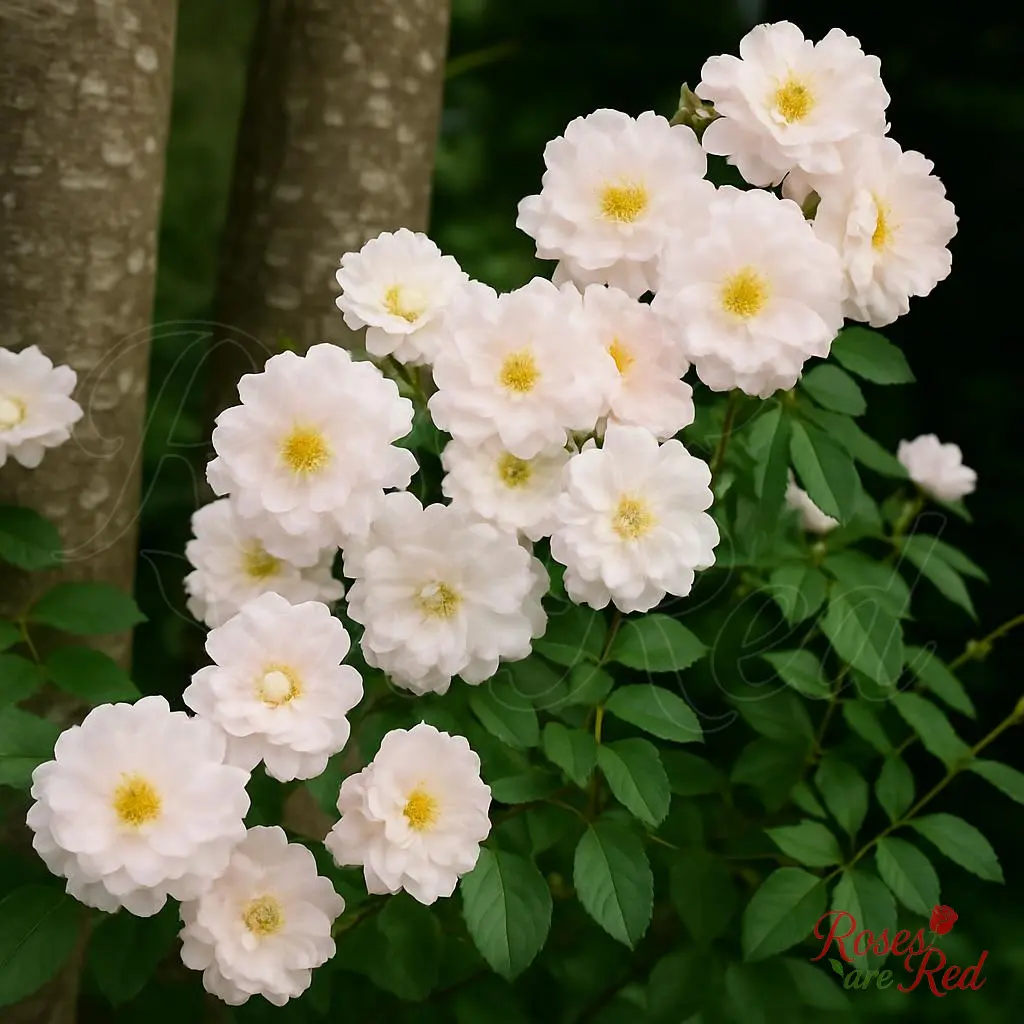
Old Garden Rose, rambler "Paul’s Himalayan Musk", United Kingdom, introduced by William Paul in 1916, Usually is white, pink in color, flat bloom shape, blooms 3 - 4 cm in size, has 5-10 buds per stem, once rebloom, has rich fragrance, the bush shape can be arching, 400 - 500 cm in height, 300 cm in width, suitable for USDA zone 6 from -23°C and above, low resistance to rain, moderate resistance to black spot, moderate resistance to mildew.
Main characteristics

Aroma

USDA Zone 6
-23°С

Rebloom


Bush Shape

Bloom Shape
Flat
Size

Height
400 - 500 cm

Width
300 cm

Bloom size
3 - 4 cm

Buds / Stem
5-10

Petal Count
Resistance

Heat

Shade

Rain

Black Spot

Mildew
More information
This widely grown rose is a vigorous rambler. The flowers are small, with petals arranged in a rosette. On opening, the blooms are lilac-pink, fading to white over the next couple of days. With a strong musk fragrance and pale green foliage, they are borne in large clusters of 30-50 flowers.
Seedling of Rosa brunonii. Among the most widespread single-flowered ramblers, this rose is cultivated broadly for vigorous growth and ease of cultivation. The flowers are about 3cm in diameter, produced densely in clusters; lilac-pink, fading to white. Strongly musk-scented and accompanied by bright green foliage, they appear in clusters of 30-50. When planted at the base of a large tree, within a couple of years it will ascend and flower heavily, producing cascading displays.
The name differs from the true Himalayan Musk Rose: Rosa moschata nepalensis (R. brunonii) is distinct, with bright green, narrow foliage, whereas Paul’s Himalayan Musk Rambler has comparatively shallower foliage and a fragrance similar to Rosa multiflora. The variety is considered to descend from Rosa brunonii or Rosa filipes, indicated by similarly slender flowering shoots. It is a large climbing rose with long, flexible shoots. The flowers are lilac-pink, small, double, appearing in large clusters in early summer.
Seedling of Rosa brunonii. Among the most widespread single-flowered ramblers, this rose is cultivated broadly for vigorous growth and ease of cultivation. The flowers are about 3cm in diameter, produced densely in clusters; lilac-pink, fading to white. Strongly musk-scented and accompanied by bright green foliage, they appear in clusters of 30-50. When planted at the base of a large tree, within a couple of years it will ascend and flower heavily, producing cascading displays.
The name differs from the true Himalayan Musk Rose: Rosa moschata nepalensis (R. brunonii) is distinct, with bright green, narrow foliage, whereas Paul’s Himalayan Musk Rambler has comparatively shallower foliage and a fragrance similar to Rosa multiflora. The variety is considered to descend from Rosa brunonii or Rosa filipes, indicated by similarly slender flowering shoots. It is a large climbing rose with long, flexible shoots. The flowers are lilac-pink, small, double, appearing in large clusters in early summer.
Popular Breeders
Articles