


 Sign in
 Rose Catalog
New Dawn, hybrid wichurana

Also known as
Everblooming Dr W Van Fleet
The New Dawn
Share
Prices nearby
or to see prices for this rose



















Brief summary
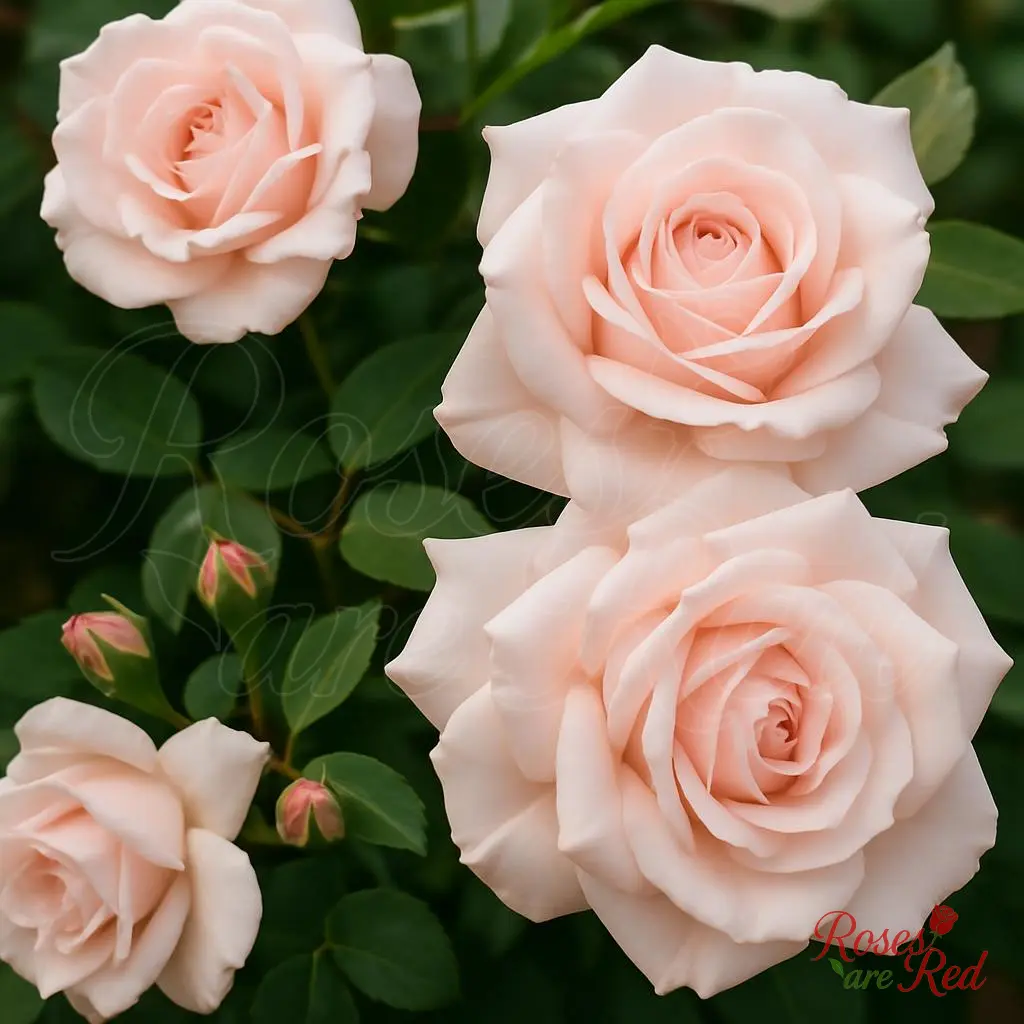
Modern Rose, hybrid wichurana "New Dawn", United States, introduced by Somerset Rose Nursery in 1930, Usually is pink in color, semi double bloom shape, blooms 7 - 8 cm in size, has 3-5 buds per stem, repeat rebloom, has moderate fragrance, the bush shape can be bushy, 200 - 250 cm in height, 200 cm in width, suitable for USDA zone 5 from -29°C and above, moderate resistance to rain, moderate resistance to black spot, moderate resistance to mildew.
Main characteristics

Aroma

USDA Zone 5
-29°С

Rebloom


Bush Shape

Bloom Shape
Semi double
Size

Height
200 - 250 cm

Width
200 cm

Bloom size
7 - 8 cm

Buds / Stem
3-5

Petal Count
Resistance

Heat

Shade

Rain

Black Spot

Mildew
More information
Blooms in clusters of silvery‑pink, semi‑marginal flowers. Foliage is grey‑green. Flowers continuously throughout summer. Tolerates poor soils and semi‑shade.
Over the last decade, New Dawn has been planted more often than any other rose. Identified as the most popular rose in the world, it has been proclaimed “the rose of the world.” New Dawn is most commonly sold as a climbing rose (rambler), but the variety is adaptable to multiple uses. As a single planting, it reaches about 2 metres in height. Long, thin shoots branch in all directions and, with support, can extend to 5 metres. Flowering shoots hang downward. Tying the plant is recommended. The variety produces pale pink terry flowers of a delicate shade; on clear, sunny days they appear almost white, and in cold weather they turn pink again. The flowers are fragrant, with a spicy aroma. Blooming persists from early summer to late autumn; there are periodic reductions in flower number, but blooms remain present. Recently, some New Dawn plants have appeared that do not re‑bloom, due to the variety being oculated onto long, fast‑growing shoots (following supplier recommendations). If a New Dawn is single‑flowering, the way to prolong blooming is to purchase a new plant.
Produces pale pink flowers all summer. Can be used as a climbing rose or as a shrub (schrab). Very winter hardy and shows strong disease resistance.
At introduction, this rose received the first U.S. patent. New Dawn is a re‑flowering sport of the old, very hardy rose Dr. W. Van Fleet, and it inherited the progenitor’s hardiness. Flowers are pearl‑pink, cup‑shaped, semi‑double, fading to pinkish cream, with bright gold stamens at the centre. It can be grown as a loose, fountain‑shaped bush, but due to vigorous growth it is more often trained as a plaited rose. It can be planted near a tree, allowing the canes to hang from the branches. Owing to its hardiness, it is suitable for difficult locations.
Over the last decade, New Dawn has been planted more often than any other rose. Identified as the most popular rose in the world, it has been proclaimed “the rose of the world.” New Dawn is most commonly sold as a climbing rose (rambler), but the variety is adaptable to multiple uses. As a single planting, it reaches about 2 metres in height. Long, thin shoots branch in all directions and, with support, can extend to 5 metres. Flowering shoots hang downward. Tying the plant is recommended. The variety produces pale pink terry flowers of a delicate shade; on clear, sunny days they appear almost white, and in cold weather they turn pink again. The flowers are fragrant, with a spicy aroma. Blooming persists from early summer to late autumn; there are periodic reductions in flower number, but blooms remain present. Recently, some New Dawn plants have appeared that do not re‑bloom, due to the variety being oculated onto long, fast‑growing shoots (following supplier recommendations). If a New Dawn is single‑flowering, the way to prolong blooming is to purchase a new plant.
Produces pale pink flowers all summer. Can be used as a climbing rose or as a shrub (schrab). Very winter hardy and shows strong disease resistance.
At introduction, this rose received the first U.S. patent. New Dawn is a re‑flowering sport of the old, very hardy rose Dr. W. Van Fleet, and it inherited the progenitor’s hardiness. Flowers are pearl‑pink, cup‑shaped, semi‑double, fading to pinkish cream, with bright gold stamens at the centre. It can be grown as a loose, fountain‑shaped bush, but due to vigorous growth it is more often trained as a plaited rose. It can be planted near a tree, allowing the canes to hang from the branches. Owing to its hardiness, it is suitable for difficult locations.
Popular Breeders
Articles