


 Sign in
 Rose Catalog
Morsdag, polyantha

Also known as
Mothers Day
Muttertag
Fete des Meres
Share
Prices nearby
or to see prices for this rose


















Brief summary
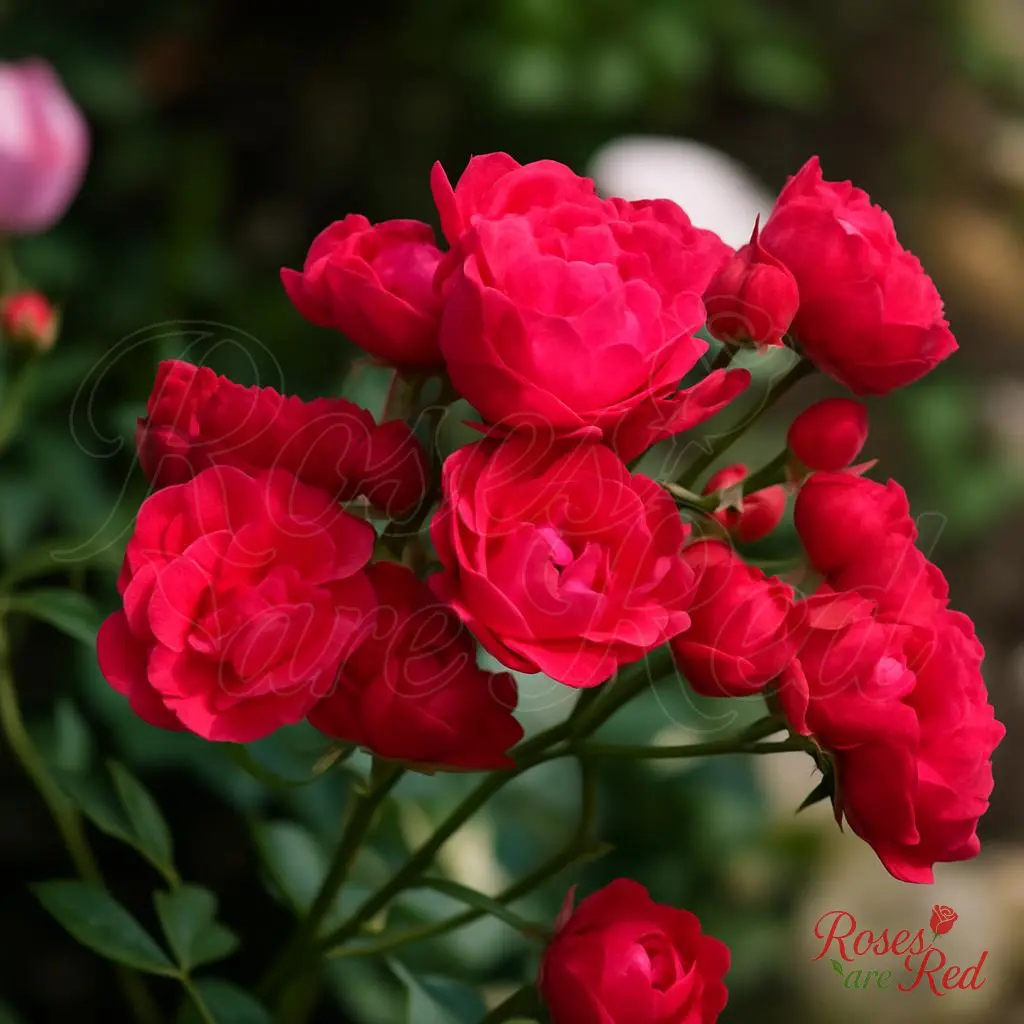
Modern Rose, polyantha "Morsdag", Netherlands, introduced by F.J. Grootendorst in 1949, Usually is red in color, semi double bloom shape, blooms 4 - 5 cm in size, has 5-10 buds per stem, repeat rebloom, has light fragrance, the bush shape can be bushy, 40 - 50 cm in height, 75 cm in width, suitable for USDA zone 5 from -29°C and above, low resistance to rain, moderate resistance to black spot, moderate resistance to mildew.
Main characteristics

Aroma

USDA Zone 5
-29°С

Rebloom


Bush Shape

Bloom Shape
Semi double
Size

Height
40 - 50 cm

Width
75 cm

Bloom size
4 - 5 cm

Buds / Stem
5-10

Petal Count
Resistance

Heat

Shade

Rain

Black Spot

Mildew
More information
Echo is a repeat-flowering polyanthus rose. It is one of the few repeat-flowering sports arising from a single cultivar. The chain of sports did not end with Echo: several others originated from it, including Anneke Koster, and from Anneke Koster came Dick Koster. Dick Koster in turn has yielded many sports—among them Margo Koster and Morsdag—and from Morsdag arose Orange Morsdag and Vattertag. These roses differ only in colour: Dick Koster is dark pink; Margo Koster is bright orange with a silvery-pink reverse to the petals; Morsdag is dark red; Orange Morsdag is bright orange; Vattertag is also orange. The petals curl strongly inward, so the globular blooms remain almost closed until they fade. In wet weather the flowers can rot and the petals become blotched by moisture. All the varieties are widely grown, bloom abundantly, and are suitable for cutting.
A large number of polyanthus roses descend from Orleans Rose or from Dick Koster. Mothersday is a sport of the latter. The flowers are small, double, solid red, globular, borne in clusters of 5–20. The foliage is small and glossy, on a very small bush. The first flush is heavy, while subsequent ones are comparatively light. Like most polyanthus roses, it is susceptible to powdery mildew. In Europe the rose is frequently sold in pots for Mother’s Day.
A large number of polyanthus roses descend from Orleans Rose or from Dick Koster. Mothersday is a sport of the latter. The flowers are small, double, solid red, globular, borne in clusters of 5–20. The foliage is small and glossy, on a very small bush. The first flush is heavy, while subsequent ones are comparatively light. Like most polyanthus roses, it is susceptible to powdery mildew. In Europe the rose is frequently sold in pots for Mother’s Day.
Popular Breeders
Articles