


 Sign in
 Rose Catalog
Morning Jewel, large-flowered climber

Share
Prices nearby
or to see prices for this rose



















Brief summary
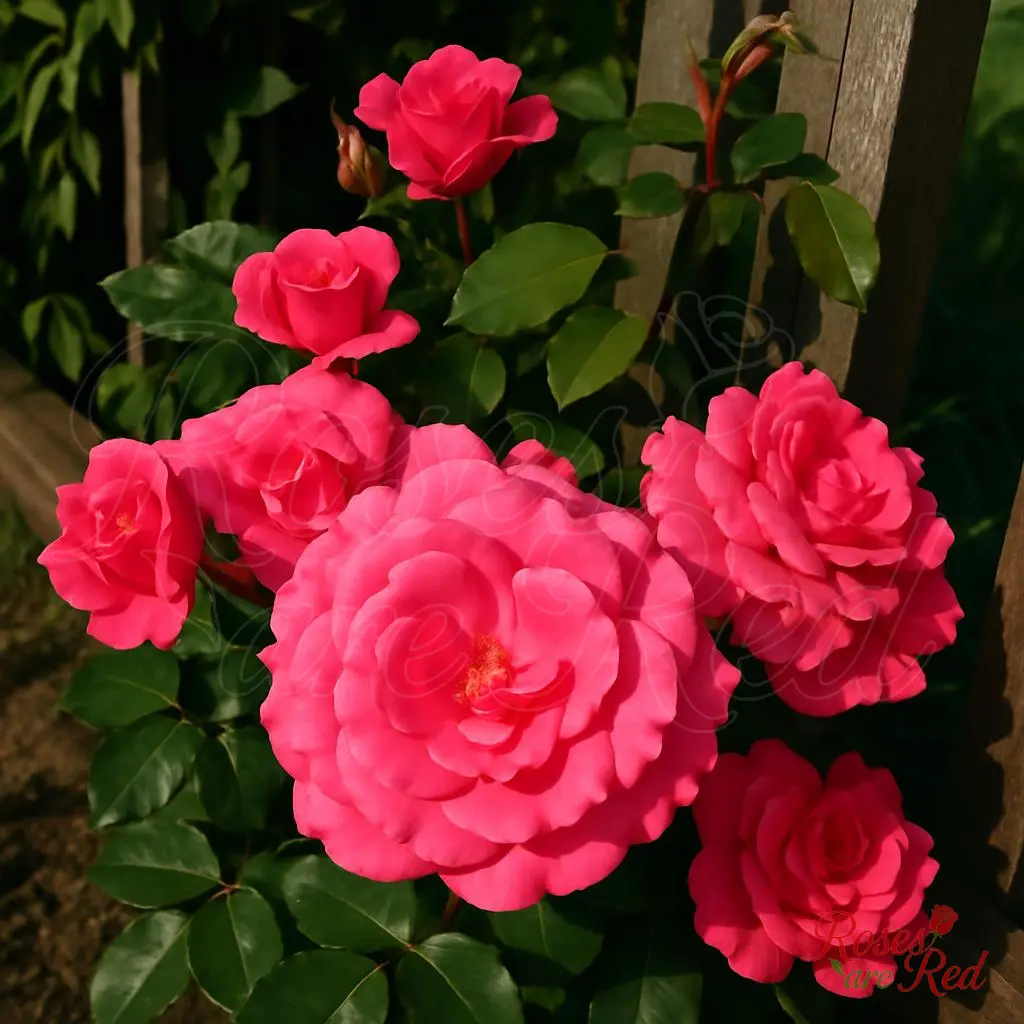
Modern Rose, large-flowered climber "Morning Jewel", Scotland, introduced by James Cocker & Sons in 1968, Usually is fuchsia in color, semi double bloom shape, blooms 7 - 8 cm in size, has 3-5 buds per stem, repeat rebloom, has light fragrance, the bush shape can be climbing, bushy, 300 - 400 cm in height, 250 cm in width, suitable for USDA zone 5 from -29°C and above, moderate resistance to black spot, moderate resistance to mildew.
Main characteristics

Aroma

USDA Zone 5
-29°С

Rebloom


Bush Shape


Bloom Shape
Semi double
Size

Height
300 - 400 cm

Width
250 cm

Bloom size
7 - 8 cm

Buds / Stem
3-5

Petal Count
Resistance

Heat

Shade

Rain

Black Spot

Mildew
More information
This Scottish rose is widely grown in Germany and holds an ADR award. The blooms are semi-double, with large, dense, weather-resistant petals, often slightly asymmetrical. The flower form is open, cup-shaped. The colour is a rich, dark, radiant pink, paler on the reverse and white at the centre. Flowers are borne on long shoots, either singly or in clusters of up to 7, and are suitable for cutting. After the first abundant flush, the shrub is rarely without flowers; the foliage is dark, glossy, and disease-resistant.
The colouring is very bright, almost vivid pink, with a small white centre. It shows low sensitivity to adverse weather, tolerating both rain and hot sun, remaining nearly unchanged until the petals drop. Globular buds open to flowers with 20 petals. The blooms are large, about 8 cm in diameter; the petals stay curved toward the centre for most of their lifespan. The first wave of flowering is very abundant. Clusters of five can cover much of the plant at peak bloom. Re-blooming is less heavy, but timely deadheading increases flower production. The growth of this climbing rose can be restrained; it reaches 1.8–3 m in height and 1.5–2.7 m in width. It produces enough shoots to be trained in a fan shape. One-year-old canes are quite stiff and resist significant bending. It performs in both sun and shade. The leaves range from light green to green, are very glossy, and are abundant, forming a background for the flowers. In unfavourable conditions, it can be affected by downy mildew (false powdery mildew).
The colouring is very bright, almost vivid pink, with a small white centre. It shows low sensitivity to adverse weather, tolerating both rain and hot sun, remaining nearly unchanged until the petals drop. Globular buds open to flowers with 20 petals. The blooms are large, about 8 cm in diameter; the petals stay curved toward the centre for most of their lifespan. The first wave of flowering is very abundant. Clusters of five can cover much of the plant at peak bloom. Re-blooming is less heavy, but timely deadheading increases flower production. The growth of this climbing rose can be restrained; it reaches 1.8–3 m in height and 1.5–2.7 m in width. It produces enough shoots to be trained in a fan shape. One-year-old canes are quite stiff and resist significant bending. It performs in both sun and shade. The leaves range from light green to green, are very glossy, and are abundant, forming a background for the flowers. In unfavourable conditions, it can be affected by downy mildew (false powdery mildew).
Popular Breeders
Articles