

 Sign in
 Rose Catalog
Share
Prices nearby
or to see prices for this rose


















Brief summary
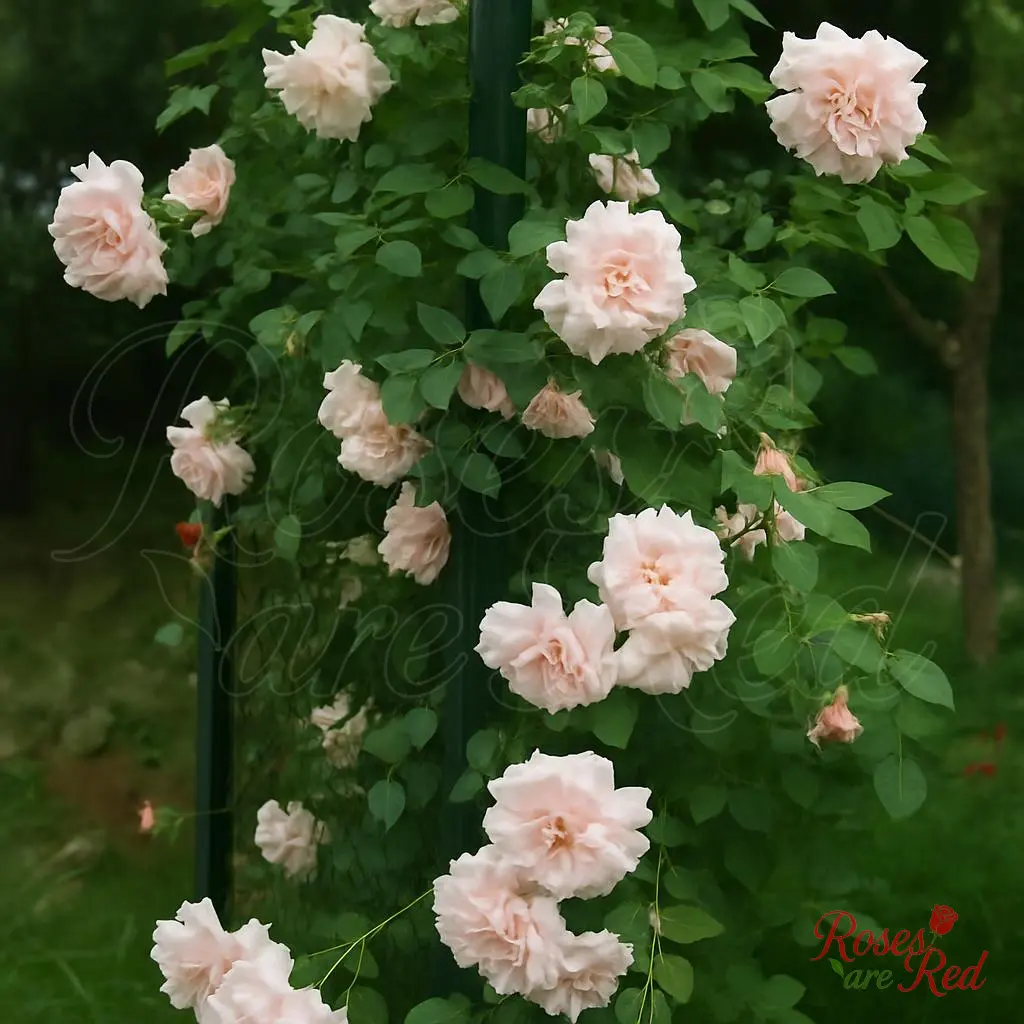
Modern Rose, hybrid kordesii "Morgengruss", introduced by Kordes Rosen in 1962, Usually is pink, salmon in color, globular bloom shape, blooms 8 - 9 cm in size, has 1-3 buds per stem, repeat rebloom, has rich fragrance, the bush shape can be upright, 180 - 200 cm in height, 150 cm in width, suitable for USDA zone 6 from -23°C and above, low resistance to rain, moderate resistance to black spot, moderate resistance to mildew.
Main characteristics

Aroma

USDA Zone 6
-23°С

Rebloom


Bush Shape

Bloom Shape
Globular
Size

Height
180 - 200 cm

Width
150 cm
Bloom size
8 - 9 cm
Buds / Stem
1-3

Petal Count
Resistance

Heat

Shade

Rain

Black Spot
Mildew
More information
Many of Wilhelm Cordes’ kordesii hybrids have bright colours; Morgengruss is an exception. Long, elegant buds open into medium-sized flowers with wavy petals, borne in large, graceful clusters. Blooms are pink or coral. The flowers are very fragrant, appearing all summer on a strong bush with dark green, glossy foliage. Introduced in 1962. It is winter hardy.
This kordesii hybrid was the first to combine pink and yellow tones. Tight little buds open into flowers 8–9 cm in diameter. The outer petals curl downward and fade to a delicate creamy pink, while the inner petals are tightly twisted and dark apricot. Later, the flower opens and shows the midrib, and the colour changes to creamy cream. The flowers appear in small clusters. The foliage is disease-resistant, dark green, shiny. The bush is strong-growing, reaching 4–5 m.
This strong-growing bush rose reaches 2.7–3 m in height and almost as much in width. The abundant foliage is glossy, light green. Oval buds open into flowers with densely margined petals, appearing in clusters. The colouring is pale pink with an orange-yellow tinge. The flowers are very fragrant. Used for planting in parks. The bush requires ample space. Grows very well in cold climates.
This kordesii hybrid was the first to combine pink and yellow tones. Tight little buds open into flowers 8–9 cm in diameter. The outer petals curl downward and fade to a delicate creamy pink, while the inner petals are tightly twisted and dark apricot. Later, the flower opens and shows the midrib, and the colour changes to creamy cream. The flowers appear in small clusters. The foliage is disease-resistant, dark green, shiny. The bush is strong-growing, reaching 4–5 m.
This strong-growing bush rose reaches 2.7–3 m in height and almost as much in width. The abundant foliage is glossy, light green. Oval buds open into flowers with densely margined petals, appearing in clusters. The colouring is pale pink with an orange-yellow tinge. The flowers are very fragrant. Used for planting in parks. The bush requires ample space. Grows very well in cold climates.
Popular Breeders
Articles