


 Sign in
 Rose Catalog
Share
Prices nearby
or to see prices for this rose



















Brief summary
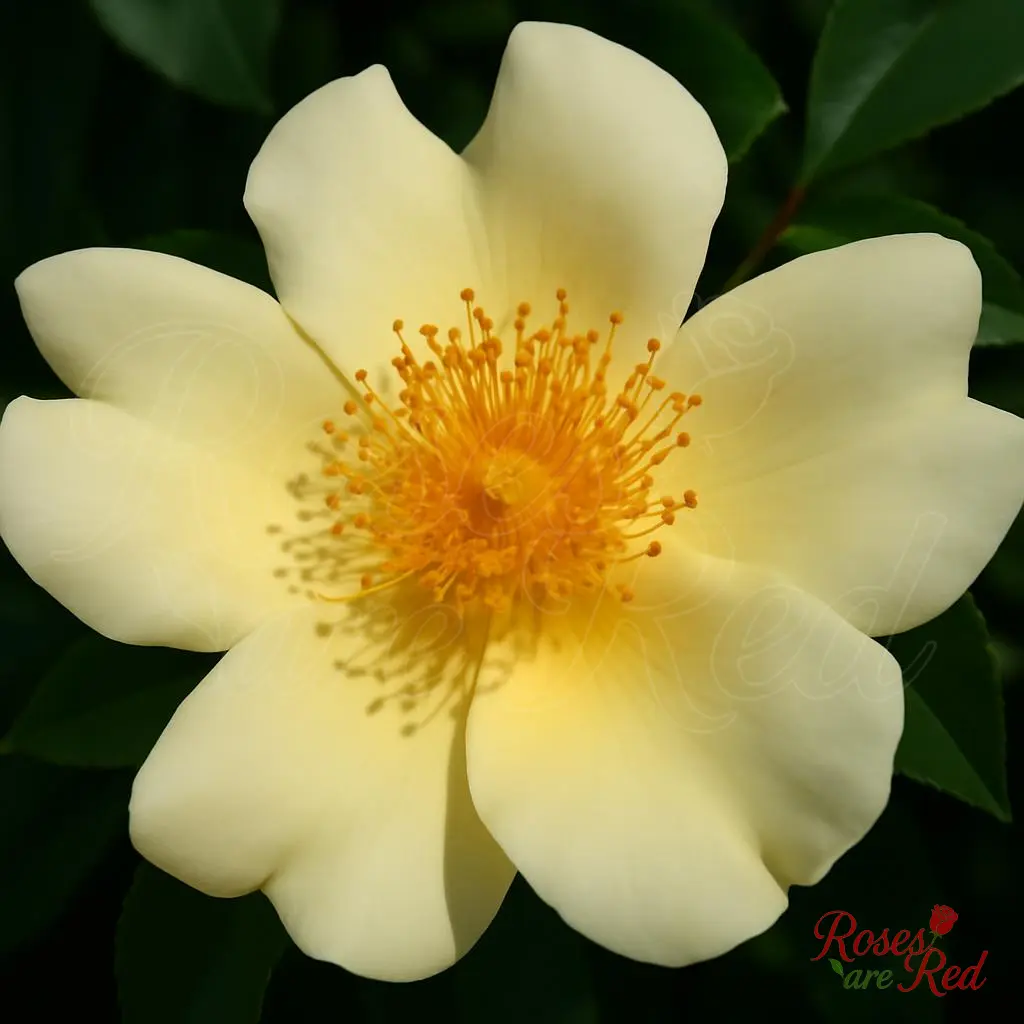
Old Garden Rose, hybrid bracteata "Mermaid", United Kingdom, introduced by George Paul in 1918, Usually is ivory in color, flat bloom shape, blooms 9 - 10 cm in size, has 5-10 buds per stem, continual rebloom, has light fragrance, the bush shape can be arching, 400 - 500 cm in height, 400 cm in width, suitable for USDA zone 6 from -23°C and above, moderate resistance to black spot, moderate resistance to mildew.
Main characteristics

Aroma

USDA Zone 6
-23°С

Rebloom


Bush Shape

Bloom Shape
Flat
Size

Height
400 - 500 cm

Width
400 cm

Bloom size
9 - 10 cm

Buds / Stem
5-10

Petal Count
Resistance

Heat

Shade

Rain

Black Spot
Mildew
More information
Mermaid originated from a cross between the evergreen Rosa bracteata and a yellow tea rose. Flowers feature delicate yellow petals and prominent dark golden stamens that are long, slender, retain their colour for an extended period, resist browning, and remain noticeable even after petal fall. Blooming is prolonged and close to continuous. Foliage is glossy, bright green with an olive-green underside and remains evergreen in warm climates. The shrub is slow to root and performs better on its own roots. Over time it develops into a large bush and can overwhelm nearby plants. It can be trained onto a support, but this is best done while shoots are young and pliable; older branches are brittle and may snap with minor handling. The cultivar shows poor tolerance to pruning, so pruning is best avoided when possible.
The flower colour is pale yellow and can appear very pale at times; with age, the colour often fades noticeably. The five-petalled blooms frequently exceed 8 cm in diameter, indicating large petals. In full bloom the deep yellow stamens are conspicuous. Although the individual flowers have a faint odour, a plant carrying many blooms is detectably musky. Inflorescences are evenly distributed across the plant, supporting sustained flowering without gaps. Given the large bloom size, even a small number of flowers is conspicuous. This is a vigorous climbing rose with long, flexible canes; however, they are more fragile than those of many other roses, and excessive bending can cause breakage. Plants reach 4.5–7.5 metres in height and 2.4–4.5 metres in width. Site in ample light with some direct sun each day. With winter covering, it can be grown in cold regions. Leaves are dark green and shiny, extending to ground level and limiting bare lower stems. The variety is susceptible to false powdery mildew.
The flower colour is pale yellow and can appear very pale at times; with age, the colour often fades noticeably. The five-petalled blooms frequently exceed 8 cm in diameter, indicating large petals. In full bloom the deep yellow stamens are conspicuous. Although the individual flowers have a faint odour, a plant carrying many blooms is detectably musky. Inflorescences are evenly distributed across the plant, supporting sustained flowering without gaps. Given the large bloom size, even a small number of flowers is conspicuous. This is a vigorous climbing rose with long, flexible canes; however, they are more fragile than those of many other roses, and excessive bending can cause breakage. Plants reach 4.5–7.5 metres in height and 2.4–4.5 metres in width. Site in ample light with some direct sun each day. With winter covering, it can be grown in cold regions. Leaves are dark green and shiny, extending to ground level and limiting bare lower stems. The variety is susceptible to false powdery mildew.
Popular Breeders
Articles