
 Sign in
 Rose Catalog
Louisa Stone, floribunda

Also known as
HARbadge
Guinevere
Lady Guinevere
Share
Prices nearby
or to see prices for this rose

















Brief summary
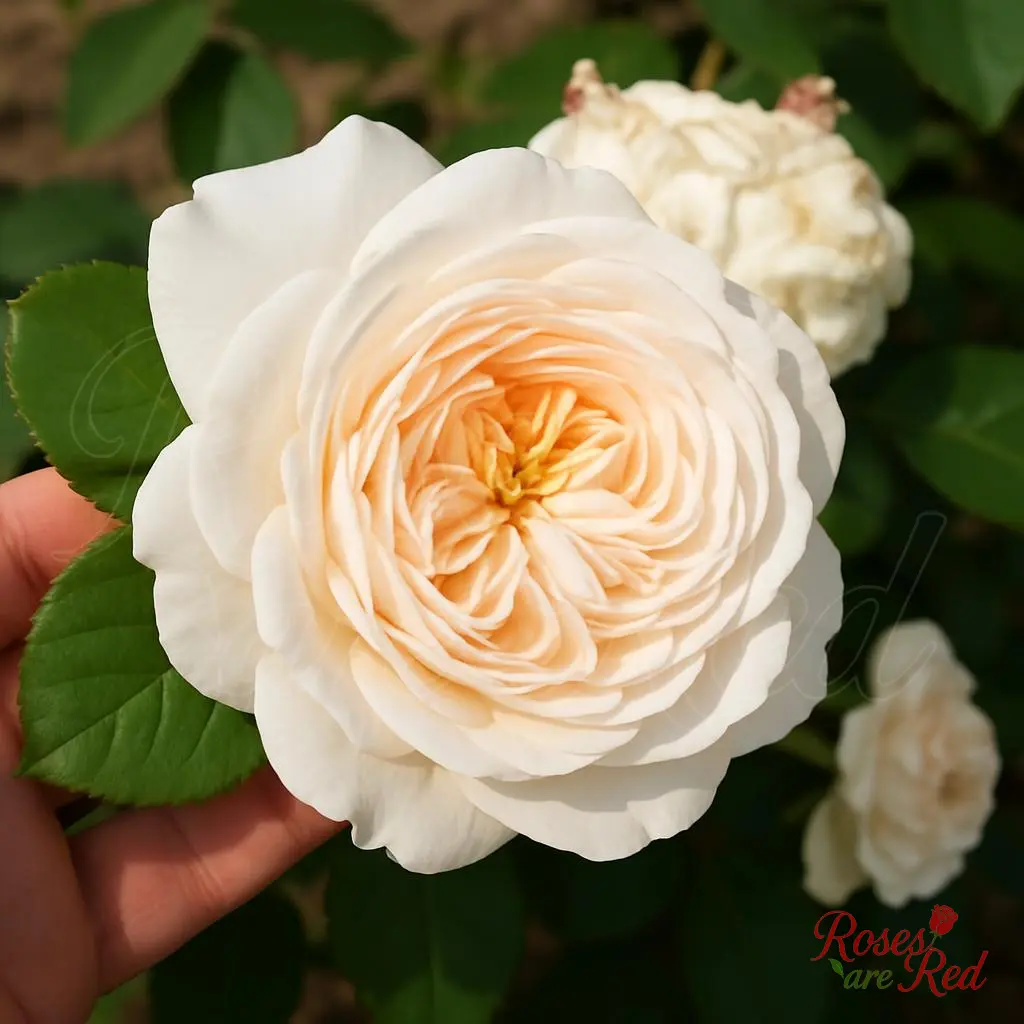
Modern Rose, floribunda "Louisa Stone", United Kingdom, introduced by Harkness & Co. Ltd in 1997, Usually is peach in color, globular bloom shape, blooms 7 - 8 cm in size, has 3-5 buds per stem, repeat rebloom, has light fragrance, the bush shape can be spreading, 80 - 100 cm in height, 75 cm in width, suitable for USDA zone 6 from -23°C and above, moderate resistance to rain, moderate resistance to black spot, moderate resistance to mildew.
Main characteristics

Aroma

USDA Zone 6
-23°С

Rebloom


Bush Shape

Bloom Shape
Globular
Size

Height
80 - 100 cm

Width
75 cm

Bloom size
7 - 8 cm

Buds / Stem
3-5

Petal Count
Resistance

Heat

Shade

Rain

Black Spot
Mildew
More information
Flowers display variable, complex coloration, ranging from white with a yellowish cast to honey tones. Color is more intense at the center and remains fairly stable overall, but the blooms have poor rain tolerance. Flowers are borne in dense clusters, up to 8 cm across, with a scent of rose oil and apples. The bush typically carries clusters averaging 5 blooms each. There is a brief pause between flowering flushes. The shrub is below average in height; shoots are somewhat weak. The crown is dome-shaped; the plant does not exceed 100 cm in height and 75 cm in width. It grows better in hot climates, yet tolerates cold conditions. Foliage is dark green, glossy, dense, and large, covering the plant from top to bottom. The variety shows disease resistance; minor black spot may appear at the end of the season. Shoots droop under the weight of the blooms.
The term “English Roses” formally applies only to David Austin’s introductions. Louisa Stone forms a full bush and double, many-petaled flowers with old-rose-style shape and aroma. Flower color is apricot, with a salmon-pink center and ivory-white petal edges. The fragrance is light. The shrub reaches up to 80 cm in height and is well branched. Shoots spread outward, giving a width of about 60 cm.
The term “English Roses” formally applies only to David Austin’s introductions. Louisa Stone forms a full bush and double, many-petaled flowers with old-rose-style shape and aroma. Flower color is apricot, with a salmon-pink center and ivory-white petal edges. The fragrance is light. The shrub reaches up to 80 cm in height and is well branched. Shoots spread outward, giving a width of about 60 cm.
Popular Breeders
Articles