

 Sign in
 Rose Catalog
Share
Prices nearby
or to see prices for this rose

















Brief summary
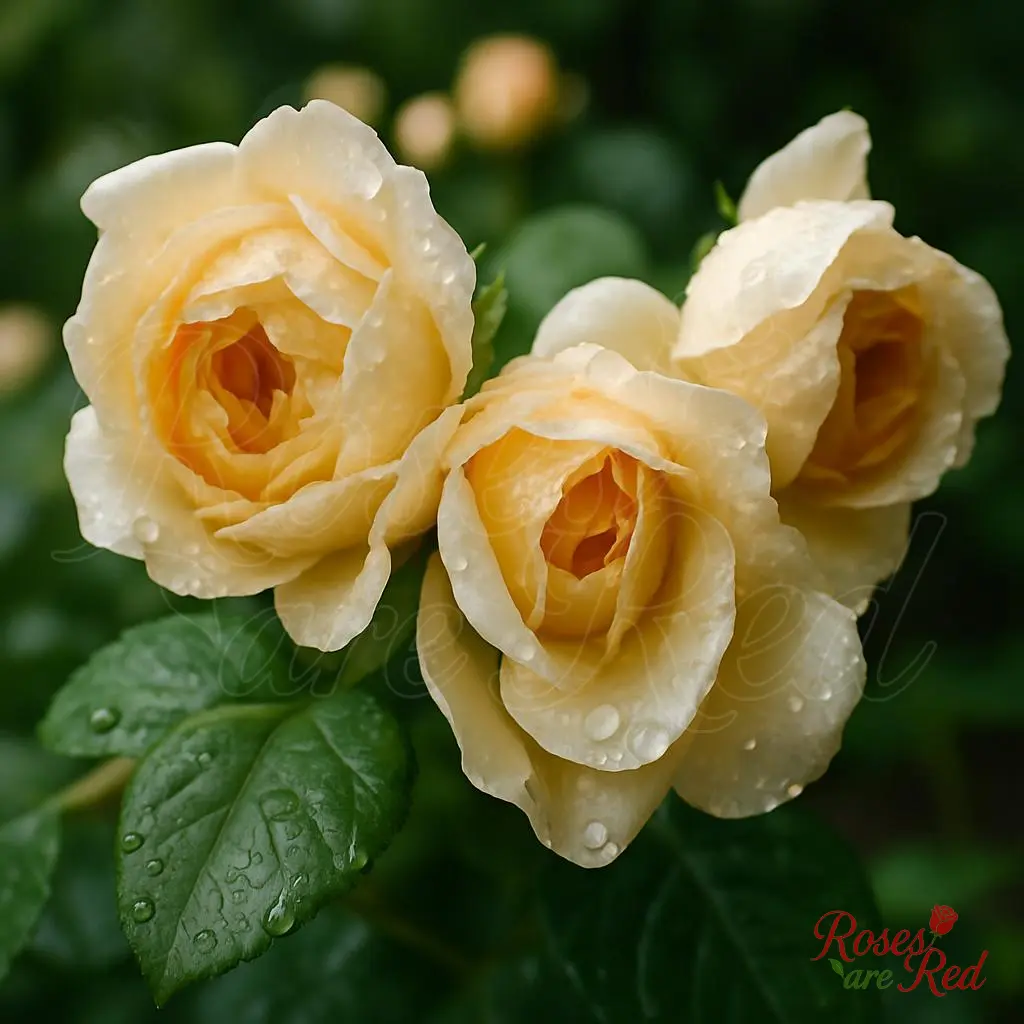
Modern Rose, shrub "Jayne Austin®", United Kingdom, introduced by David C. H. Austin in 1993, Usually is yellow in color, cupped bloom shape, very full petal count, blooms 8 - 10 cm in size, has 3-5 buds per stem, repeat rebloom, has rich fragrance, the bush shape can be arching, bushy, 100 - 120 cm in height, 105 cm in width, suitable for USDA zone 6 from -23°C and above, low resistance to rain, moderate resistance to black spot, strong resistance to mildew.
Main characteristics

Aroma

USDA Zone 6
-23°С

Rebloom


Bush Shape


Bloom Shape
Cupped
Size

Height
100 - 120 cm

Width
105 cm
Bloom size
8 - 10 cm
Buds / Stem
3-5

Petal Count
Very full
Resistance

Heat

Shade

Rain

Black Spot
Mildew
More information
Among the yellow and apricot-coloured English roses (most of which are derived from the vintage Noisette rose Gloire de Dijon), Jayne Austin bears medium to large flowers. The petals have a silky, lustrous texture and soft yellow colouring. Blooms are initially cup-shaped, later opening to a flat rosette; the fragrance is of tea rose. The bush is upright and robust, with numerous basal shoots. As with the other yellow roses in this group, it tends to send out long shoots which, if not cut back, can alter the appearance of the plant. These should be shortened as soon as they begin to mature to maintain the overall shape of the bush. The foliage is abundant, pale green.
The colour is apricot yellow and the petals have a soft, shiny texture—a characteristic of Noisette roses inherited by this variety. The flowers form rosettes. The bush is fairly erect and somewhat lanky. Jayne Austin is recommended to be planted in a group of three bushes. It smells like tea roses, with tones of lilac. The flowers are spoilt by rain. When properly pruned, the bush is medium height.
Jayne Austin tends to produce more foliage than flowers. Named in honour of David Austin’s niece. The flowers are creamy yellow at first, fading to cream and white, especially at the edges, although the undersides of the petals are darker and the inner petals retain the apricot tone much longer. The outer petals are large and flat, the inner petals shallower and more irregularly shaped. The bloom usually forms a rosette around a button-like centre. They appear in clusters (usually 3–5 pcs), held erect, on fairly long shoots. The bush is studded with large thorns; the long shoots form a rounded bush. The foliage is bright green, shiny, susceptible to powdery mildew in cold weather, and sometimes to rust. However, it grows better in temperate climates, as the flowers turn brown and wither in heat.
The colour is apricot yellow and the petals have a soft, shiny texture—a characteristic of Noisette roses inherited by this variety. The flowers form rosettes. The bush is fairly erect and somewhat lanky. Jayne Austin is recommended to be planted in a group of three bushes. It smells like tea roses, with tones of lilac. The flowers are spoilt by rain. When properly pruned, the bush is medium height.
Jayne Austin tends to produce more foliage than flowers. Named in honour of David Austin’s niece. The flowers are creamy yellow at first, fading to cream and white, especially at the edges, although the undersides of the petals are darker and the inner petals retain the apricot tone much longer. The outer petals are large and flat, the inner petals shallower and more irregularly shaped. The bloom usually forms a rosette around a button-like centre. They appear in clusters (usually 3–5 pcs), held erect, on fairly long shoots. The bush is studded with large thorns; the long shoots form a rounded bush. The foliage is bright green, shiny, susceptible to powdery mildew in cold weather, and sometimes to rust. However, it grows better in temperate climates, as the flowers turn brown and wither in heat.
Popular Breeders
Articles