

 Sign in
 Rose Catalog
Henry Hudson, hybrid rugosa
Share
Prices nearby
or to see prices for this rose



















Brief summary
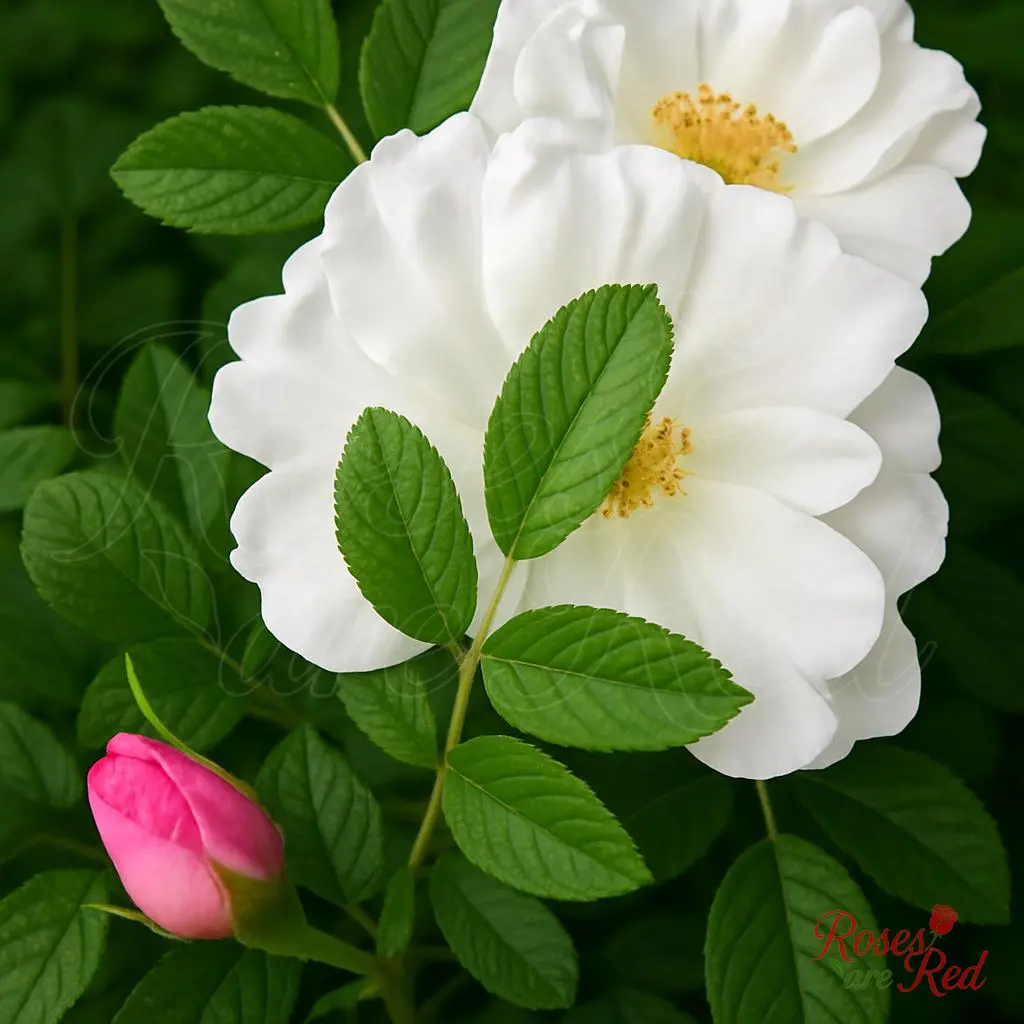
Modern Rose, hybrid rugosa "Henry Hudson", introduced by Dr. Felicitas Svejda in 1976, Usually is pink in color, semi double bloom shape, blooms 6 - 7 cm in size, has 3-5 buds per stem, continual rebloom, has moderate fragrance, the bush shape can be bushy, 90 - 100 cm in height, 100 cm in width, moderate resistance to black spot, moderate resistance to mildew.
Main characteristics

Aroma

Rebloom


Bush Shape

Bloom Shape
Semi double
Size

Height
90 - 100 cm

Width
100 cm

Bloom size
6 - 7 cm

Buds / Stem
3-5

Petal Count
Resistance

Heat

Shade

Rain

Black Spot
Mildew
More information
Some roses in the Canadian Explorer series did not arise from targeted breeding but from earlier experimental studies. Henry Hudson emerged as a by-product of tests examining the genetic potential of the Schneezwerg variety. The result is a hardy, healthy shrub with specific flower characteristics. Buds start pink; open blooms are pure white in hot weather and pale pink in autumn. Flowers are semi-double, opening to reveal stamens. The petals are thin and papery, translucent in light, later turning brown and drying on the plant. The plant is a typical rugosa: coarse, pale leaves, numerous sharp prickles, a dense, branching habit, and a tendency to produce suckers.
Flowering is abundant but short-lived. Resistant to diseases. Sufficiently winter-hardy.
Henry Hudson bears dark green, abundant foliage with disease resistance; the variety is absolutely winter hardy, blooms continuously throughout summer, and is very fragrant. The bush is low and suitable for use as a bedding plant or groundcover rose. Blooms wither on the plant; for a neater appearance they should be removed. Cuttings root at an average rate; it is preferable to take cuttings in early summer just before flowering.
This hybrid rugosa is part of the Canadian Explorer series. The flowers are double, cup-shaped or nearly flat, 6–7 cm in diameter, with a cluster of yellow stamens in the center. Flowers are soft pink at first, fading to white; in cold weather they retain their pink color. Very abundant early-summer flowering is followed by fairly abundant waves of repeat bloom. The shrub is compact, branched, and spreading, 60–90 cm high and 90–120 cm wide. Suitable for flowerbeds, borders, mass, or landscape plantings. Petals do not drop after flowering but dry on the bush. Disease resistance is described as exceptional.
Flowering is abundant but short-lived. Resistant to diseases. Sufficiently winter-hardy.
Henry Hudson bears dark green, abundant foliage with disease resistance; the variety is absolutely winter hardy, blooms continuously throughout summer, and is very fragrant. The bush is low and suitable for use as a bedding plant or groundcover rose. Blooms wither on the plant; for a neater appearance they should be removed. Cuttings root at an average rate; it is preferable to take cuttings in early summer just before flowering.
This hybrid rugosa is part of the Canadian Explorer series. The flowers are double, cup-shaped or nearly flat, 6–7 cm in diameter, with a cluster of yellow stamens in the center. Flowers are soft pink at first, fading to white; in cold weather they retain their pink color. Very abundant early-summer flowering is followed by fairly abundant waves of repeat bloom. The shrub is compact, branched, and spreading, 60–90 cm high and 90–120 cm wide. Suitable for flowerbeds, borders, mass, or landscape plantings. Petals do not drop after flowering but dry on the bush. Disease resistance is described as exceptional.
Popular Breeders
Articles