


 Sign in
 Rose Catalog
Heidetraum, shrub

Also known as
NOAtraum
Flower Carpet
Blooming Carpet
Emera
Emera Pavement
Floral Carpet
Pink Flower Carpet
Share
Prices nearby
or to see prices for this rose



















Brief summary
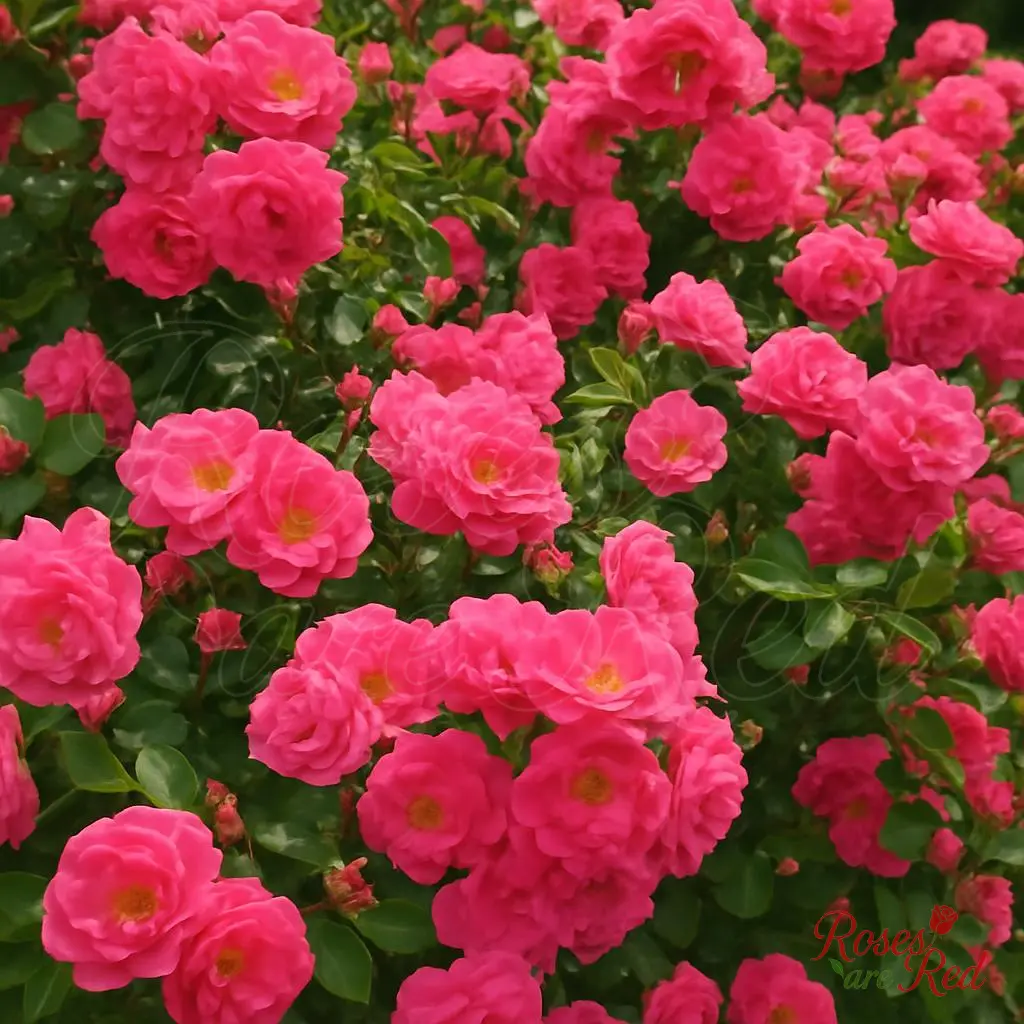
Modern Rose, shrub "Heidetraum", Germany, introduced by Noack Rosen in 1989, Usually is fuchsia in color, semi double bloom shape, blooms 5 - 6 cm in size, has 5-10 buds per stem, continual rebloom, has light fragrance, the bush shape can be spreading, 60 - 80 cm in height, 100 cm in width, suitable for USDA zone 5 from -29°C and above, strong resistance to rain, strong resistance to black spot, strong resistance to mildew.
Main characteristics

Aroma

USDA Zone 5
-29°С

Rebloom


Bush Shape

Bloom Shape
Semi double
Size

Height
60 - 80 cm

Width
100 cm

Bloom size
5 - 6 cm

Buds / Stem
5-10

Petal Count
Resistance

Heat

Shade

Rain

Black Spot

Mildew
More information
Hedetraum is a rose noted for strong disease resistance and heavy bloom, used as a climbing rose, a ground cover rose, or as a small shrub in borders. It is widely distributed in English-speaking regions under the name Flower Carpet. Flowering extends for a long period, with hips forming concurrently. Blooms are deep pink, almost crimson at first, cup-shaped, double, with a small white eye; they fade to pink or lilac-pink, and the petals shatter cleanly. Flowers appear in open trusses of 10–20. The foliage is dark, glossy, and highly disease resistant. In 1997, a lighter sport, Sommermelodie, was introduced; it differs only in color.
This profusely blooming, low-maintenance rose suits beginners and experienced growers alike. Small, rounded buds open to semi-double, 4–5 cm, cup-shaped or flat flowers in a deep pink tone. When fully open, a white eye and a cluster of yellow stamens are visible. The fragrance is faint, and the flowers are carried in large clusters. Flowering proceeds in cycles over an extended season, from early summer until frost. In autumn, the plant bears small red hips. The shrub is low and spreading, typically 60–80 cm tall and 100–120 cm wide. Often planted in groups of three or more for mass color. Suitable as a landscape accent, ground cover, or informal hedge. Arching shoots can be trained to spill over a low retaining wall or used in containers. Generally disease resistant, though some reports note powdery mildew or black spot, especially in hot, humid climates.
From July onward, this ground cover rose from the Flower Carpet series produces abundant clusters of pink semi-double flowers about 6 cm across. Bloom coverage can largely obscure the foliage. Flowers are almost scentless and do not self-clean well, so many spent blooms may remain on the trusses. The glossy green leaves persist on the plant for a long time. By the second year, this rose can cover 90% of the designated area. The variety shows strong disease resistance and is frequently used in public plantings.
The flowers are deep pink and maintain their color without pronounced blueing or blackening. Each bloom carries about 25 petals and is small; buds are globular, and the petals retain a concave form even when fully open, with a diameter around 4 cm. Flowers tolerate wet weather well and are scentless. The variety is noted for abundant flowering. Inflorescences are closely spaced along the stems, creating continuous coverage of bloom. The rose flowers continuously through the season. Shoots initially grow upright and then laterally; as they extend, they arch downward and end in many intertwined stems. Plants reach 60 cm to ~1 m in height and 1.2–1.8 m in width, forming very dense ground cover that leaves the soil beneath mostly hidden. Performs well in many conditions, including heavily shaded sites. It succeeds across regions and is used where cold or otherwise unfavorable conditions limit rose cultivation. Foliage is waxy, dark green, and densely arrayed along the stems, enhancing soil coverage. Under good growing conditions, no diseases are observed. Suitable for landscaping slopes as an alternative to turf. Usable in tubs and pots.
This profusely blooming, low-maintenance rose suits beginners and experienced growers alike. Small, rounded buds open to semi-double, 4–5 cm, cup-shaped or flat flowers in a deep pink tone. When fully open, a white eye and a cluster of yellow stamens are visible. The fragrance is faint, and the flowers are carried in large clusters. Flowering proceeds in cycles over an extended season, from early summer until frost. In autumn, the plant bears small red hips. The shrub is low and spreading, typically 60–80 cm tall and 100–120 cm wide. Often planted in groups of three or more for mass color. Suitable as a landscape accent, ground cover, or informal hedge. Arching shoots can be trained to spill over a low retaining wall or used in containers. Generally disease resistant, though some reports note powdery mildew or black spot, especially in hot, humid climates.
From July onward, this ground cover rose from the Flower Carpet series produces abundant clusters of pink semi-double flowers about 6 cm across. Bloom coverage can largely obscure the foliage. Flowers are almost scentless and do not self-clean well, so many spent blooms may remain on the trusses. The glossy green leaves persist on the plant for a long time. By the second year, this rose can cover 90% of the designated area. The variety shows strong disease resistance and is frequently used in public plantings.
The flowers are deep pink and maintain their color without pronounced blueing or blackening. Each bloom carries about 25 petals and is small; buds are globular, and the petals retain a concave form even when fully open, with a diameter around 4 cm. Flowers tolerate wet weather well and are scentless. The variety is noted for abundant flowering. Inflorescences are closely spaced along the stems, creating continuous coverage of bloom. The rose flowers continuously through the season. Shoots initially grow upright and then laterally; as they extend, they arch downward and end in many intertwined stems. Plants reach 60 cm to ~1 m in height and 1.2–1.8 m in width, forming very dense ground cover that leaves the soil beneath mostly hidden. Performs well in many conditions, including heavily shaded sites. It succeeds across regions and is used where cold or otherwise unfavorable conditions limit rose cultivation. Foliage is waxy, dark green, and densely arrayed along the stems, enhancing soil coverage. Under good growing conditions, no diseases are observed. Suitable for landscaping slopes as an alternative to turf. Usable in tubs and pots.
Popular Breeders
Articles