 Sign in
 Rose Catalog
Golden Wings, hybrid spinosissima (scots)
Share
Prices nearby
or to see prices for this rose

















Brief summary
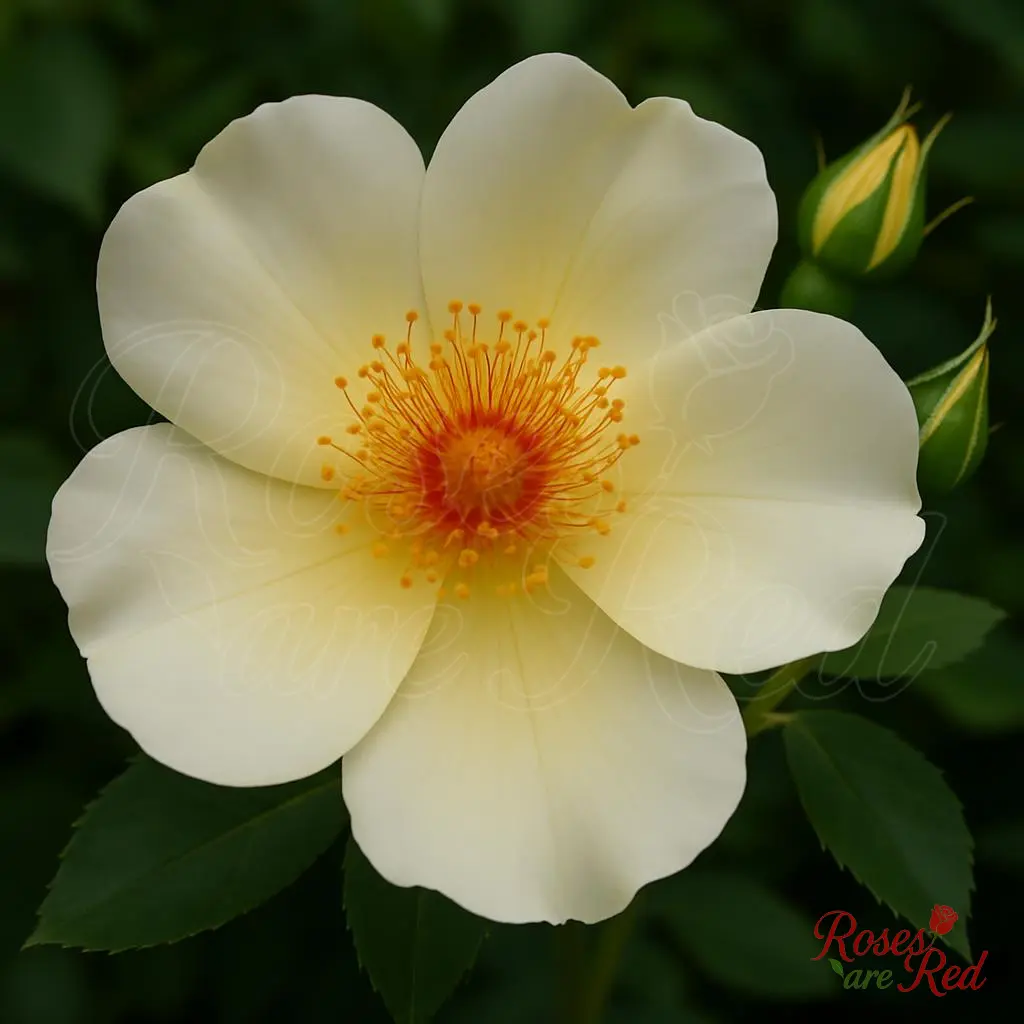
Old Garden Rose, hybrid spinosissima (scots) "Golden Wings", introduced in 1958, Usually is ivory in color, semi double bloom shape, blooms 10 - 12 cm in size, has 3-5 buds per stem, repeat rebloom, has light fragrance, the bush shape can be bushy, 150 - 200 cm in height, 150 cm in width, suitable for USDA zone 5 from -29°C and above, moderate resistance to rain, low resistance to black spot, moderate resistance to mildew.
Main characteristics

Aroma

USDA Zone 5
-29°С

Rebloom


Bush Shape

Bloom Shape
Semi double
Size

Height
150 - 200 cm

Width
150 cm
Bloom size
10 - 12 cm
Buds / Stem
3-5

Petal Count
Resistance

Heat

Shade

Rain

Black Spot
Mildew
More information
Golden Wings has long, slender, pointed buds that open into large, cup-shaped flowers. The color is pale lemon, later fading to creamy white, with 5–10 petals and bright amber stamens. Flowers appear singly or in clusters of 2–5 and, despite their delicate look, tolerate wind and rain well. Large, rounded orange fruits follow and persist until winter. The foliage is light green and susceptible to black spot. The plant takes a couple of years to reach its final size, and during this period the bush does not need shearing.
Hybrid spinosissima. Flowers up to 7.5 cm in diameter, lightly scented, with dark stamens. Light green foliage, few thorns. Produces fruit . Susceptible to black spot. Withstands hard frosts without shelter.
These delicately colored, unbrushed flowers may look fragile, but the variety is hardy. It blooms with unbrushed, saucer-shaped flowers 7–11 cm in diameter, a soft creamy color with orange or red stamens. The lightly scented flowers appear in small clusters. It usually blooms in late spring and continues at a moderate but steady rate until frost. The foliage is light green. The bush is branched and rounded and can be used alone as a landscape accent or in a mixed border, where it pairs with spring bulbs and blue-flowered companions such as bells. Also suitable for mass plantings and hedges. Usually disease resistant, but can develop black spot in wet climates.
Hybrid spinosissima. Flowers up to 7.5 cm in diameter, lightly scented, with dark stamens. Light green foliage, few thorns. Produces fruit . Susceptible to black spot. Withstands hard frosts without shelter.
These delicately colored, unbrushed flowers may look fragile, but the variety is hardy. It blooms with unbrushed, saucer-shaped flowers 7–11 cm in diameter, a soft creamy color with orange or red stamens. The lightly scented flowers appear in small clusters. It usually blooms in late spring and continues at a moderate but steady rate until frost. The foliage is light green. The bush is branched and rounded and can be used alone as a landscape accent or in a mixed border, where it pairs with spring bulbs and blue-flowered companions such as bells. Also suitable for mass plantings and hedges. Usually disease resistant, but can develop black spot in wet climates.
Popular Breeders
Articles