


 Sign in
 Rose Catalog
Frau Karl Druschki, hybrid perpetual
Also known as
Reine des Nieges
Schneekonigin
Snedronningen
Snow Queen
White American Beauty
Share
Prices nearby
or to see prices for this rose



















Brief summary
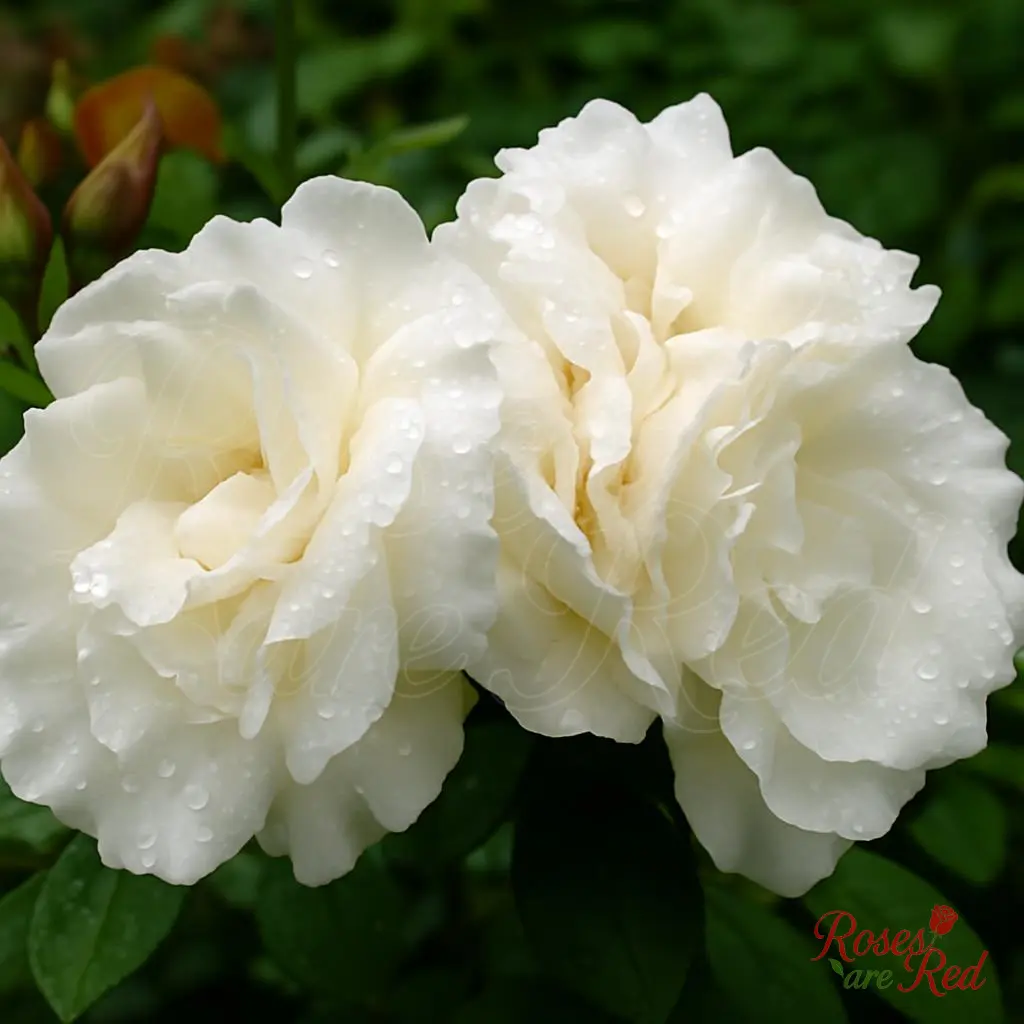
Old Garden Rose, hybrid perpetual "Frau Karl Druschki", introduced by Peter Lambert in 1901, Usually is white in color, high-center (point) bloom shape, blooms 10 - 12 cm in size, has 1 buds per stem, repeat rebloom, has light fragrance, the bush shape can be bushy, 150 - 175 cm in height, 125 cm in width, suitable for USDA zone 5 from -29°C and above, low resistance to rain, low resistance to black spot, moderate resistance to mildew.
Main characteristics

Aroma

USDA Zone 5
-29°С

Rebloom


Bush Shape

Bloom Shape
High-center (Point)
Size

Height
150 - 175 cm

Width
125 cm

Bloom size
10 - 12 cm

Buds / Stem
1

Petal Count
Resistance

Heat

Shade

Rain

Black Spot

Mildew
More information
Although ‘Frau Karl Druschki’ is commonly listed as a remontant rose, it is more accurately treated as a vigorous, winter-hardy hybrid tea. Blooms are large; the buds are slender, pointed, and initially carry a pink flush that fades so quickly the opening flower is already clear, bright white. When fully open the stamens are exposed; petals are susceptible to damage from rain and strong sun. Suitable for cutting, with a marked contrast against dark foliage. Hips may form in autumn.
Rounded, pink-tinged buds expand into white flowers over 8 cm across. The shrub is robust; in warm regions it can be trained as a short climber. Endures severe frost without protection.
Pinkish buds open to pure-white, densely petalled flowers of classic, high-centered form that keep well when cut. Odourless. The plant is vigorous, to 1.5 m, with arching canes. Foliage is pale and leathery. Flowers freely. Sensitive to rain; blooms may rot. Performs better in dry climates. Tolerates poor soils. Bending long shoots promotes heavy flowering along the entire length of the cane. Only minimal pruning is needed.
Pinkish buds develop into double, white, ivory-tinted flowers. They appear in early summer and again in autumn. Fragrance is light. Although ‘Frau Karl Druschki’ is classed as an old remontant variety, it closely resembles modern large-flowered roses. Grown either as a tall shrub or as a low climbing rose. Foliage is grey-green.
This remontant hybrid produces flowers from pinkish-red buds that open to 7–10 cm double blooms, initially high-centered and later cup-shaped. The flowers are snow-white, sometimes with a faint pink or yellow tone at the center, with prominent golden stamens. Usually unscented. Heavy bloom in late spring and a second time in autumn, with moderate flowering waves in summer. Canes are spiny; foliage is leathery, bright green. The shrub has a fountain-shaped habit, typically 120–150 cm tall and 100–120 cm wide, though with good care it can grow much larger. Planting in groups of three or more creates a denser effect; suitable for the back of a mixed border. Can also be used as a climbing rose. Disease resistance is modest; use preventive treatments.
Rounded, pink-tinged buds expand into white flowers over 8 cm across. The shrub is robust; in warm regions it can be trained as a short climber. Endures severe frost without protection.
Pinkish buds open to pure-white, densely petalled flowers of classic, high-centered form that keep well when cut. Odourless. The plant is vigorous, to 1.5 m, with arching canes. Foliage is pale and leathery. Flowers freely. Sensitive to rain; blooms may rot. Performs better in dry climates. Tolerates poor soils. Bending long shoots promotes heavy flowering along the entire length of the cane. Only minimal pruning is needed.
Pinkish buds develop into double, white, ivory-tinted flowers. They appear in early summer and again in autumn. Fragrance is light. Although ‘Frau Karl Druschki’ is classed as an old remontant variety, it closely resembles modern large-flowered roses. Grown either as a tall shrub or as a low climbing rose. Foliage is grey-green.
This remontant hybrid produces flowers from pinkish-red buds that open to 7–10 cm double blooms, initially high-centered and later cup-shaped. The flowers are snow-white, sometimes with a faint pink or yellow tone at the center, with prominent golden stamens. Usually unscented. Heavy bloom in late spring and a second time in autumn, with moderate flowering waves in summer. Canes are spiny; foliage is leathery, bright green. The shrub has a fountain-shaped habit, typically 120–150 cm tall and 100–120 cm wide, though with good care it can grow much larger. Planting in groups of three or more creates a denser effect; suitable for the back of a mixed border. Can also be used as a climbing rose. Disease resistance is modest; use preventive treatments.
Popular Breeders
Articles