

 Sign in
 Rose Catalog
Francois Juranville, hybrid wichurana

Share
Prices nearby
or to see prices for this rose



















Brief summary
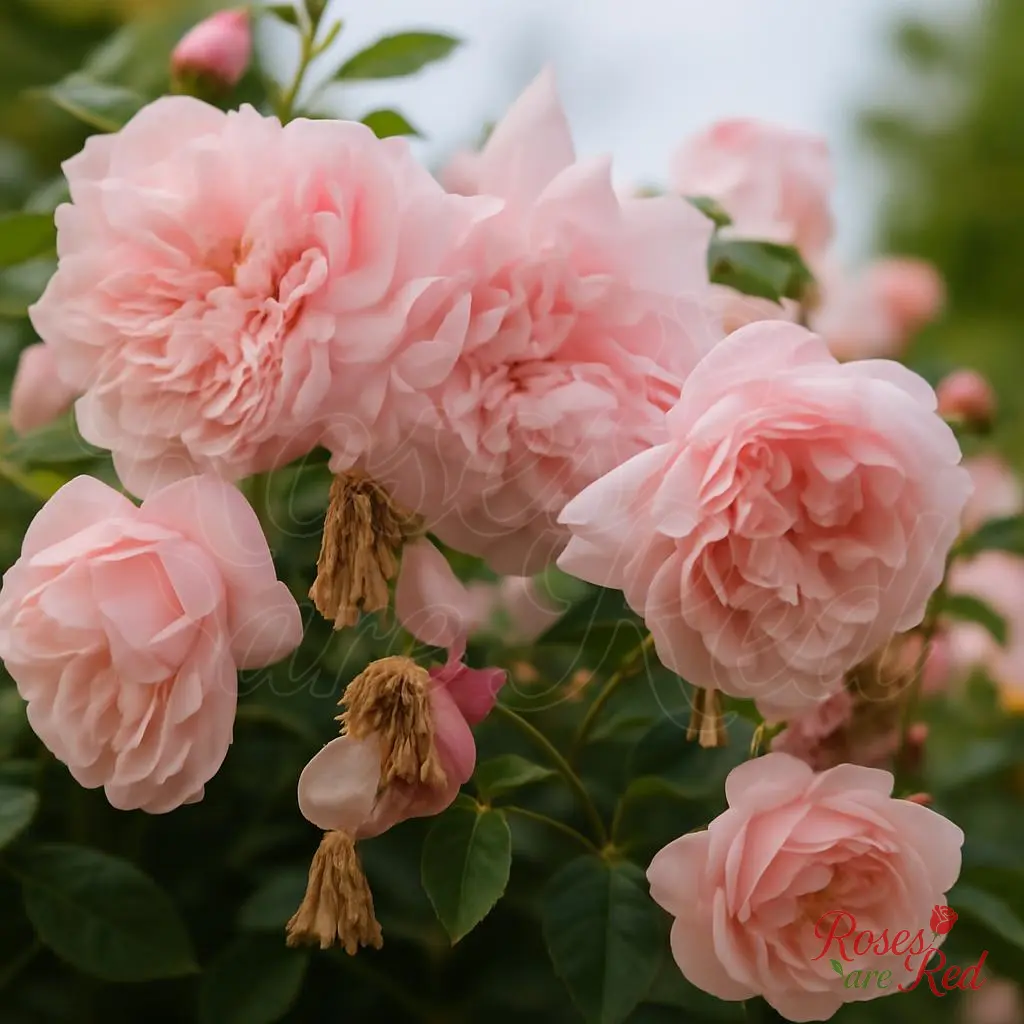
Modern Rose, hybrid wichurana "Francois Juranville", France, introduced by Barbier Frères & Compagnie in 1906, Usually is pink in color, flat bloom shape, blooms 7 - 8 cm in size, has 3-5 buds per stem, once rebloom, has rich fragrance, the bush shape can be arching, 300 - 500 cm in height, 300 cm in width, suitable for USDA zone 6 from -23°C and above, low resistance to rain, moderate resistance to black spot, moderate resistance to mildew.
Main characteristics

Aroma

USDA Zone 6
-23°С

Rebloom


Bush Shape

Bloom Shape
Flat
Size

Height
300 - 500 cm

Width
300 cm

Bloom size
7 - 8 cm

Buds / Stem
3-5

Petal Count
Resistance

Heat

Shade

Rain

Black Spot

Mildew
More information
Francois Juranville is a Barbier-bred Wichurana hybrid, widely grown in colder regions where the blooms retain a rich copper‑pink tone for longer. The flowers are double, flat, sometimes quartered, with slightly wavy and twisted petals and a slightly tousled look. The foliage is dark, glossy, and firm; young leaves are bronze. Canes are long, graceful, and flexible; new growth is dark purple. The cultivar is vigorous and nearly thornless. In hot, dry weather the flowers appear plain pink with a creamy center and open rapidly.
This variety is sometimes confused with ‘Albertine’. Albertine bears pure silvery‑pink clustered flowers and dark green, glossy foliage with bronze tones. The shrub is dense, with flexible, almost thornless shoots. It blooms once in summer and tolerates partial shade and poor soils.
The colour is warm pink; in strong sun the petals fade, and heavy rain can cause some petals to turn soft brown and collapse. Buds are globular; as they open, numerous small inner petals become visible. Fully open blooms reach 10 cm in diameter. The flowers are fragrant with a classic rose scent. Flowering occurs on lateral shoots branching from the main canes; blooms are numerous and can densely cover the plant. Rebloom is limited: after the first flush, only occasional single flowers appear. Growth is rapid. Climbing shoots reach up to 3 m, are flexible, and can be trained to supports; fast-growing laterals subsequently fill the gaps. The plant can reach about 4.5 m in height and up to 3.6 m in width. It performs in a wide range of sites but requires ample light for best display. The variety is hardy but does not cope well with winter winds; in the coldest regions, protection is required. Leaves are green and glossy, present in quantity and forming a dense backdrop for the blooms. For its age, it shows good resistance to common rose diseases; depending on conditions, powdery mildew or black spot may occur, typically without severe impact. Suitable for training on structures or other supports in well-lit areas; it can also be grown in a bush form.
Shade‑tolerant variety.
This variety is sometimes confused with ‘Albertine’. Albertine bears pure silvery‑pink clustered flowers and dark green, glossy foliage with bronze tones. The shrub is dense, with flexible, almost thornless shoots. It blooms once in summer and tolerates partial shade and poor soils.
The colour is warm pink; in strong sun the petals fade, and heavy rain can cause some petals to turn soft brown and collapse. Buds are globular; as they open, numerous small inner petals become visible. Fully open blooms reach 10 cm in diameter. The flowers are fragrant with a classic rose scent. Flowering occurs on lateral shoots branching from the main canes; blooms are numerous and can densely cover the plant. Rebloom is limited: after the first flush, only occasional single flowers appear. Growth is rapid. Climbing shoots reach up to 3 m, are flexible, and can be trained to supports; fast-growing laterals subsequently fill the gaps. The plant can reach about 4.5 m in height and up to 3.6 m in width. It performs in a wide range of sites but requires ample light for best display. The variety is hardy but does not cope well with winter winds; in the coldest regions, protection is required. Leaves are green and glossy, present in quantity and forming a dense backdrop for the blooms. For its age, it shows good resistance to common rose diseases; depending on conditions, powdery mildew or black spot may occur, typically without severe impact. Suitable for training on structures or other supports in well-lit areas; it can also be grown in a bush form.
Shade‑tolerant variety.
Popular Breeders
Articles