

 Sign in
 Rose Catalog
F.J.Grootendorst, hybrid rugosa
Also known as
Grootendorst
Nelkenrose
Red Grootendorst
Share
Prices nearby
or to see prices for this rose



















Brief summary
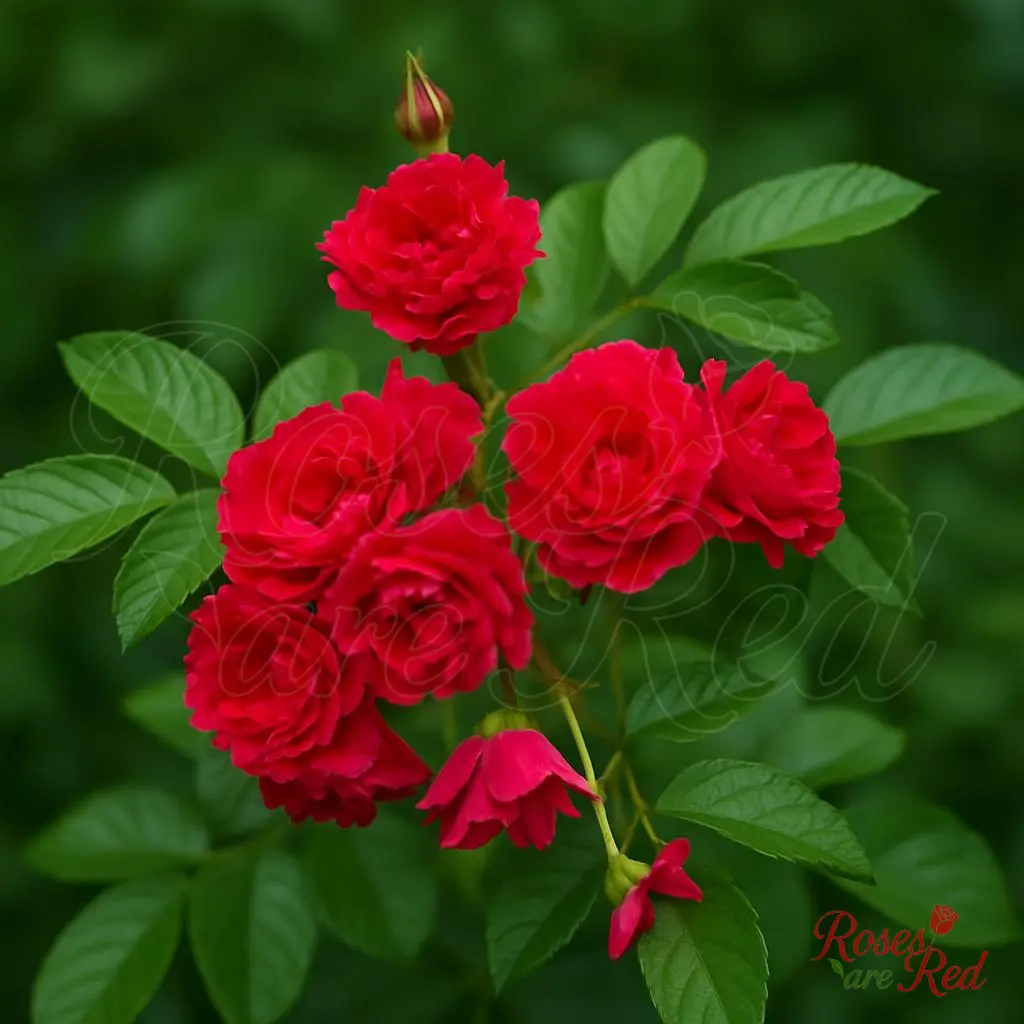
Modern Rose, hybrid rugosa "F.J.Grootendorst", introduced in 1918, Usually is red in color, semi double bloom shape, blooms 3 - 4 cm in size, has 5-10 buds per stem, continual rebloom, has light fragrance, the bush shape can be upright, 150 - 175 cm in height, 125 cm in width, strong resistance to rain, strong resistance to black spot, strong resistance to mildew.
Main characteristics

Aroma

Rebloom


Bush Shape

Bloom Shape
Semi double
Size

Height
150 - 175 cm

Width
125 cm
Bloom size
3 - 4 cm
Buds / Stem
5-10

Petal Count
Resistance

Heat

Shade

Rain

Black Spot
Mildew
More information
There are four Grootendorst roses. The original cultivar, from which the others (sports) derive, was raised by an amateur and listed by Boskop Nursery as F.J. Grootendorst & Sons, named in honor of the family’s father. The flowers of F.J. Grootendorst are deep red. Two sports came from it: Pink Grootengorst in 1923 and the deep red Grootendorst Supreme in 1936. From Pink Grootengorst came another sport, White Grootendorst, in 1962. All four cultivars are identical except for flower color, and the sports frequently revert (i.e., the coloration of the original returns). They are distinguished from other rugosa roses by absence of fragrance and indented/serrated petal edges (such indentation occurs in only one other rugosa, Fimbriata, and in the Chinese rose Serratipetala). Flowers appear in dense clusters, usually 7–15, accompanied by pale green, wrinkled foliage. Thick green shoots and gray-brown branches are very prickly; young growth is strongly lobed. Later the shoots become bare, respond well to pruning, and flower again quickly. Without pruning, plants reach about 1.75 m, are very winter-hardy, disease-resistant, and bloom heavily. Suitable for cutting, either alone or in mixed arrangements, and for mixed borders due to abundant, long-lasting flowering.
Hybrid rugosa. Blooms in large clusters of small, carnation-like flowers; very abundant. The bush is vigorous. In harsh winters can freeze back to the snow line.
Dark green, leathery, very prickly rugosa foliage with tassels of small, crimson-red flowers with indented, carnation-like edges. Odourless. Suitable for hedges, reaches 1.5 m in height. Blooms profusely. Can be cut back to any desired height. Hardy. Can be grown in semi-shade.
Very prickly, as in rugosas. Reblooms quickly. Blooms in large sprays.
Landscape shrub; the foliage distinguishes it from other roses. Red, carnation-like flowers appear in very large clusters. The bush is upright and responds well to pruning. (Oliver)
Flowers are small (4 cm), double, carmine-red, borne in small inflorescences. Petals have a toothed edge; the cultivar is sometimes called a “carnation rose.” Shrubs up to 1 m tall, dense, very prickly, with dark green, glossy foliage. Flowering from June to August. Widely used in hedges. Shade-tolerant variety.
Hybrid rugosa. Blooms in large clusters of small, carnation-like flowers; very abundant. The bush is vigorous. In harsh winters can freeze back to the snow line.
Dark green, leathery, very prickly rugosa foliage with tassels of small, crimson-red flowers with indented, carnation-like edges. Odourless. Suitable for hedges, reaches 1.5 m in height. Blooms profusely. Can be cut back to any desired height. Hardy. Can be grown in semi-shade.
Very prickly, as in rugosas. Reblooms quickly. Blooms in large sprays.
Landscape shrub; the foliage distinguishes it from other roses. Red, carnation-like flowers appear in very large clusters. The bush is upright and responds well to pruning. (Oliver)
Flowers are small (4 cm), double, carmine-red, borne in small inflorescences. Petals have a toothed edge; the cultivar is sometimes called a “carnation rose.” Shrubs up to 1 m tall, dense, very prickly, with dark green, glossy foliage. Flowering from June to August. Widely used in hedges. Shade-tolerant variety.
Popular Breeders
Articles