


 Sign in
 Rose Catalog
Felicite et Perpetue, hybrid sempervirens

Also known as
Felicite Perpetue
Lilly Ito
Seven Sisters
Share
Prices nearby
or to see prices for this rose



















Brief summary
Old Garden Rose, hybrid sempervirens "Felicite et Perpetue", France, introduced by Antoine A. Jacques in 1828, Usually is pink in color, flat bloom shape, blooms 3 - 4 cm in size, has 5-10 buds per stem, once rebloom, has rich fragrance, the bush shape can be arching, 400 - 500 cm in height, 300 cm in width, suitable for USDA zone 5 from -29°C and above, low resistance to rain, moderate resistance to black spot, strong resistance to mildew.
Main characteristics

Aroma

USDA Zone 5
-29°С

Rebloom


Bush Shape

Bloom Shape
Flat
Size

Height
400 - 500 cm

Width
300 cm

Bloom size
3 - 4 cm

Buds / Stem
5-10

Petal Count
Resistance

Heat

Shade

Rain

Black Spot

Mildew
More information
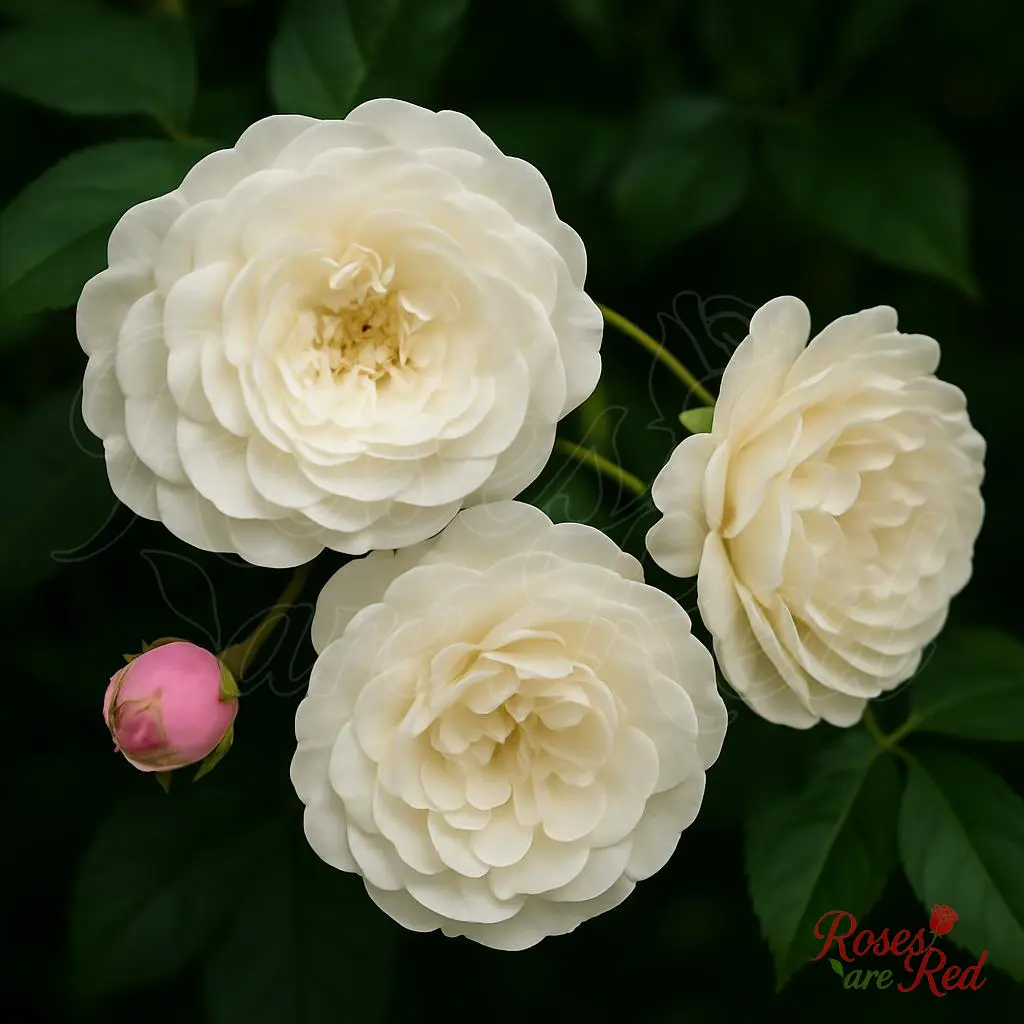
Felicite et Perpetue is a widely grown Sempervirens hybrid. Flowers open soft pink from crimson buds, then shift to cream and finally pure white. They are densely double, forming neat rosettes with a button eye at the centre. Blooms are carried in large, loose trusses, usually 20–40 per truss, set against very dark, small, disease-resistant evergreen foliage. With age, blooms turn brown and dry on the plant. The plant forms a large, dense, well-lined, pleated rose with large thorns. Without support the bush sprawls; shoots are readily trained over arches and other supports.
This cultivar has many synonyms, including multiple orthographic variations of Felicite et Perpetue. It is among the most common Rosa sempervirens hybrids. Flowers measure 3.5–4 cm in diameter, globular at first, then opening into small flat rosettes with a mass of tiny petals around a central button. They start delicate pink, quickly fading to cream and then white, with a strong musky fragrance. It blooms late, in large trusses, very profusely. The petals do not drop; they remain on the plant, withering into brown clumps.
This cultivar has many synonyms, including multiple orthographic variations of Felicite et Perpetue. It is among the most common Rosa sempervirens hybrids. Flowers measure 3.5–4 cm in diameter, globular at first, then opening into small flat rosettes with a mass of tiny petals around a central button. They start delicate pink, quickly fading to cream and then white, with a strong musky fragrance. It blooms late, in large trusses, very profusely. The petals do not drop; they remain on the plant, withering into brown clumps.
Popular Breeders
Articles