


 Sign in
 Rose Catalog
Dorothy Perkins, hybrid wichurana

Share
Prices nearby
or to see prices for this rose



















Brief summary
Modern Rose, hybrid wichurana "Dorothy Perkins", United States, introduced by Jackson & Perkins in 1901, Usually is fuchsia in color, flat bloom shape, blooms 4 - 5 cm in size, has 5-10 buds per stem, once rebloom, has light fragrance, the bush shape can be arching, 200 - 300 cm in height, 200 cm in width, suitable for USDA zone 6 from -23°C and above, moderate resistance to rain, low resistance to black spot, low resistance to mildew.
Main characteristics

Aroma

USDA Zone 6
-23°С

Rebloom


Bush Shape

Bloom Shape
Flat
Size

Height
200 - 300 cm

Width
200 cm

Bloom size
4 - 5 cm

Buds / Stem
5-10

Petal Count
Resistance

Heat

Shade

Rain

Black Spot

Mildew
More information
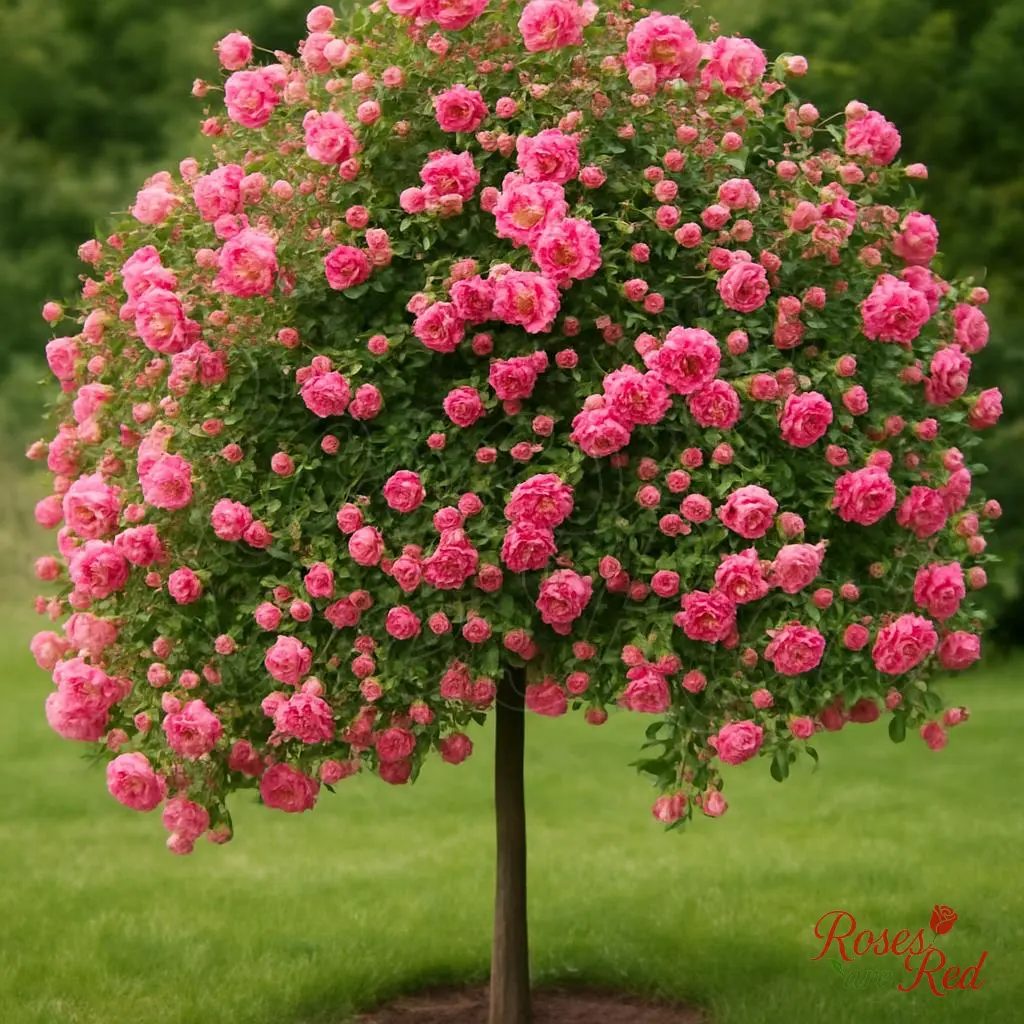
Produces many blooms. Cascading flower clusters hang from a vigorous plant. Flowers are terry, rosette-shaped, small, pink. Foliage is glossy, dark green. Reaches 3 m in height and 2.5 m in width. Tolerates poor soils. Susceptible to powdery mildew.
This variegated rose bears pink flowers and otherwise closely resembles the raspberry-colored cultivar Excelsa. The terry blooms, 6 cm in diameter, form large, drooping clusters appearing in early summer. Like Excelsa, Dorothy Perkins is suitable for training on a stake. The leaves persist for some time, but buds and flowers are soon affected by powdery mildew. Often used in large gardens where space allows both once-flowering variegated roses such as Dorothy Perkins and continuous-flowering roses. A related selection is Super Dorothy (HELdoro), bred by Hetzel in 1986, which flowers longer and shows reduced powdery mildew susceptibility.
Flowers are bright pink, saucer-shaped, small (3 cm), very double (about 90 petals), slightly fragrant, borne in inflorescences of 30–40. Leaves are dark green, shiny. Spines are frequent, hook-shaped. Shrubs reach up to 4.5 m, with thin, flexible shoots. Flowering is abundant for 30–40 days, sometimes repeated (a portion of buds typically turns yellow and drops before opening). Winter-resistant. Suitable for vertical gardening; also grown as a bush.
Shade-tolerant variety.
This variegated rose bears pink flowers and otherwise closely resembles the raspberry-colored cultivar Excelsa. The terry blooms, 6 cm in diameter, form large, drooping clusters appearing in early summer. Like Excelsa, Dorothy Perkins is suitable for training on a stake. The leaves persist for some time, but buds and flowers are soon affected by powdery mildew. Often used in large gardens where space allows both once-flowering variegated roses such as Dorothy Perkins and continuous-flowering roses. A related selection is Super Dorothy (HELdoro), bred by Hetzel in 1986, which flowers longer and shows reduced powdery mildew susceptibility.
Flowers are bright pink, saucer-shaped, small (3 cm), very double (about 90 petals), slightly fragrant, borne in inflorescences of 30–40. Leaves are dark green, shiny. Spines are frequent, hook-shaped. Shrubs reach up to 4.5 m, with thin, flexible shoots. Flowering is abundant for 30–40 days, sometimes repeated (a portion of buds typically turns yellow and drops before opening). Winter-resistant. Suitable for vertical gardening; also grown as a bush.
Shade-tolerant variety.
Popular Breeders
Articles