


 Sign in
 Rose Catalog
Dainty Bess, hybrid tea

Share
Prices nearby
or to see prices for this rose



















Brief summary
Modern Rose, hybrid tea "Dainty Bess", United Kingdom, introduced by Archer & Daughter, Wm. E.B. in 1925, Usually is pink in color, flat bloom shape, blooms 11 - 12 cm in size, has 1-3 buds per stem, repeat rebloom, has light fragrance, the bush shape can be upright, 90 - 100 cm in height, 100 cm in width, suitable for USDA zone 5 from -29°C and above, moderate resistance to rain, moderate resistance to black spot, moderate resistance to mildew, good for cutting.
Main characteristics

Aroma

USDA Zone 5
-29°С

Rebloom


Bush Shape

Bloom Shape
Flat
Size

Height
90 - 100 cm

Width
100 cm
Bloom size
11 - 12 cm

Buds / Stem
1-3

Petal Count
Resistance

Heat

Shade

Rain

Black Spot
Mildew
More information
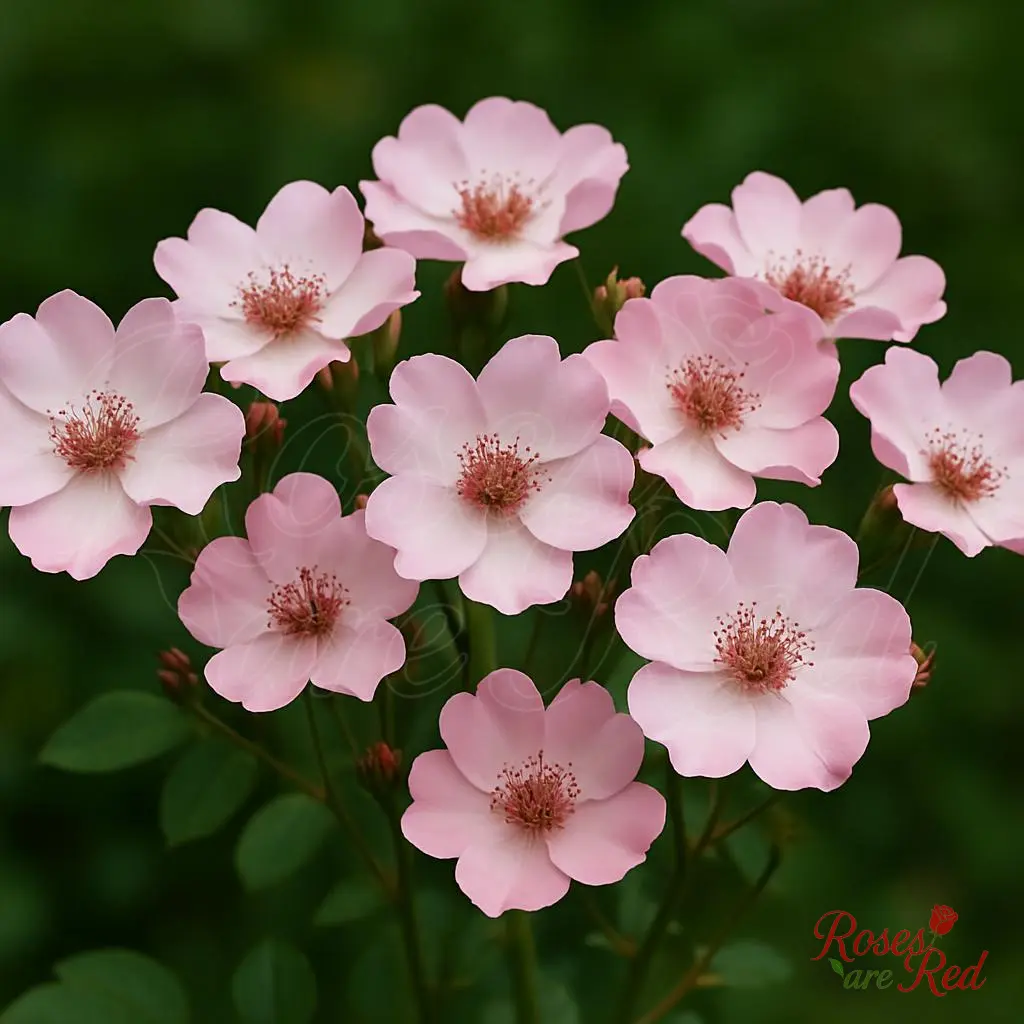
Rose hybridisers report that many seedlings resemble Dainty Bess, with few worth propagating. Dainty Bess is a single (non-double) hybrid tea rose, soft pink with slightly darker petal undersides. The petals are long, firm, broad, and slightly wavy; the flowers feature purple stamens. Blooms form on long shoots, typically in airy clusters of 3–5, followed by large red hips. Foliage is typical, with some susceptibility to black spot. Flowering is nearly continuous. A pleated form exists.
Non-double hybrid tea roses are uncommon. Dainty Bess produces dense pink buds that open to broad, flat, single blooms 10–12 cm across, borne singly or in small clusters. The slightly wavy petals are soft pink above and a little darker beneath, surrounding stamens that range from golden-brown to dark red. Fragrance reports vary: many note a light, spicy scent, while others detect little to none. It starts in early summer and then reblooms in waves through the season. Shoots are very spiny, and the foliage is glossy, dark green. The plant is upright and open, 90–120 cm tall and 60–80 cm wide. Often planted in groups of 3 or more to soften the stiff habit. In heat, petals shatter quickly, and overall bloom quantity is moderate. Although disease resistance is moderate, black spot, powdery mildew, and rust can occur; preventive care is advised.
The silver-pink flowers are unusual for a hybrid tea: single, with five large, slightly wavy petals, encircling dark red stamens. Flowers close at night. Blooms produced in shade are paler. They are fragrant, hold well without dropping quickly, and are suitable for cutting. The shrub has strong, stiff, upright shoots. The variety is hardy, shows disease resistance, and tolerates adverse weather.
Non-double hybrid tea roses are uncommon. Dainty Bess produces dense pink buds that open to broad, flat, single blooms 10–12 cm across, borne singly or in small clusters. The slightly wavy petals are soft pink above and a little darker beneath, surrounding stamens that range from golden-brown to dark red. Fragrance reports vary: many note a light, spicy scent, while others detect little to none. It starts in early summer and then reblooms in waves through the season. Shoots are very spiny, and the foliage is glossy, dark green. The plant is upright and open, 90–120 cm tall and 60–80 cm wide. Often planted in groups of 3 or more to soften the stiff habit. In heat, petals shatter quickly, and overall bloom quantity is moderate. Although disease resistance is moderate, black spot, powdery mildew, and rust can occur; preventive care is advised.
The silver-pink flowers are unusual for a hybrid tea: single, with five large, slightly wavy petals, encircling dark red stamens. Flowers close at night. Blooms produced in shade are paler. They are fragrant, hold well without dropping quickly, and are suitable for cutting. The shrub has strong, stiff, upright shoots. The variety is hardy, shows disease resistance, and tolerates adverse weather.
Popular Breeders
Articles