


 Sign in
 Rose Catalog
Cornelia, hybrid musk

Share
Prices nearby
or to see prices for this rose



















Brief summary
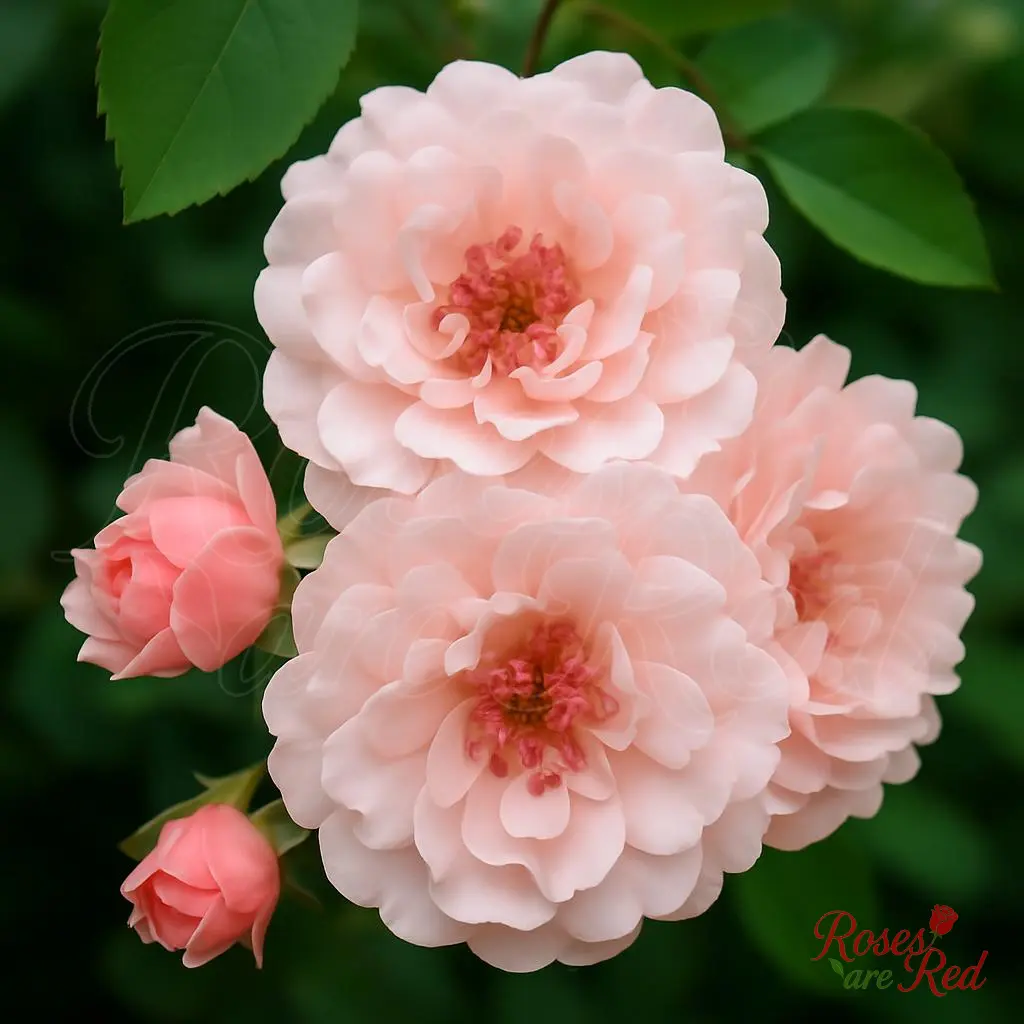
Modern Rose, hybrid musk "Cornelia", United Kingdom, introduced by Joseph Hardwick Pemberton in 1925, Usually is pink, peach in color, semi double bloom shape, blooms 4 - 5 cm in size, has 5-10 buds per stem, repeat rebloom, has rich fragrance, the bush shape can be spreading, 140 - 160 cm in height, 175 cm in width, suitable for USDA zone 6 from -23°C and above, moderate resistance to rain, moderate resistance to black spot, moderate resistance to mildew.
Main characteristics

Aroma

USDA Zone 6
-23°С

Rebloom


Bush Shape

Bloom Shape
Semi double
Size

Height
140 - 160 cm

Width
175 cm

Bloom size
4 - 5 cm

Buds / Stem
5-10

Petal Count
Resistance

Heat

Shade

Rain

Black Spot

Mildew
More information
Compact, semi-marginal blooms are smaller than those of Felicia or Penelopa but are produced in very large numbers. They open from coral-red buds; the reverses of the petals retain a salmon-pink tone, while the inner petals are clear pink. Wavy petals distinguish this rose among musk hybrids. Colour fades in heat and is stronger in autumn and in cooler climates. Flowers are borne in large clusters, typically about 25 in the first flush; in autumn, nearly twice as many. Foliage is dark green and disease resistant. Shoots are smooth and almost thornless; the shrub is rounded. In hot climates it can be trained on a support as a pletista rose.
Colour ranges from pink to peach depending on the time of year. This musk rose carries small, double flowers with wavy petals, approximately 2–3 cm across. Early-season blooms are usually pale pink with a yellow tint. The display continues through summer, with another profuse wave typically in autumn. In cooler weather the tones shift more toward peach. Fragrance is light to medium. Shoots are moderately prickly; the shrub is fountain-shaped and can be used as a pleated rose, in which case Cornelia reaches 3–4 m. Shoots can be wrapped around an obelisk or pergola post, or trained along an arch or wall. If cut back after the first flowering, Cornelia forms an airy, rounded shrub about 120–150 cm tall and 150–180 cm wide. Suitable for the back of a mixed border or as an informal hedge. Disease resistant.
Roses are seldom grown for autumn bloom, but Cornelia produces brighter flowers and larger clusters in autumn. The first blooms in early summer are apricot, fading to pink, set against dark green foliage. Requires little or no pruning.
Flowers are pink with a peach tinge. Small globular buds open to neat blooms with about 30 petals and a diameter of around 6 cm. The fragrance is strong and musky. The first flush exceeds the subsequent ones, although in favourable conditions late-season flowering can be abundant. The shrub is neat, rounded, and very dense. Size varies greatly with growing conditions and pruning: height 120–180 cm, width usually 110–140 cm. Requires abundant light. Cold-sensitive. Foliage is light green and glossy; shrubs may appear under-branched. Susceptible to powdery mildew.
Cornelia has a fountain-like habit similar to Buff Beauty. It flowers as freely in large sprays of coral-pink, semi-marginal blooms. It reaches about 1.5 m in height, with foliage that is bronze at first and later dark green. Colour is more vivid in autumn.
Clusters of small, densely set pink flowers with an apricot tinge open from dark pink buds. The shrub is densely clothed, with reddish shoots, well rounded, and reaches about 1.5 m in both height and width. Flowering lasts a very long time. Tolerates semi-shade and adverse weather.
The English clergyman Pemberton bred many hybrid musk roses that form inflorescences all summer and carry a musky scent. The tall, luxuriant variety Cornelia also blooms continuously with loose, double flowers. Colour varies substantially from delicate apricot to pink, depending on season and soil type. The flowers are fragrant and suitable for cutting; Cornelia is also suitable for mixed plantings with perennials.
This rose withstands northern winters and southern summers. Cornelia’s long, arching shoots droop to create a fountain-shaped shrub, or can be tied and used as a plaited rose on a support. With restrained pruning each year after the first flowering, it can be maintained at about 1.5 m, but it will grow considerably taller on a support. In June, it is covered with clusters of small, densely borne, fragrant apricot-pink flowers with golden stamens. Flowering continues until autumn. Shade-tolerant variety.
Colour ranges from pink to peach depending on the time of year. This musk rose carries small, double flowers with wavy petals, approximately 2–3 cm across. Early-season blooms are usually pale pink with a yellow tint. The display continues through summer, with another profuse wave typically in autumn. In cooler weather the tones shift more toward peach. Fragrance is light to medium. Shoots are moderately prickly; the shrub is fountain-shaped and can be used as a pleated rose, in which case Cornelia reaches 3–4 m. Shoots can be wrapped around an obelisk or pergola post, or trained along an arch or wall. If cut back after the first flowering, Cornelia forms an airy, rounded shrub about 120–150 cm tall and 150–180 cm wide. Suitable for the back of a mixed border or as an informal hedge. Disease resistant.
Roses are seldom grown for autumn bloom, but Cornelia produces brighter flowers and larger clusters in autumn. The first blooms in early summer are apricot, fading to pink, set against dark green foliage. Requires little or no pruning.
Flowers are pink with a peach tinge. Small globular buds open to neat blooms with about 30 petals and a diameter of around 6 cm. The fragrance is strong and musky. The first flush exceeds the subsequent ones, although in favourable conditions late-season flowering can be abundant. The shrub is neat, rounded, and very dense. Size varies greatly with growing conditions and pruning: height 120–180 cm, width usually 110–140 cm. Requires abundant light. Cold-sensitive. Foliage is light green and glossy; shrubs may appear under-branched. Susceptible to powdery mildew.
Cornelia has a fountain-like habit similar to Buff Beauty. It flowers as freely in large sprays of coral-pink, semi-marginal blooms. It reaches about 1.5 m in height, with foliage that is bronze at first and later dark green. Colour is more vivid in autumn.
Clusters of small, densely set pink flowers with an apricot tinge open from dark pink buds. The shrub is densely clothed, with reddish shoots, well rounded, and reaches about 1.5 m in both height and width. Flowering lasts a very long time. Tolerates semi-shade and adverse weather.
The English clergyman Pemberton bred many hybrid musk roses that form inflorescences all summer and carry a musky scent. The tall, luxuriant variety Cornelia also blooms continuously with loose, double flowers. Colour varies substantially from delicate apricot to pink, depending on season and soil type. The flowers are fragrant and suitable for cutting; Cornelia is also suitable for mixed plantings with perennials.
This rose withstands northern winters and southern summers. Cornelia’s long, arching shoots droop to create a fountain-shaped shrub, or can be tied and used as a plaited rose on a support. With restrained pruning each year after the first flowering, it can be maintained at about 1.5 m, but it will grow considerably taller on a support. In June, it is covered with clusters of small, densely borne, fragrant apricot-pink flowers with golden stamens. Flowering continues until autumn. Shade-tolerant variety.
Popular Breeders
Articles