

 Sign in
 Rose Catalog
Cherry Love, hybrid tea

Prices nearby

















Brief summary
Main characteristics






Size



Resistance




More information
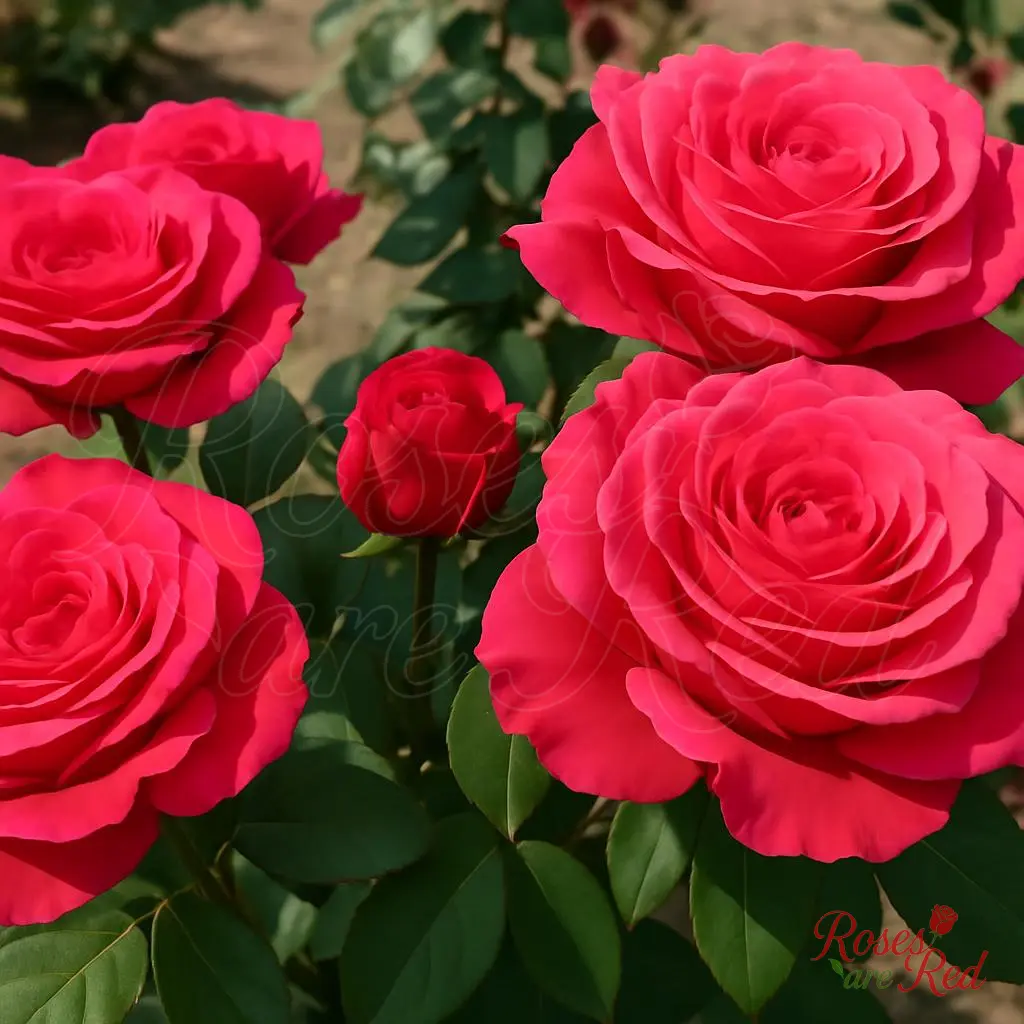
Hybrid tea rose with deep cherry-colored flowers and a velvety appearance. Petals have burgundy veins on a cherry background and form an elongated, high-centered bud. Flowers are borne singly on the shoots and do not fade in the sun. The bud, as the petals begin to open, is about 2.8 cm in height and 1.4 cm in diameter, globular in shape. Fully open flowers reach about 9.5 cm in diameter. The flower center remains closed for an extended period.
The bush is compact, dense, and upright, with vigorous growth. Average bush height is about 160 cm. Leaves are dark green, leathery, pointed, with a glossy anthocyanin tone. The number of prickles is typical for the group; some descriptions note stems as almost without thorns.
Winter hardiness is high. The flowers tolerate rain and partial shade well and show resistance to high temperatures. In open-ground cultivation, the bush maintains a uniform shape with evenly arranged flowers and blooms throughout the season.
Fragrance is absent or very weak. Flower longevity is about 16 days on the plant, up to about 12–17 days in the cut. The variety is resistant to black spot and insufficiently resistant to powdery mildew. The cultivar is described as a sport of TANkalcid discovered in April 1998 and shows similarity in flower form and overall habit to the rose ‘Black Magic’.