

 Sign in
 Rose Catalog
Charles de Mills, gallica/provins

Also known as
Bizarre Triomphant
Ardoisee
Maheca de Dupont
Rosa gallica atropurpurea
Rose Bleue
Violette Bronzee
Share
Prices nearby
or to see prices for this rose


















Brief summary
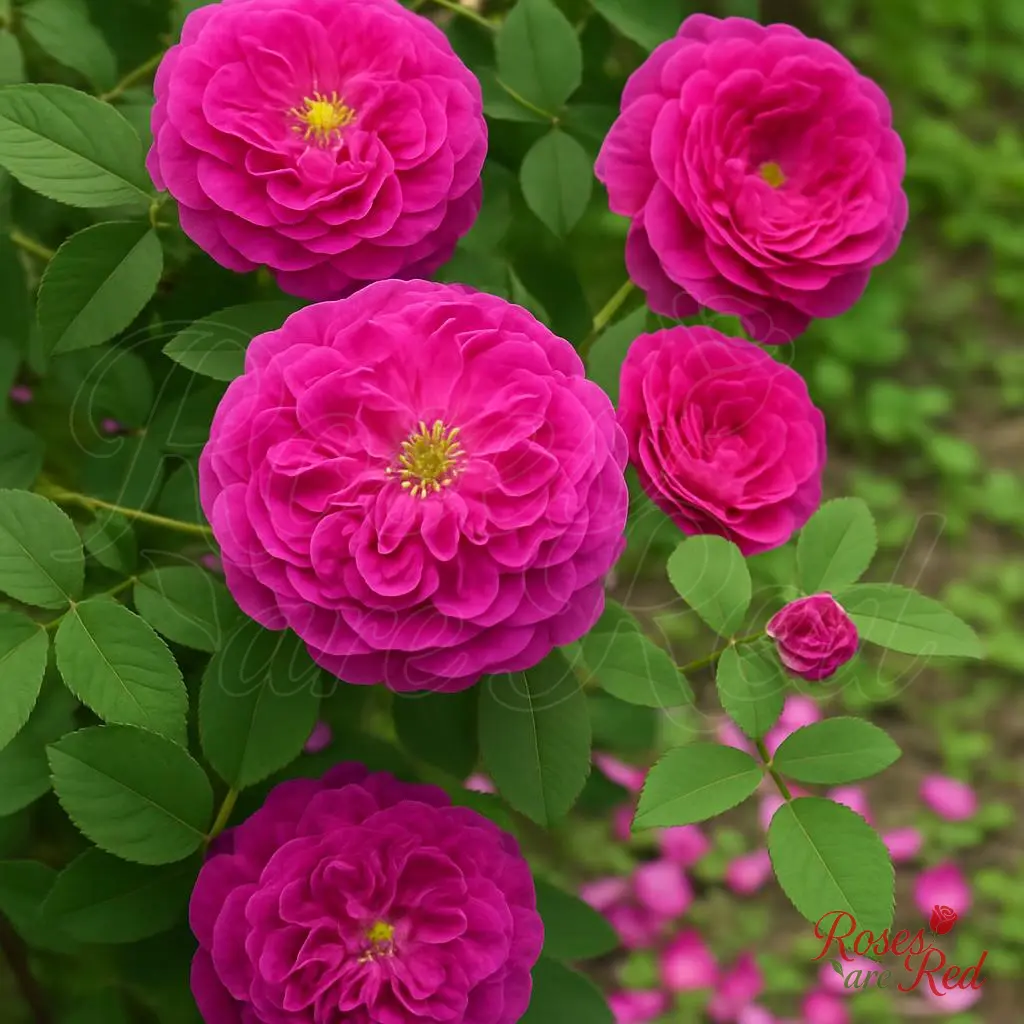
Old Garden Rose, gallica/provins "Charles de Mills", Netherlands, introduced in 1786, Usually is purple in color, globular bloom shape, blooms 11 - 12 cm in size, has 1-3 buds per stem, once rebloom, has rich fragrance, the bush shape can be arching, 125 - 150 cm in height, 175 cm in width, low resistance to rain, moderate resistance to black spot, low resistance to mildew.
Main characteristics

Aroma

Rebloom


Bush Shape

Bloom Shape
Globular
Size

Height
125 - 150 cm

Width
175 cm

Bloom size
11 - 12 cm

Buds / Stem
1-3

Petal Count
Resistance

Heat

Shade

Rain

Black Spot

Mildew
More information
The exact historical name of this antique Gallica is unknown; some consider it to be Bizarre Triomphant. It is among the more commonly grown antique roses, noted for large flowers, vigorous growth, coloration, and ease of cultivation. Buds open slightly cupped, with masses of small central petals; when fully open, blooms flatten and take on a mushroom-like aspect. Color varies slightly but always includes purple or crimson tones, often with black, plum, or purple tints. Individual blooms are short-lived and appear in clusters of 3. The shrub is nearly thornless, with matte, rigid foliage and arched, drooping shoots that bow under flower weight. Staking is often used; plants on rootstock produce many suckers. Powdery mildew may appear late in the season.
Large, velvety raspberry blooms, densely petalled, with a symmetrical form. The shrub is fairly spreading and tends to collapse; flowers persist for several weeks if temperatures remain moderate. Susceptible to black spot. (Oliver)
This rose varies notably in appearance with growing conditions. Flowers can reach 15 cm across. The shrub is tidy with good structure, though branches may bend to the ground under the weight of blooms. Height can reach 1.5 m, and plants on their own roots produce many basal shoots. Color is typical for Gallicas—dark crimson—ranging from deep purple to dark pink. Flowering continues for several weeks in early summer. Individual blooms can be long-lasting. Flowers are often flattened.
This Gallica bears large, flat, very full blooms, 13–15 cm in diameter. Color is usually deep crimson or reddish purple, with a dark pink edge on the outer petals, fading to pinkish purple. Flowers appear in small clusters over several weeks. Foliage is stiff and bright green; shoots are upright and not very prickly. The shrub is strong-growing, 120–150 cm tall. Used as an accent or at the back of a border. On its own roots it sends up shoots, forming dense thickets. Heavy blooms tend to droop; training on a support helps carry the weight and display the flowers.
Charles de Mills shows deep red and purple tones with gradations that fade to very dark pink. Blooms retain a cupped form even when fully open, and the fragrance is intense. The rich green foliage is infrequently affected by disease, though black spot may occur on lower leaves if ventilation is poor. The shrub forms a symmetrical mound with slightly drooping, nearly thornless shoots. Winter hardiness is adequate. Propagates readily from green cuttings.
Large flowers, almost brownish crimson, with so many petals that the blooms are flattened. Fragrance is very intense. The shrub is well shaped, almost thornless, with rich green foliage. Shoots often droop, but in colder regions are usually upright. Susceptible to black spot. Can suffer severe frost damage without winter protection.
Rounded, cupped, quartered flowers 10–12 cm across, so densely petalled they can appear tissue-like. Deep red with purple undertones and a silvery lavender reverse, with a strong fragrance. Once-blooming. The shrub is practically thornless.
Large, velvety raspberry blooms, densely petalled, with a symmetrical form. The shrub is fairly spreading and tends to collapse; flowers persist for several weeks if temperatures remain moderate. Susceptible to black spot. (Oliver)
This rose varies notably in appearance with growing conditions. Flowers can reach 15 cm across. The shrub is tidy with good structure, though branches may bend to the ground under the weight of blooms. Height can reach 1.5 m, and plants on their own roots produce many basal shoots. Color is typical for Gallicas—dark crimson—ranging from deep purple to dark pink. Flowering continues for several weeks in early summer. Individual blooms can be long-lasting. Flowers are often flattened.
This Gallica bears large, flat, very full blooms, 13–15 cm in diameter. Color is usually deep crimson or reddish purple, with a dark pink edge on the outer petals, fading to pinkish purple. Flowers appear in small clusters over several weeks. Foliage is stiff and bright green; shoots are upright and not very prickly. The shrub is strong-growing, 120–150 cm tall. Used as an accent or at the back of a border. On its own roots it sends up shoots, forming dense thickets. Heavy blooms tend to droop; training on a support helps carry the weight and display the flowers.
Charles de Mills shows deep red and purple tones with gradations that fade to very dark pink. Blooms retain a cupped form even when fully open, and the fragrance is intense. The rich green foliage is infrequently affected by disease, though black spot may occur on lower leaves if ventilation is poor. The shrub forms a symmetrical mound with slightly drooping, nearly thornless shoots. Winter hardiness is adequate. Propagates readily from green cuttings.
Large flowers, almost brownish crimson, with so many petals that the blooms are flattened. Fragrance is very intense. The shrub is well shaped, almost thornless, with rich green foliage. Shoots often droop, but in colder regions are usually upright. Susceptible to black spot. Can suffer severe frost damage without winter protection.
Rounded, cupped, quartered flowers 10–12 cm across, so densely petalled they can appear tissue-like. Deep red with purple undertones and a silvery lavender reverse, with a strong fragrance. Once-blooming. The shrub is practically thornless.
Popular Breeders
Articles