
 Sign in
 Rose Catalog
Share
Prices nearby
or to see prices for this rose

















Brief summary
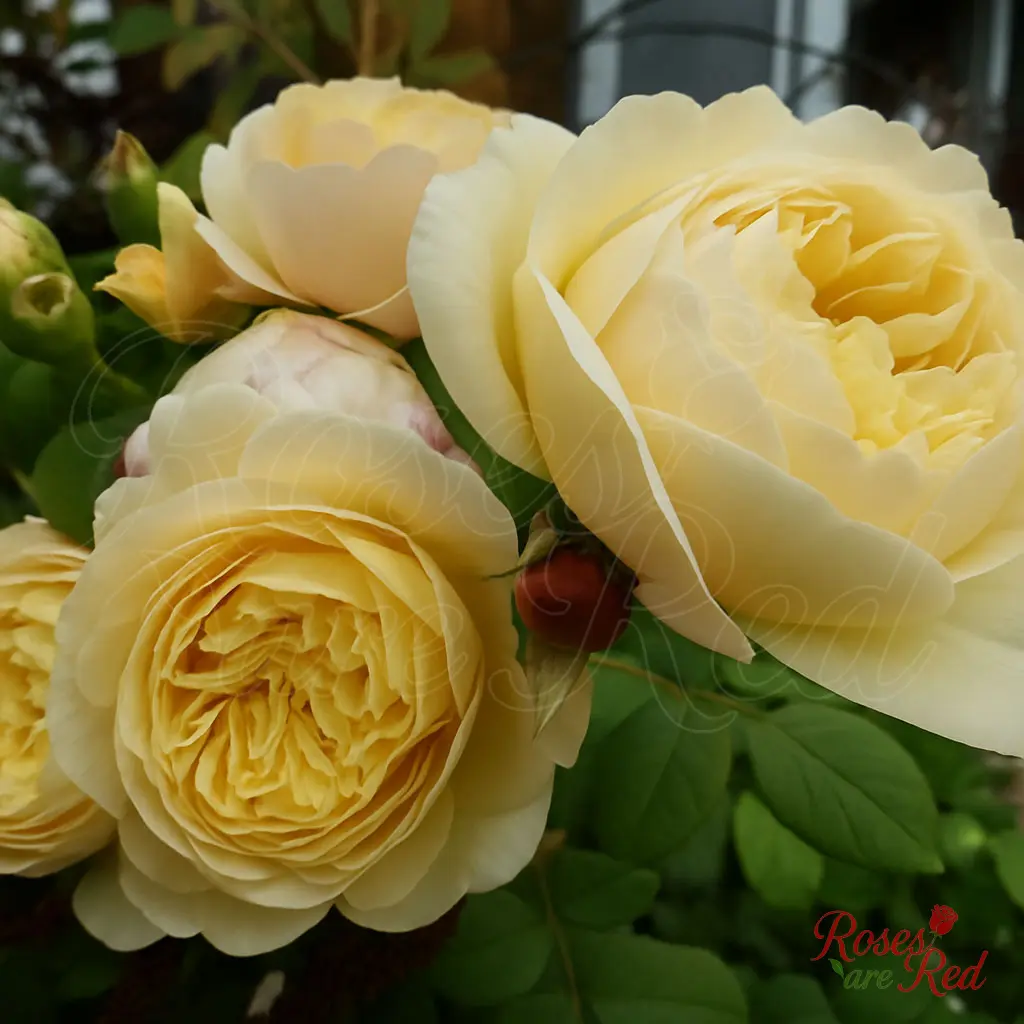
Modern Rose, shrub "Charles Darwin®", United Kingdom, introduced by David C. H. Austin in 1991, Usually is yellow in color, deep cup bloom shape, very full petal count, blooms 14 - 16 cm in size, has 1-3 buds per stem, repeat rebloom, has rich fragrance, the bush shape can be bushy, 100 - 120 cm in height, 90 cm in width, suitable for USDA zone 5 from -29°C and above, low resistance to rain, strong resistance to black spot, strong resistance to mildew, thornless or has nearly no thorns, good for cutting.
Main characteristics

Aroma

USDA Zone 5
-29°С

Rebloom


Bush Shape

Bloom Shape
Deep cup
Size
Height
100 - 120 cm
Width
90 cm
Bloom size
14 - 16 cm
Buds / Stem
1-3
Petal Count
Very full
Resistance

Heat

Shade

Rain

Black Spot
Mildew
More information
Charles Darwin blooms rank among the largest of English Roses, comparable in size to Brother Cadfael and Golden Celebration. The flowers are very densely petaled, initially spherical, then opening into wide, cup-shaped blooms. The colour is a rich yellow reminiscent of old gold, with occasional variation toward lemon or sandy tones. The variety forms a branched bush with notable disease resistance, suitable for the foreground of a mixed border or for a rose garden. The fragrance is strong and weather-dependent, ranging from a light Tea Rose note to an almost pure lemon scent.
At first glance the variety resembles Abraham Darby: the same large, cup-shaped flowers on a sturdy bush, but with a different colour. Charles Darwin displays a very pure mustard-yellow hue with a pronounced aroma combining floral tea and lemon.
At first glance the variety resembles Abraham Darby: the same large, cup-shaped flowers on a sturdy bush, but with a different colour. Charles Darwin displays a very pure mustard-yellow hue with a pronounced aroma combining floral tea and lemon.
Popular Breeders
Articles