


 Sign in
 Rose Catalog
Charles Aznavour, floribunda

Prices nearby



















Brief summary
Main characteristics







Size





Resistance





More information
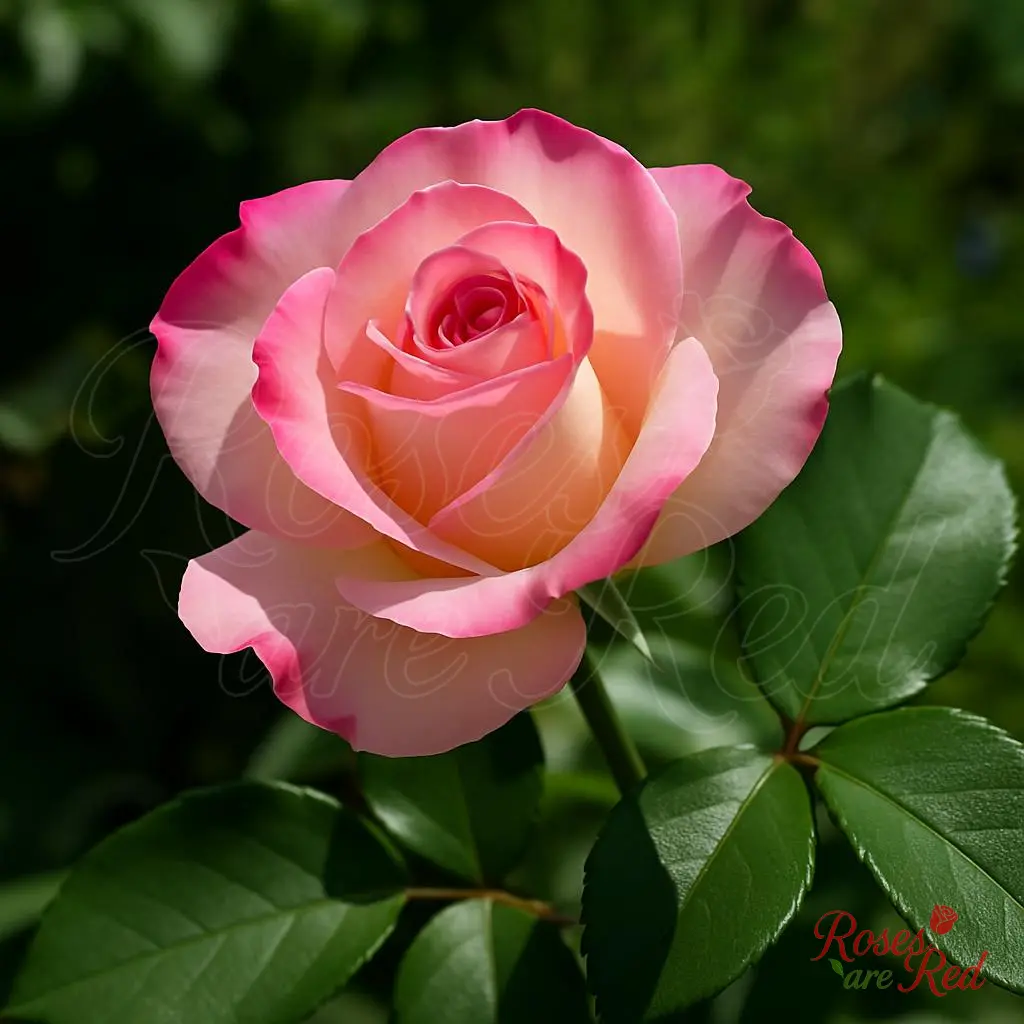
‘Charles Aznavour’ is a floribunda rose characterized by abundant, rapid repeat flowering and almost continuous blooming through the season. It produces half-waved flowers with wavy petals and a small central cluster of stamens. Buds are ovoid.
At opening, flowers are ivory with a pink center. As they mature, a dark pink edging develops on the petals, and the cream tones gradually become pure white. In strong sun and hot weather, the color lightens and the flowers may appear almost white. In dry conditions, the flower display remains longer. Bloom diameter averages about 4 in (10 cm). Each flower has approximately 24–25 petals and is usually borne singly or in small clusters of 5–15 blooms. The flowers have no fragrance and are suitable for cutting.
The foliage is medium to dark green, glossy to semi-glossy, dense, leathery, and shows resistance to common rose diseases. The plant has an arching, bushy, compact, mounded, and spreading growth habit. It is winter-hardy and is also used as a landscape rose in hot climates, where it reaches about 1.2 m in height. Typical dimensions are 2–3 ft (60–90 cm) in height and 3–4 ft (90–120 cm) in width.
Flowering occurs in flushes throughout the season. In hot weather, flowers fade more quickly; in cooler spring and autumn conditions, flower color is retained for a longer period and the blooming phase per flush is longer.
‘Charles Aznavour’ is a white or white-blend rose with blush or pink edges, bred by Alain Meilland in France in 1988.