

 Sign in
 Rose Catalog
Champlain, hybrid kordesii
Share
Prices nearby
or to see prices for this rose



















Brief summary
Modern Rose, hybrid kordesii "Champlain", introduced by Dr. Felicitas Svejda in 1982, Usually is burgundy in color, semi double bloom shape, blooms 5 - 6 cm in size, has 3-5 buds per stem, continual rebloom, has light fragrance, the bush shape can be bushy, 100 - 125 cm in height, 100 cm in width, suitable for USDA zone 5 from -29°C and above, moderate resistance to black spot, low resistance to mildew.
Main characteristics

Aroma

USDA Zone 5
-29°С

Rebloom


Bush Shape

Bloom Shape
Semi double
Size

Height
100 - 125 cm

Width
100 cm

Bloom size
5 - 6 cm

Buds / Stem
3-5

Petal Count
Resistance

Heat

Shade

Rain

Black Spot
Mildew
More information
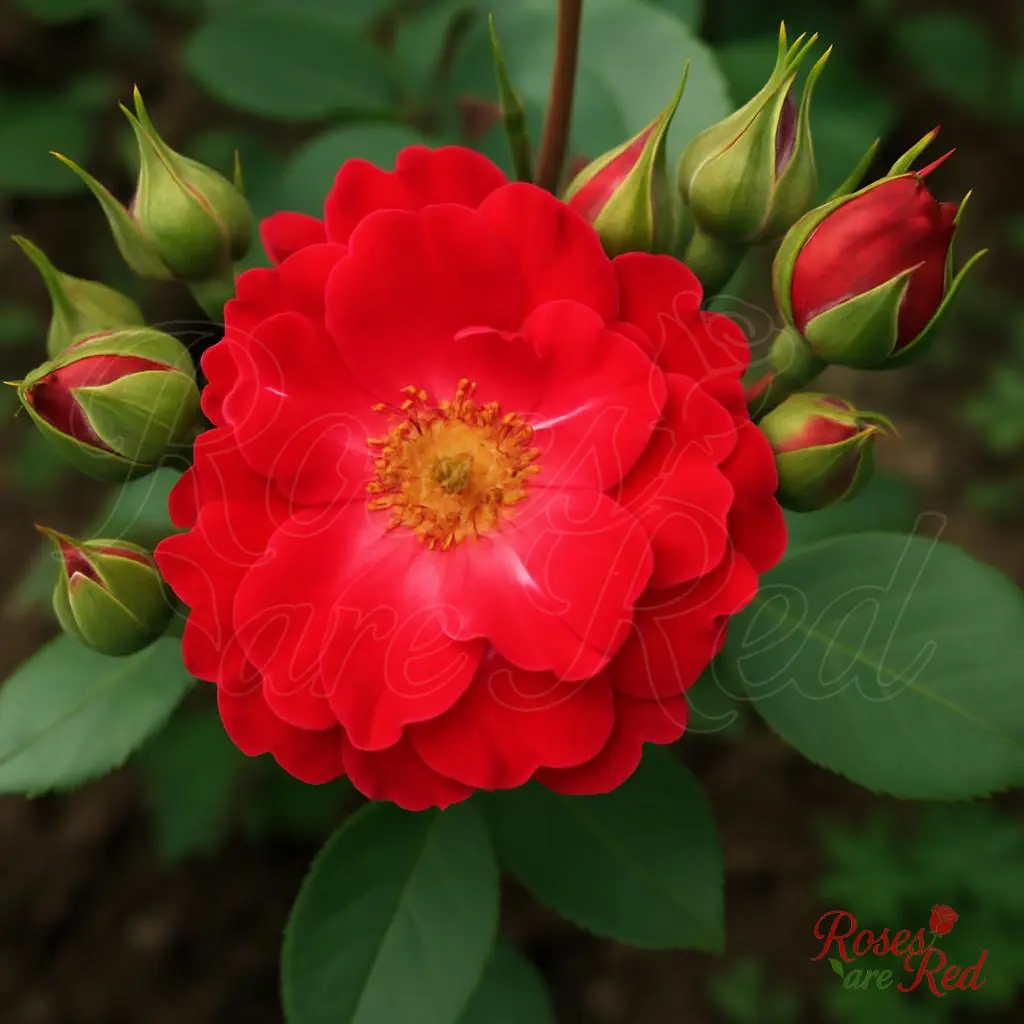
In full bloom, Champlain produces very abundant flowering. Although bred to withstand severe Canadian winters, it aligns more with a floribunda than other roses in the Explorer series. The blooms are bright, deep red, semi-double, with a prominent cluster of bright yellow stamens in the center. They appear in small clusters of 5–7, almost continuously until frost. Champlain is a compact variety with fine, pale green, glossy foliage. Quite thorny. Very disease resistant in cold climates, but powdery mildew is possible in wet conditions.
Champlain is winter-hardy and flowers almost continuously. Only heavy frosts stop blooming. Although overall winter hardiness is not very high, the shrub regrows well from the base when on its own roots. The flowers are rich, velvety red. The variety also shows notable disease resistance. The bush is low, suitable for planting in flowerbeds. Rooting is easy, but obtaining cuttings is difficult because the plant is low and in constant bloom.
A red rose for gardeners in northern regions. This kordesii hybrid is part of the Canadian Explorer Series, bred by Agriculture Canada in Ottawa and selected for winter hardiness, repeat flowering, and disease resistance. Champlain bears rich red, velvety flowers with a cluster of golden stamens in the center. The lightly scented double flowers are medium-sized (about 8 cm in diameter) and appear in large clusters from early summer until frost. Bright green foliage covers the spiny shoots. The shrub is quite compact, 90–120 cm tall and wide. Suitable for borders in combination with silver perennials such as wormwood and hare’s ears (Stachys byzantina), and also for hedges. Growth is slow, possibly because considerable energy is directed to abundant flowering. Disease resistance is good, although it is susceptible to powdery mildew in some regions.
Champlain is winter-hardy and flowers almost continuously. Only heavy frosts stop blooming. Although overall winter hardiness is not very high, the shrub regrows well from the base when on its own roots. The flowers are rich, velvety red. The variety also shows notable disease resistance. The bush is low, suitable for planting in flowerbeds. Rooting is easy, but obtaining cuttings is difficult because the plant is low and in constant bloom.
A red rose for gardeners in northern regions. This kordesii hybrid is part of the Canadian Explorer Series, bred by Agriculture Canada in Ottawa and selected for winter hardiness, repeat flowering, and disease resistance. Champlain bears rich red, velvety flowers with a cluster of golden stamens in the center. The lightly scented double flowers are medium-sized (about 8 cm in diameter) and appear in large clusters from early summer until frost. Bright green foliage covers the spiny shoots. The shrub is quite compact, 90–120 cm tall and wide. Suitable for borders in combination with silver perennials such as wormwood and hare’s ears (Stachys byzantina), and also for hedges. Growth is slow, possibly because considerable energy is directed to abundant flowering. Disease resistance is good, although it is susceptible to powdery mildew in some regions.
Popular Breeders
Articles