


 Sign in
 Rose Catalog
Cardinal de Richelieu, gallica/provins

Also known as
Rose Van Sian
Share
Prices nearby
or to see prices for this rose



















Brief summary
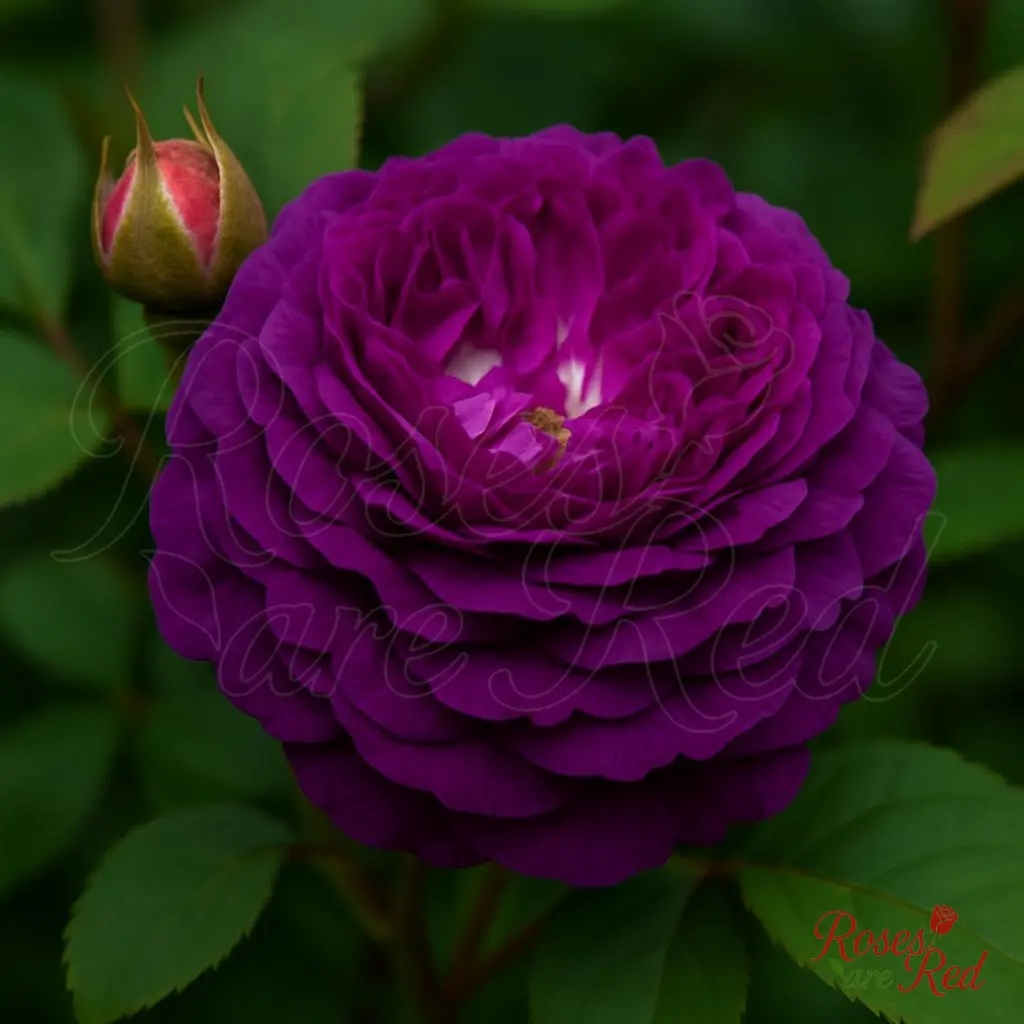
Old Garden Rose, gallica/provins "Cardinal de Richelieu", Belgium, introduced by Louis-Joseph-Ghislain Parmentier in 1847, Usually is purple in color, rosette (ruffled) bloom shape, blooms 5 - 6 cm in size, has 1-3 buds per stem, once rebloom, has light fragrance, the bush shape can be arching, 150 - 175 cm in height, 150 cm in width, suitable for USDA zone 5 from -29°C and above, low resistance to rain, moderate resistance to black spot, moderate resistance to mildew.
Main characteristics

Aroma

USDA Zone 5
-29°С

Rebloom


Bush Shape

Bloom Shape
Rosette (Ruffled)
Size

Height
150 - 175 cm

Width
150 cm

Bloom size
5 - 6 cm

Buds / Stem
1-3

Petal Count
Resistance

Heat

Shade

Rain

Black Spot

Mildew
More information
Cardinals wore red and bishops wore purple. Cardinal de Richelieu is a Gallica rose noted for purple coloration. The cultivar has an unusual chromosome set: it is triploid, while most Gallica roses are tetraploid. On this basis, it is suspected to be a hybrid with a diploid Chinese rose. The flowers are small, double, purple, with an almost white reverse; when the petals reflex and expose the button eye, the contrast between white and purple is pronounced. Petal bases are pale with white streaks. The color later moves through purple and lilac before the petals drop. The bush is self-cleaning. Flowers typically come in clusters of three. Shoots are reported as thornless to almost thornless. The foliage is fine and glossy. Bloom is free for a Gallica.
Among purple-toned roses, this Gallica produces rounded, cup-shaped, double blooms about 7.5 cm in diameter, in small clusters. Flowers open velvety dark red and deepen to dark purple, with lighter or pink tones on petal reverses and white streaks at the base. It blooms once per season in early summer. Shoots are slender, arching, and almost thornless. Regular care is recommended; for strong flowering the following year, thin and prune after bloom. It can be trained on a support. Often used at the front of borders with silvery perennials such as Artemisia and sage. Generally disease resistant, though black spot can occur.
Cardinal de Richelieu presents cup-shaped blooms even when fully open. Flower diameter is reported as about 6 cm at most in some sources. Clusters usually contain 3 flowers, sometimes more. Buds are crimson-purple, opening to ashy-purple and eventually aging to deep grey-purple in sun. It can be combined with white Mme Hardy for contrast. The scent is light but noticeable, almost peppery. The bush is compact, of medium vigor, and typically requires a couple of seasons to reach mature size.
The very double flowers are a deep purple within winter-hardy roses, appearing in large numbers in early summer on a dense bush that usually does not exceed 1 m. Bloom lasts 4–5 weeks. Late blooms can show proliferation (a secondary small flower emerging from the center). The cultivar tolerates cold to about -30°C. Foliage can be somewhat susceptible to black spot. Propagates readily from green cuttings.
Flowers are reported at about 5 cm in diameter, velvety purple, and quartered. Foliage is dark green; shoots are almost without thorns. It is hardy without winter shelter.
The petals tend to curl inward, exposing the lighter undersides. Shoots are almost thornless. The variety is shade tolerant and blooms heavily for a Gallica.
Among purple-toned roses, this Gallica produces rounded, cup-shaped, double blooms about 7.5 cm in diameter, in small clusters. Flowers open velvety dark red and deepen to dark purple, with lighter or pink tones on petal reverses and white streaks at the base. It blooms once per season in early summer. Shoots are slender, arching, and almost thornless. Regular care is recommended; for strong flowering the following year, thin and prune after bloom. It can be trained on a support. Often used at the front of borders with silvery perennials such as Artemisia and sage. Generally disease resistant, though black spot can occur.
Cardinal de Richelieu presents cup-shaped blooms even when fully open. Flower diameter is reported as about 6 cm at most in some sources. Clusters usually contain 3 flowers, sometimes more. Buds are crimson-purple, opening to ashy-purple and eventually aging to deep grey-purple in sun. It can be combined with white Mme Hardy for contrast. The scent is light but noticeable, almost peppery. The bush is compact, of medium vigor, and typically requires a couple of seasons to reach mature size.
The very double flowers are a deep purple within winter-hardy roses, appearing in large numbers in early summer on a dense bush that usually does not exceed 1 m. Bloom lasts 4–5 weeks. Late blooms can show proliferation (a secondary small flower emerging from the center). The cultivar tolerates cold to about -30°C. Foliage can be somewhat susceptible to black spot. Propagates readily from green cuttings.
Flowers are reported at about 5 cm in diameter, velvety purple, and quartered. Foliage is dark green; shoots are almost without thorns. It is hardy without winter shelter.
The petals tend to curl inward, exposing the lighter undersides. Shoots are almost thornless. The variety is shade tolerant and blooms heavily for a Gallica.
Popular Breeders
Articles