


 Sign in
 Rose Catalog
Cantabrigiensis, shrub

Also known as
R. cantabrigiensis
Rosa X cantabrigiensis
Rosa X pteragonis 'Cantabrigiensis'
Rosa cantabrigiensis hort. ex S.Weaver
Rosa pteragonis cantabrigiensis
The Cambridge Rose
Share
Prices nearby
or to see prices for this rose



















Brief summary
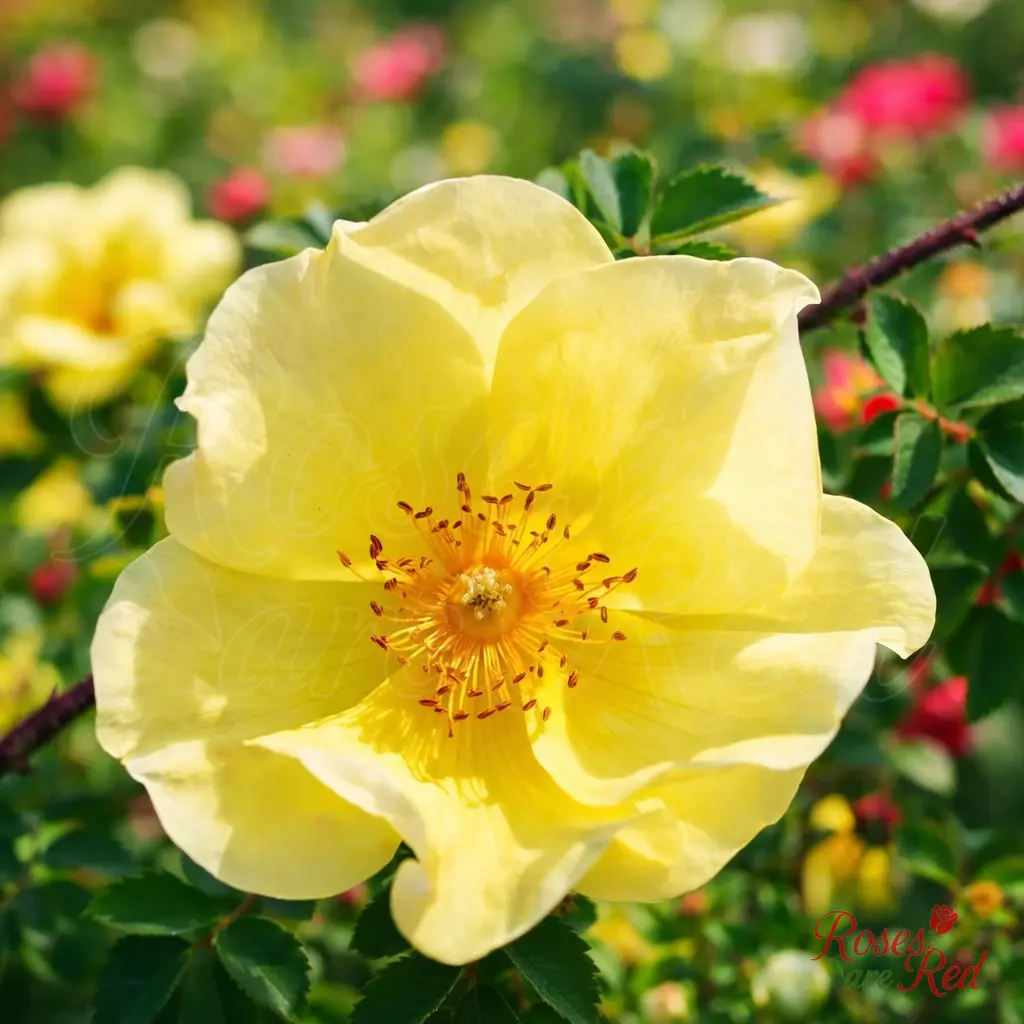
Modern Rose, shrub "Cantabrigiensis", United Kingdom, introduced by Dr. C. C. Hurst in 1922, Usually is yellow in color, single count petal count, blooms 5 cm in size, has 1 buds per stem, once rebloom, has moderate fragrance, the bush shape can be arching, bushy, spreading, upright, 150 - 210 cm in height, suitable for USDA zone 6 from -23°C and above, thornless or has nearly no thorns.
Main characteristics

Aroma

USDA Zone 6
-23°С

Rebloom


Bush Shape


Size

Height
150 - 210 cm

Width
Bloom size
5 cm

Buds / Stem
1

Petal Count
Single count
Resistance

Heat

Shade

Rain

Black Spot

Mildew
More information
Cantabrigiensis is a shrub rose of the species cross class. The flowers are light yellow, aging to cream, with moderate fragrance and about 5 petals, forming a large single bloom about 5 cm in diameter, usually borne solitary. It blooms once in spring or summer. The plant has an arching, thorny, bushy, spreading and upright habit with small light green foliage consisting of 7 to 11 leaflets. It reaches about 200 to 500 cm in height. It is suitable for USDA zones 6b through 9b and can be grown as a garden or specimen shrub. The cultivar was bred by Dr. C. C. Hurst in the United Kingdom around 1922 and introduced in the United Kingdom by R Harkness & Co. Ltd. around 1937 as Rosa X pteragonis 'Cantabrigiensis'.
Popular Breeders
Articles