


 Sign in
 Rose Catalog
Buff Beauty, hybrid musk

Bentall (Bentall), 1939
Share
Prices nearby
or to see prices for this rose



















Brief summary
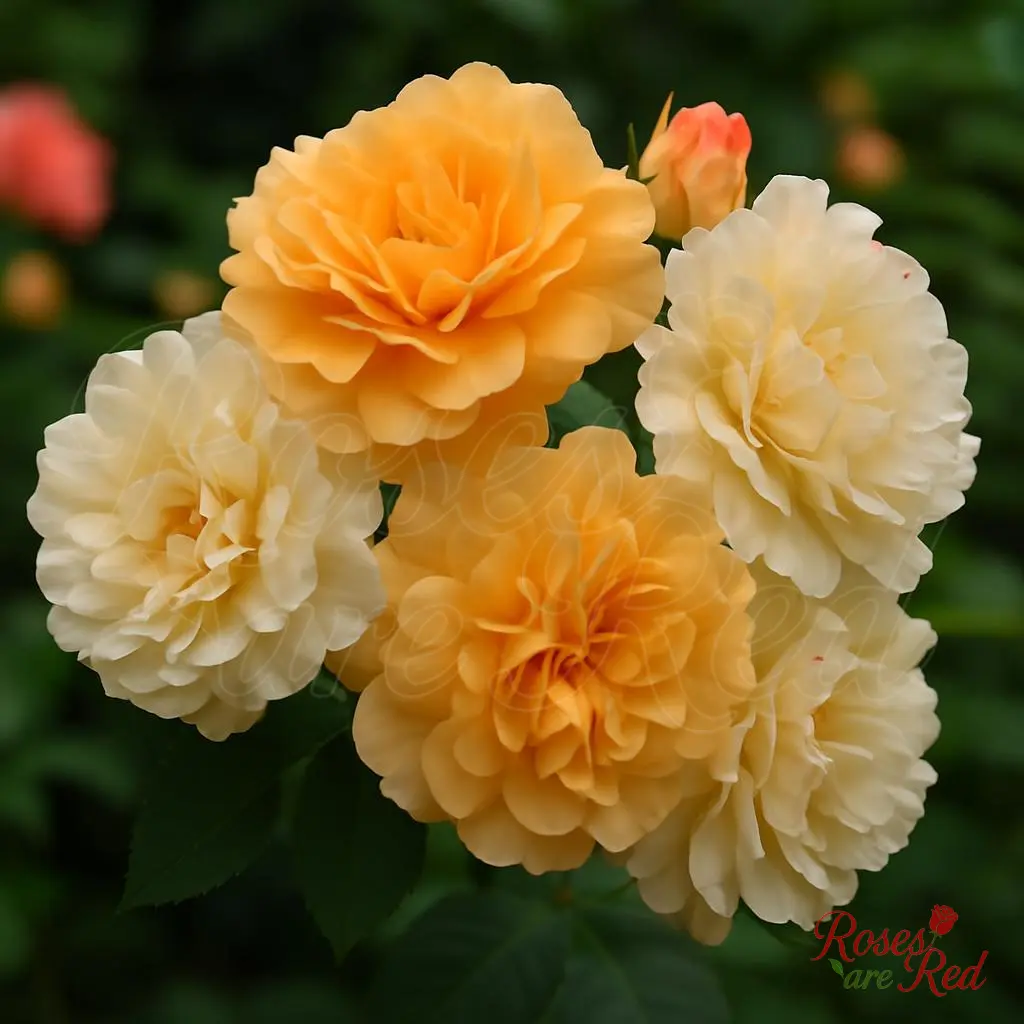
Modern Rose, hybrid musk "Buff Beauty", United Kingdom, introduced by Bentall in 1939, Usually is peach, ivory in color, globular bloom shape, blooms 9 - 10 cm in size, has 3-5 buds per stem, continual rebloom, has rich fragrance, the bush shape can be arching, 180 - 200 cm in height, 150 cm in width, suitable for USDA zone 5 from -29°C and above, low resistance to rain, strong resistance to black spot, strong resistance to mildew.
Main characteristics

Aroma

USDA Zone 5
-29°С

Rebloom


Bush Shape

Bloom Shape
Globular
Size

Height
180 - 200 cm

Width
150 cm

Bloom size
9 - 10 cm

Buds / Stem
3-5

Petal Count
Resistance

Heat

Shade

Rain

Black Spot

Mildew
More information
One of the most widespread musk roses. Blooms shift in tone from apricot yellow through soft orange and honey to a rich cream. Color is stronger in shade or cool conditions, especially in autumn, and fades to cream in hot, sunny weather. Flowers are densely petaled, appear in loose clusters, and are suitable for cutting; blooms are larger in autumn. The plant forms a spreading shrub with arching, pendulous canes; in hot climates it is often trained to twine on a support, while in cold climates it grows as a broad bush with long, flexible, drooping shoots. Foliage is large and dark green, with young leaves red; the variety shows disease resistance and vigorous growth. It flowers in successive waves, with heavy blooming in early autumn, continuing until the first frost.
Buff Beauty is a musky hybrid with variable color and fragrance. It produces clusters of scented, densely petaled flowers up to 10 cm across. Color depends on growing conditions and is most often peach-orange with a golden cast. It is brightest in light partial shade and quickly bleaches to creamy peach in strong sun. It begins in early summer and then reblooms intermittently through summer. Shoots are moderately thorny; foliage is coarse and leathery, red when young and later dark green. Fully open blooms are fairly heavy, so it is often grown with support as a twining rose and can be trained up a wall or pergola. Like many musk roses, it tolerates semi-shade; a bright site without direct sun is recommended. Suitable as a specimen or in a mixed border; can be combined with soft purple or blue flowers such as bluebells.
With partial Noisette ancestry, it exhibits a semi-rambling habit. Flowering is very abundant, almost continuous through the season, with a marked flush in autumn. Blooms measure 7–9 cm and range from deep apricot to creamy honey, with color influenced by weather, time of year, and soil. The scent blends tea-rose and fruity notes. The shrub is very broad and strongly spreading. It is disease resistant, though winter hardiness is not very high.
Apricot-yellow buds open to translucent flowers up to 7.5 cm in diameter, yellowish to creamy, with excellent repeat. Young shoots show a reddish tint. The bush is often wider than tall; in southern regions it behaves like a climbing rose.
Flowers 7–10 cm across vary from creamy yellow to deep apricot depending on the weather. New foliage is bronze-red, later turning dark green; shoots are smooth and brown. The shrub is graceful and fountain-shaped, often broader than its height. It requires ample space and can be trained along a wall or support, or used on a slope as a groundcover.
Shade-tolerant variety.
Buff Beauty is a musky hybrid with variable color and fragrance. It produces clusters of scented, densely petaled flowers up to 10 cm across. Color depends on growing conditions and is most often peach-orange with a golden cast. It is brightest in light partial shade and quickly bleaches to creamy peach in strong sun. It begins in early summer and then reblooms intermittently through summer. Shoots are moderately thorny; foliage is coarse and leathery, red when young and later dark green. Fully open blooms are fairly heavy, so it is often grown with support as a twining rose and can be trained up a wall or pergola. Like many musk roses, it tolerates semi-shade; a bright site without direct sun is recommended. Suitable as a specimen or in a mixed border; can be combined with soft purple or blue flowers such as bluebells.
With partial Noisette ancestry, it exhibits a semi-rambling habit. Flowering is very abundant, almost continuous through the season, with a marked flush in autumn. Blooms measure 7–9 cm and range from deep apricot to creamy honey, with color influenced by weather, time of year, and soil. The scent blends tea-rose and fruity notes. The shrub is very broad and strongly spreading. It is disease resistant, though winter hardiness is not very high.
Apricot-yellow buds open to translucent flowers up to 7.5 cm in diameter, yellowish to creamy, with excellent repeat. Young shoots show a reddish tint. The bush is often wider than tall; in southern regions it behaves like a climbing rose.
Flowers 7–10 cm across vary from creamy yellow to deep apricot depending on the weather. New foliage is bronze-red, later turning dark green; shoots are smooth and brown. The shrub is graceful and fountain-shaped, often broader than its height. It requires ample space and can be trained along a wall or support, or used on a slope as a groundcover.
Shade-tolerant variety.
Popular Breeders
Articles