


 Sign in
 Rose Catalog
Bonica, shrub

Registration name
MEIdomonac
Also known as
Bonica 82
Bonica Meidiland
Demon
Share
Prices nearby
or to see prices for this rose



















Brief summary
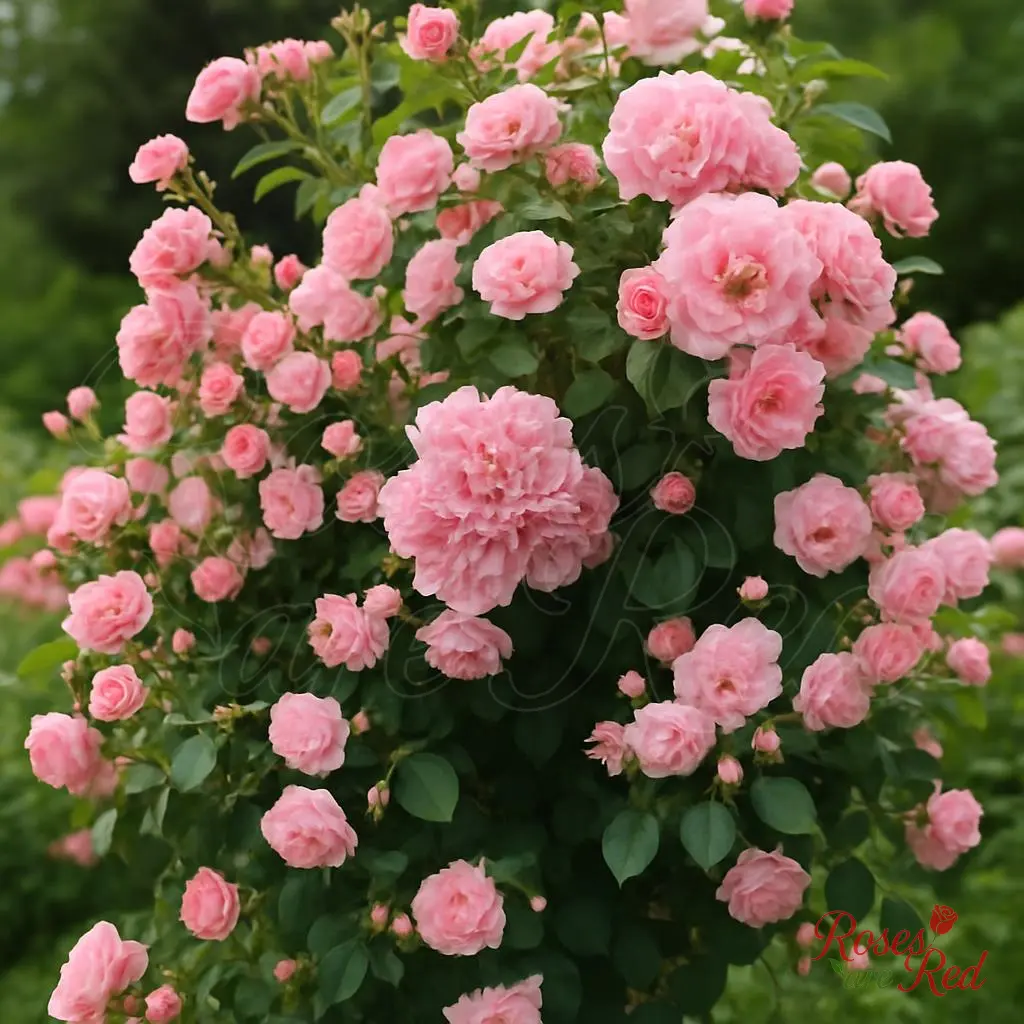
Modern Rose, shrub "Bonica", France, introduced by Meilland Roses in 1985, Usually is pink in color, semi double bloom shape, blooms 5 - 6 cm in size, has 5-10 buds per stem, repeat rebloom, has light fragrance, the bush shape can be spreading, 90 - 100 cm in height, 120 cm in width, suitable for USDA zone 5 from -29°C and above, moderate resistance to rain, low resistance to black spot, moderate resistance to mildew.
Main characteristics

Aroma

USDA Zone 5
-29°С

Rebloom


Bush Shape

Bloom Shape
Semi double
Size

Height
90 - 100 cm

Width
120 cm

Bloom size
5 - 6 cm

Buds / Stem
5-10

Petal Count
Resistance

Heat

Shade

Rain

Black Spot

Mildew
More information
Bonica 82 is a modern rose noted for vigorous growth, abundant bloom, and versatile use. It is used as a shrub, groundcover rose, landscape plant, and in containers. The flowers are pale pink, opening from bright pink buds, and in heat they fade quickly to almost white. Petals are wavy, and the blooms are slightly cup-shaped. Flowers typically appear in clusters of 5–15. Although the flowering shoots are short, the blooms are suitable for cutting and have a long vase life. Bonica 82 has a very long first flowering period; thereafter, individual blooms continue until very late autumn. Bright red hips follow and can remain on the plant until the following spring. The variety forms a dense, rounded bush that can reach 1.5 m in height; it is often pruned in spring to half its height. The foliage is dark green and glossy. Black spot often appears in late summer; flowering persists.
The bush is branched and spreading. Bloom is near-continuous. This rose forms a large plant 120–200 cm tall, depending on region. It has received many awards. Deadheading is recommended because the plant is very floriferous and sets numerous hips; if hips are not removed, fruits persist and the shrub carries them in winter.
It produces large clusters of 3–5 cm double , cup-shaped flowers. Petals are deep pink when the bloom first opens, fading to soft pink. Flowering starts in early summer, followed by a moderate repeat and another abundant flush in autumn. Hips may form after the autumn bloom. Arching shoots are densely covered with shiny dark green foliage. The bush is spreading and is used singly, in groups, and in mixed borders. It shows disease resistance; in humid conditions, black spot may appear.
The bush is branched and spreading. Bloom is near-continuous. This rose forms a large plant 120–200 cm tall, depending on region. It has received many awards. Deadheading is recommended because the plant is very floriferous and sets numerous hips; if hips are not removed, fruits persist and the shrub carries them in winter.
It produces large clusters of 3–5 cm double , cup-shaped flowers. Petals are deep pink when the bloom first opens, fading to soft pink. Flowering starts in early summer, followed by a moderate repeat and another abundant flush in autumn. Hips may form after the autumn bloom. Arching shoots are densely covered with shiny dark green foliage. The bush is spreading and is used singly, in groups, and in mixed borders. It shows disease resistance; in humid conditions, black spot may appear.
Popular Breeders
Articles