


 Sign in
 Rose Catalog
Blanc Double de Coubert, hybrid rugosa

Also known as
Muslin Rose
Rosa rugosa Blanc Double de Coubert
The Muslin Rose
Share
Prices nearby
or to see prices for this rose



















Brief summary
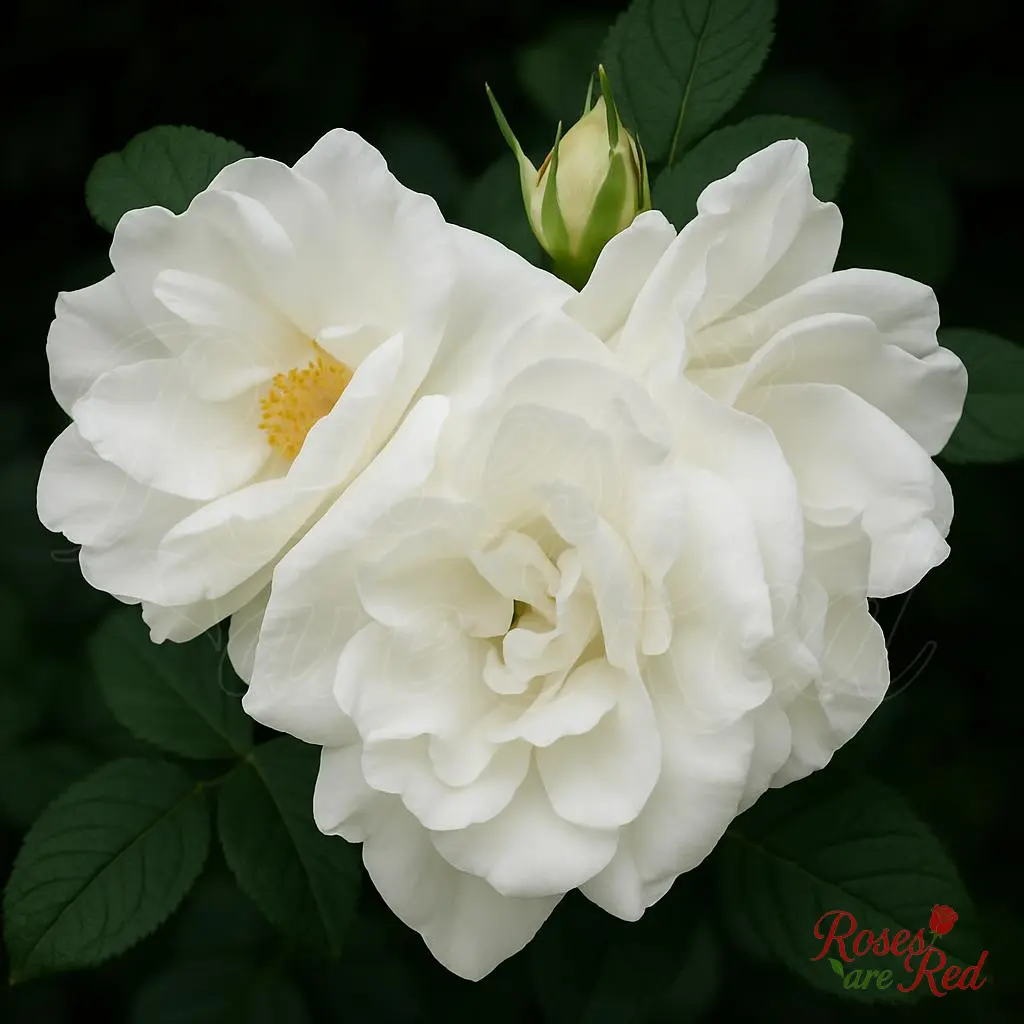
Modern Rose, hybrid rugosa "Blanc Double de Coubert", France, introduced by Charles Pierre Marie Cochet-Cochet in 1892, Usually is white in color, semi double bloom shape, blooms 8 - 9 cm in size, has 1-3 buds per stem, continual rebloom, has rich fragrance, the bush shape can be upright, 120 - 150 cm in height, 50 cm in width, low resistance to rain, strong resistance to black spot, strong resistance to mildew.
Main characteristics

Aroma

Rebloom


Bush Shape

Bloom Shape
Semi double
Size

Height
120 - 150 cm

Width
50 cm

Bloom size
8 - 9 cm

Buds / Stem
1-3

Petal Count
Resistance

Heat

Shade

Rain

Black Spot

Mildew
More information
Vita Sackville-West popularized this rose. It is now cultivated worldwide and is winter-hardy even in regions such as Ontario and Austria. It appears to be a terry form of Rosa rugosa Alba. Noted traits include vigorous growth, high disease resistance, fragrance, white flowers, and large orange hips. It tolerates poor soils and drought and shows strong disease resistance. The foliage is wrinkled and turns bright yellow in autumn. Bloom is almost continuous. Flowers are damaged by rain, the shoots are very prickly, and in small gardens the dense, thorny growth can be difficult to manage. Suitable for cold climates.
Described as “one of the best known of the late Victorian period.” An attractive branching shrub with dark green, wrinkled leaves, strong growth, and height to 2 m. Flowers are large, up to 9 cm wide, semi-flowered, pure white, with golden stamens and a pronounced fragrance. Hips are red and large. Tolerates semi-shade and most soil and weather conditions. Appropriate for hedging or creating a screen.
This large white rose is strongly fragrant. Petals are loosely arranged around a yellow center, and the growth can be lax and irregular. Shrubs, especially in group plantings, form an impenetrable hedge or a large bed. The bush blooms until the first frost; although flowers are fewer late in the season, the fragrance persists. On its own roots it produces scions (suckers) around the plant, forming a thicket. Suitable for stabilizing steep slopes or creating a hedge. Green cuttings root well.
The contrast of snow-white petals with bright green, wrinkled foliage is characteristic. A rugosa hybrid, its buds are pinkish, opening to pure white terry flowers about 7–8 cm in diameter. Fully open blooms are flat, with small, wrinkled petals surrounding yellow stamens. Very fragrant, flowering through summer and autumn. The foliage turns yellow in autumn. Shoots are erect, often drooping; the shrub is very prickly, large, and rounded. It frequently produces shoots, forming thickets, and is well suited to hedges. Useful at the back of a mixed border, especially in white schemes. A drawback is that rain spoils the petals; browned blooms may remain on the plant and need regular removal for a tidy appearance. Shade-tolerant variety.
Described as “one of the best known of the late Victorian period.” An attractive branching shrub with dark green, wrinkled leaves, strong growth, and height to 2 m. Flowers are large, up to 9 cm wide, semi-flowered, pure white, with golden stamens and a pronounced fragrance. Hips are red and large. Tolerates semi-shade and most soil and weather conditions. Appropriate for hedging or creating a screen.
This large white rose is strongly fragrant. Petals are loosely arranged around a yellow center, and the growth can be lax and irregular. Shrubs, especially in group plantings, form an impenetrable hedge or a large bed. The bush blooms until the first frost; although flowers are fewer late in the season, the fragrance persists. On its own roots it produces scions (suckers) around the plant, forming a thicket. Suitable for stabilizing steep slopes or creating a hedge. Green cuttings root well.
The contrast of snow-white petals with bright green, wrinkled foliage is characteristic. A rugosa hybrid, its buds are pinkish, opening to pure white terry flowers about 7–8 cm in diameter. Fully open blooms are flat, with small, wrinkled petals surrounding yellow stamens. Very fragrant, flowering through summer and autumn. The foliage turns yellow in autumn. Shoots are erect, often drooping; the shrub is very prickly, large, and rounded. It frequently produces shoots, forming thickets, and is well suited to hedges. Useful at the back of a mixed border, especially in white schemes. A drawback is that rain spoils the petals; browned blooms may remain on the plant and need regular removal for a tidy appearance. Shade-tolerant variety.
Popular Breeders
Articles