

 Sign in
 Rose Catalog
Share
Prices nearby
or to see prices for this rose



















Brief summary
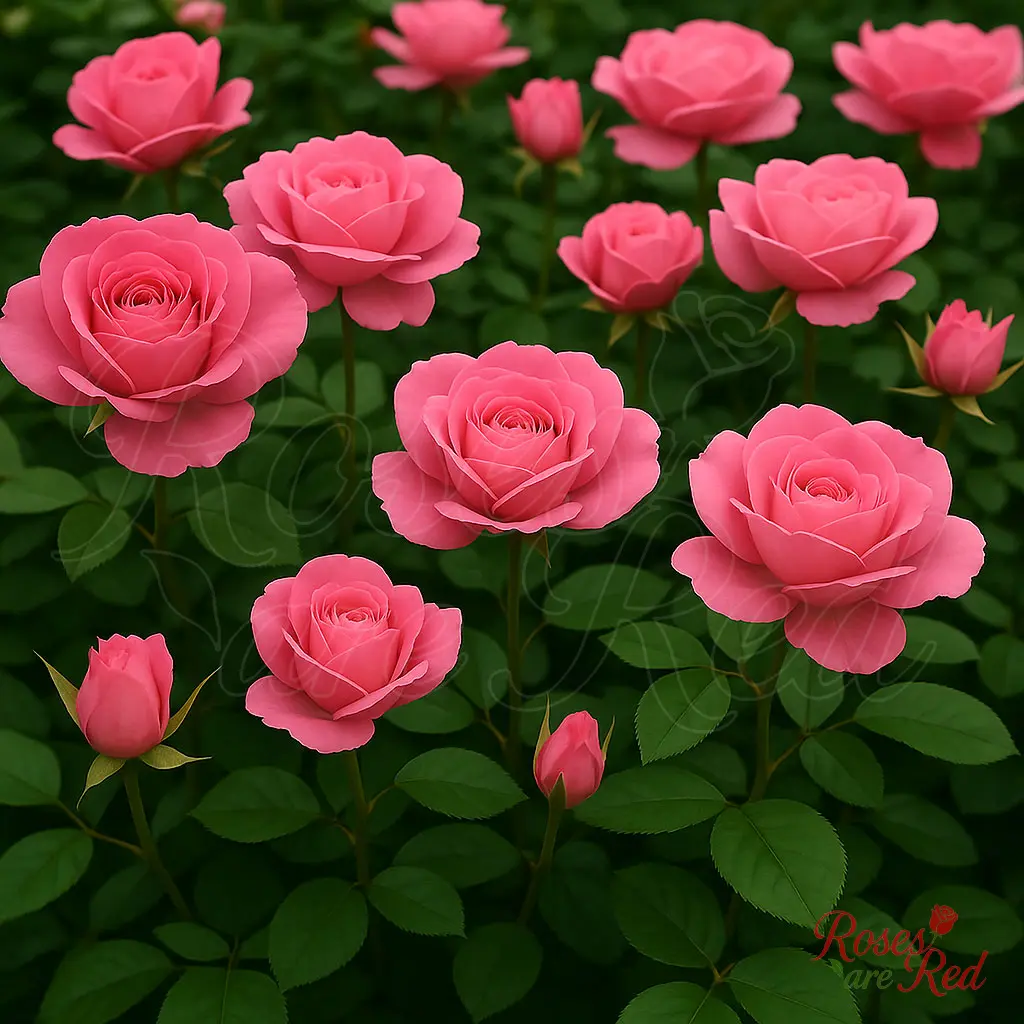
Modern Rose, shrub "Armada", United Kingdom, introduced by Harkness & Co. Ltd in 1988, Usually is pink in color, semi double bloom shape, blooms 9 - 10 cm in size, has 3-5 buds per stem, repeat rebloom, has light fragrance, the bush shape can be arching, 150 - 175 cm in height, 125 cm in width, suitable for USDA zone 5 from -29°C and above, strong resistance to black spot, strong resistance to mildew.
Main characteristics

Aroma

USDA Zone 5
-29°С

Rebloom


Bush Shape

Bloom Shape
Semi double
Size
Height
150 - 175 cm

Width
125 cm
Bloom size
9 - 10 cm

Buds / Stem
3-5

Petal Count
Resistance

Heat

Shade

Rain

Black Spot
Mildew
More information
Armada is a hardy, resilient shrub rose for gardens. Light crimson buds open into cup-shaped pink flowers with darker reverses. They are produced in large numbers in clusters of 3–9 across the entire bush. Orange hips follow and remain on the plant through winter. The bush is vigorous, branched, spreading, with dark green, glossy foliage, and shows disease resistance. In hot climates, the cultivar can be used as a low climbing rose, suitable for hedges. It is one of several recent Harkness introductions developed by crossing ‘New Dawn’ with selected hybrid tea and floribunda roses.
The flower color is intensely pink—not pastel, but a saturated, vivid pink. Firm petals tolerate wind and heavy rain. Buds are small and globular; flower diameter is about 4 cm. Each bloom has 10 petals; the flowers are flat, with visible yellow stamens that contrast with the pink petals. Fragrance is faint, rose-like with a hint of musk. Clustered inflorescences can carry up to 35 buds that open sequentially over several weeks. Removing the first fading blooms encourages further flowering later in the season. At peak, the upper portions of the bushes can be covered by a continuous layer of bloom. The cultivar exhibits strong health; basal shoots are thick and robust. Bushes typically become dense in the second or third year. Height reaches 1.2–1.8 m with a width of 1–1.2 m. As with roses generally, it performs best on suitable sites, but it can also be planted in challenging areas. It is among the hardier cultivars; in very cold regions it requires winter protection. Leaves are light green and glossy. Known for disease resistance. Suitable for hedges and for adding color to mixed borders. Shows vigorous growth and abundant flowering; the color can read bold depending on placement.
The flower color is intensely pink—not pastel, but a saturated, vivid pink. Firm petals tolerate wind and heavy rain. Buds are small and globular; flower diameter is about 4 cm. Each bloom has 10 petals; the flowers are flat, with visible yellow stamens that contrast with the pink petals. Fragrance is faint, rose-like with a hint of musk. Clustered inflorescences can carry up to 35 buds that open sequentially over several weeks. Removing the first fading blooms encourages further flowering later in the season. At peak, the upper portions of the bushes can be covered by a continuous layer of bloom. The cultivar exhibits strong health; basal shoots are thick and robust. Bushes typically become dense in the second or third year. Height reaches 1.2–1.8 m with a width of 1–1.2 m. As with roses generally, it performs best on suitable sites, but it can also be planted in challenging areas. It is among the hardier cultivars; in very cold regions it requires winter protection. Leaves are light green and glossy. Known for disease resistance. Suitable for hedges and for adding color to mixed borders. Shows vigorous growth and abundant flowering; the color can read bold depending on placement.
Popular Breeders
Articles