

 Sign in
 Rose Catalog
Albertine, hybrid wichurana
Share
Prices nearby
or to see prices for this rose

















Brief summary
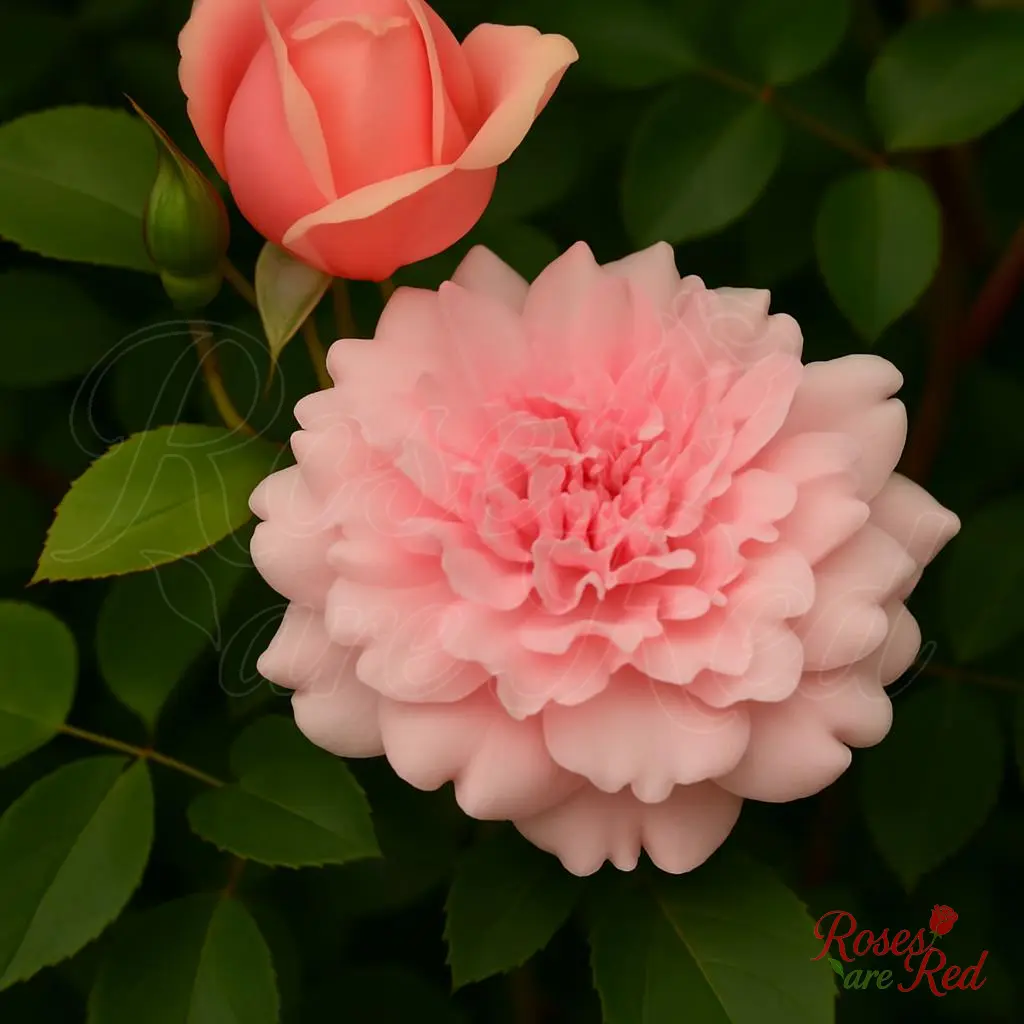
Modern Rose, hybrid wichurana "Albertine", France, introduced by Barbier Frères & Compagnie in 1921, Usually is salmon in color, globular bloom shape, blooms 8 - 9 cm in size, has 3-5 buds per stem, once rebloom, has rich fragrance, the bush shape can be arching, 300 - 400 cm in height, 300 cm in width, suitable for USDA zone 6 from -23°C and above, low resistance to rain, low resistance to black spot, low resistance to mildew.
Main characteristics

Aroma

USDA Zone 6
-23°С

Rebloom


Bush Shape

Bloom Shape
Globular
Size

Height
300 - 400 cm

Width
300 cm
Bloom size
8 - 9 cm
Buds / Stem
3-5

Petal Count
Resistance

Heat

Shade

Rain

Black Spot
Mildew
More information
In mild climates, Albertine ranks among the most widely grown variegated roses. It flowers profusely, persists with minimal maintenance, and propagates readily from cuttings, which accounts for its distribution. The double to semi-double blooms are salmon pink, opening from darker buds; the effect includes contrast between the pink petals and their coral-toned reverse. The fragrance is strong and detectable at a distance. Blooms are somewhat tousled, appearing in clusters of 3-7 on short pedicels. The foliage is glossy dark green with red-tipped growth. The plant forms a rigid framework with shoots unusually thick for a Vihurana hybrid, and numerous thorns allow it to climb into low trees and shrubs. As a free-standing shrub it reaches about 2 m in height and 4 m in spread. In colder climates it is susceptible to powdery mildew and black spot, but these issues do not reduce its survival or flowering the following year. The variety tolerates different soils, but is less winter-hardy than most Vihurana hybrids.
Widely planted. Clusters of salmon-pink buds open to copper-pink, strongly fragrant flowers. Flowering lasts about 3 weeks. May be affected by powdery mildew.
Introduced by Barbier in 1921 and widely grown internationally. The foliage is bright copper-red; shoots of the same color are strong and thorny. The scented flowers have a somewhat loose form. They are shrimp pink with a yellow tone in the center and fade with age. Powdery mildew may occur after flowering, without reducing vigor.
Flowers are strongly fragrant and appear in small clusters. They are large, double, copper pink with a golden base. Shoots are covered with curved thorns. The bush is vigorous but less rampant than many ramblers. Susceptible to powdery mildew. Tolerant of poor soils.
Not reliably hardy in central Europe; widespread in Australia, France, and England. Coral buds open into medium-sized (7-9 cm) semi-double flowers of salmon pink with a yellow cast, fading to pale pink while the reverse becomes brighter and deeper copper. Flowers appear in small clusters (3-7) in very large numbers. The strong, sweet fragrance is noticeable around the plant. The foliage is glossy, dark green, and susceptible to powdery mildew. The bush is dense, with stiff shoots bearing large thorns; cuttings root easily.
Buds of Albertine open into bright orange-pink, double, cup-shaped flowers with a golden base, appearing in large clusters in summer. The fragrant blooms cover the bush for about 3 weeks and then fade to a delicate pink with age. The foliage is glossy with a copper-red sheen. Shoots carry numerous curved thorns. Fast growing. Can be grown as a shrub. Susceptible to powdery mildew.
Widely planted. Clusters of salmon-pink buds open to copper-pink, strongly fragrant flowers. Flowering lasts about 3 weeks. May be affected by powdery mildew.
Introduced by Barbier in 1921 and widely grown internationally. The foliage is bright copper-red; shoots of the same color are strong and thorny. The scented flowers have a somewhat loose form. They are shrimp pink with a yellow tone in the center and fade with age. Powdery mildew may occur after flowering, without reducing vigor.
Flowers are strongly fragrant and appear in small clusters. They are large, double, copper pink with a golden base. Shoots are covered with curved thorns. The bush is vigorous but less rampant than many ramblers. Susceptible to powdery mildew. Tolerant of poor soils.
Not reliably hardy in central Europe; widespread in Australia, France, and England. Coral buds open into medium-sized (7-9 cm) semi-double flowers of salmon pink with a yellow cast, fading to pale pink while the reverse becomes brighter and deeper copper. Flowers appear in small clusters (3-7) in very large numbers. The strong, sweet fragrance is noticeable around the plant. The foliage is glossy, dark green, and susceptible to powdery mildew. The bush is dense, with stiff shoots bearing large thorns; cuttings root easily.
Buds of Albertine open into bright orange-pink, double, cup-shaped flowers with a golden base, appearing in large clusters in summer. The fragrant blooms cover the bush for about 3 weeks and then fade to a delicate pink with age. The foliage is glossy with a copper-red sheen. Shoots carry numerous curved thorns. Fast growing. Can be grown as a shrub. Susceptible to powdery mildew.
Popular Breeders
Articles