

 Sign in
 Rose Catalog
Gertrude Jekyll, shrub

Registration name
AUSbord
Also known as
Von Doussa Children
Share
Prices nearby
or to see prices for this rose



















Brief summary
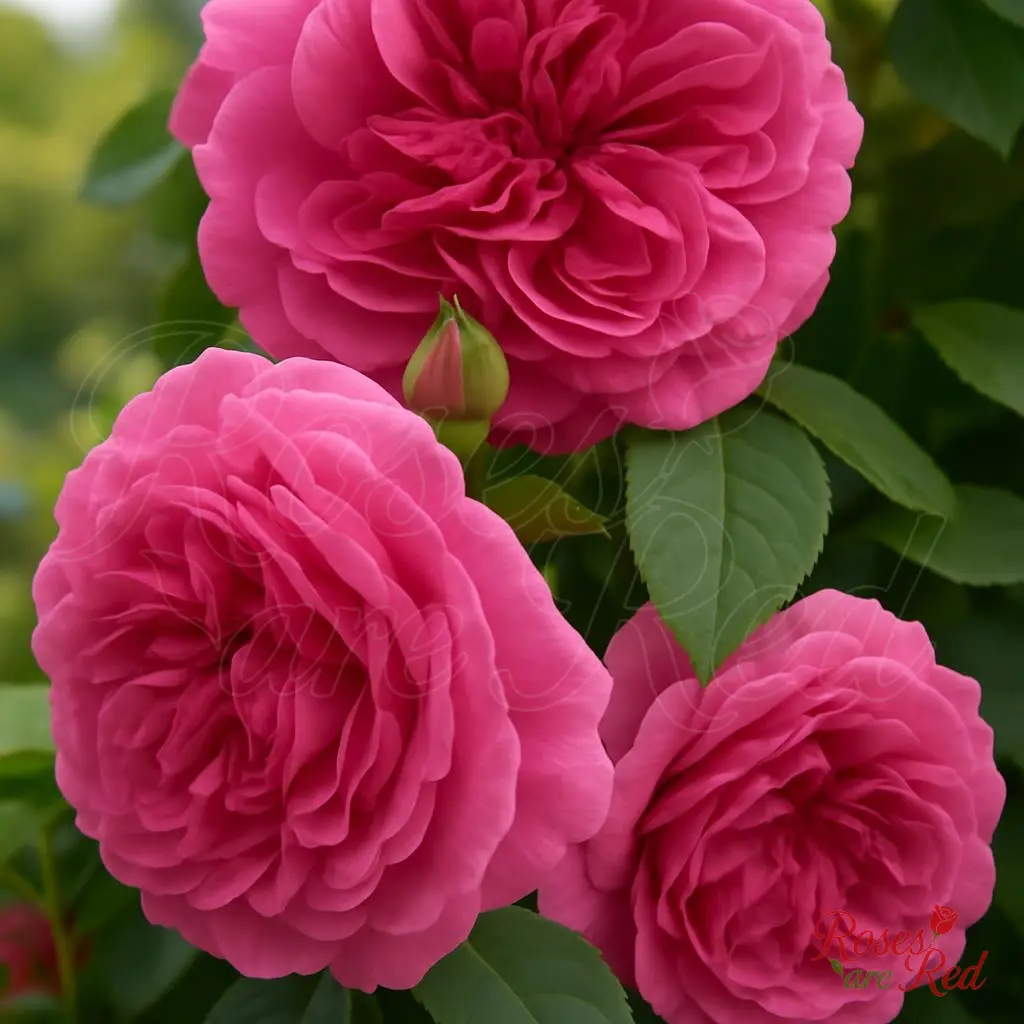
Modern Rose, shrub "Gertrude Jekyll", United Kingdom, introduced by David C. H. Austin in 1986, Usually is fuchsia in color, globular bloom shape, blooms 10 - 11 cm in size, has 1-3 buds per stem, repeat rebloom, has rich fragrance, the bush shape can be upright, 100 - 120 cm in height, 90 cm in width, suitable for USDA zone 5 from -29°C and above, low resistance to rain, moderate resistance to black spot, moderate resistance to mildew.
Main characteristics

Aroma

USDA Zone 5
-29°С

Rebloom


Bush Shape

Bloom Shape
Globular
Size

Height
100 - 120 cm

Width
90 cm

Bloom size
10 - 11 cm

Buds / Stem
1-3

Petal Count
Resistance

Heat

Shade

Rain

Black Spot
Mildew
More information
Gertrude Jekyll produces large, rich pink blooms. Small, delicate buds develop into large, heavy, rosette-shaped flowers reminiscent of Portland roses. The fragrance is very strong; petals of Gertrude Jekyll are used to produce essential oil for perfumery, in this regard comparable only with Evelyn. The plant grows very tall; the shrub can have a loose habit. Foliage is large.
A David Austin variety with deep pink flowers, pale crimson at the center, fading to pale pink at the edges. Blooms open wide, displaying masses of small petals, sometimes with a flattened center, and may occasionally reveal golden stamens. Flowers are borne in small clusters of 3–5 blooms. The shrub is very prickly and densely foliated, with blooms set within the foliage. Deadheading and timely pruning are needed for good repeat flowering.
The shrub is upright; the flowers are large, deep pink, and not always perfectly regular in form. Foliage and growth habit resemble Portland roses. The variety is very hardy and free-flowering, with a very strong rose-oil fragrance. Forms a medium-sized bush.
Some growers note reluctance to flower. Cutting new shoots back by half their length, or bending and pegging long canes to the ground, encourages increased blooming. The rose responds strongly to favorable conditions and ample fertilization. The fragrance is very strong. Susceptible to black spot.
A widely known English rose that requires good care to perform optimally. Reddish-pink buds open to densely petalled, slightly cupped or flat rosettes 10–12 cm in diameter. Flowers are usually deep pink in the center, fading to pink or soft pink at the edges; the color is brightest in cool weather. Reports consistently note a powerful fragrance, with descriptors ranging from sweet to classic rose oil. Bloom is abundant in early summer; later flushes are lighter. Shoots are stiff and prickly. The shrub is open, reaching 120–150 cm in height and 100–120 cm in width in cooler climates. In warmer regions it is often trained as a pleached rose, reaching 2.5–3 m. When grown as a bush, cut shoots by half after the first bloom to improve rebloom and control size. Disease resistance is average; apply preventive treatments.
A David Austin variety with deep pink flowers, pale crimson at the center, fading to pale pink at the edges. Blooms open wide, displaying masses of small petals, sometimes with a flattened center, and may occasionally reveal golden stamens. Flowers are borne in small clusters of 3–5 blooms. The shrub is very prickly and densely foliated, with blooms set within the foliage. Deadheading and timely pruning are needed for good repeat flowering.
The shrub is upright; the flowers are large, deep pink, and not always perfectly regular in form. Foliage and growth habit resemble Portland roses. The variety is very hardy and free-flowering, with a very strong rose-oil fragrance. Forms a medium-sized bush.
Some growers note reluctance to flower. Cutting new shoots back by half their length, or bending and pegging long canes to the ground, encourages increased blooming. The rose responds strongly to favorable conditions and ample fertilization. The fragrance is very strong. Susceptible to black spot.
A widely known English rose that requires good care to perform optimally. Reddish-pink buds open to densely petalled, slightly cupped or flat rosettes 10–12 cm in diameter. Flowers are usually deep pink in the center, fading to pink or soft pink at the edges; the color is brightest in cool weather. Reports consistently note a powerful fragrance, with descriptors ranging from sweet to classic rose oil. Bloom is abundant in early summer; later flushes are lighter. Shoots are stiff and prickly. The shrub is open, reaching 120–150 cm in height and 100–120 cm in width in cooler climates. In warmer regions it is often trained as a pleached rose, reaching 2.5–3 m. When grown as a bush, cut shoots by half after the first bloom to improve rebloom and control size. Disease resistance is average; apply preventive treatments.
Popular Breeders
Articles